Nativity of the Theotokos: a lesson of faith and patience for modern families
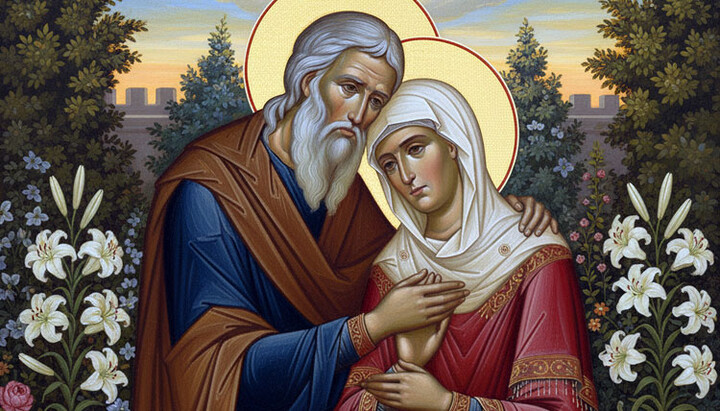
Righteous Joachim and Anna are an example of patience and unwavering faith in Divine Providence. Photo: UOJ
In these days, the Church celebrates the Nativity of the Most Holy Theotokos. The series of the twelve great feasts of the church year is opened by a significant event in Christian history, which gives every parent hope that the Lord never abandons those who fully trust in Him. A vivid example of this is the righteous couple Joachim and Anna.
"We magnify you, Most Holy Virgin, and honor your holy parents", are the words sung before the icon of the Nativity of the Most Holy Theotokos. The Mother of God is born to prepare through prayer and chastity for the Nativity of the God-Child. She is born so that we too may be born for eternal life through faith in Her Son.
The event of the birth of the Most Pure Virgin Mary is not reflected in the Gospel texts. However, it evokes genuine admiration in every Christian.
A quiet and unremarkable girl, Mariam, the long-awaited and prayed-for child, comes into the world.
How many prayerful tears did the righteous Joachim and Anna shed in the Jerusalem temple for this miracle to finally happen! How many days and nights they spent in incessant supplications to God for the sorrow of the couple's infertility to be turned into the joy of the loud cry of a newborn child! But where the Lord acts, there "the laws of nature are overcome". Even when it seems that nothing can be changed, God proves His omnipotence to man.
The trial of childlessness and the example of Saints Joachim and Anna
The parents of the Mother of God were childless for a long time. In the view of Jewish society, this meant that such a family was abandoned by God for their sins. Therefore, for the pious and noble couple, their joint life became a true test of their fidelity, faith, and trust in God.
Let's imagine for a moment how a modern married couple would act in such a case. Unfortunately, in childless families today, divorces often occur because the primary goal of creating a family for the husband and wife was not fulfilled.
Almost every woman desires to become a mother. She subconsciously feels that her salvation lies in childbearing. And even if a woman wants to build a career, putting family life on the back burner, she will still always nurture in her soul the desire to find her happiness in a marital union.
For a man, the birth of a child provides an opportunity to pass on his spiritual, professional, and life experience. He feels responsible for this before God, society, and his family. And suddenly, all plans and dreams are unexpectedly shattered when the couple learns the bitter truth that their union is doomed to barrenness.
Only if the marriage was initially based on love, mutual respect, and mutual support of the spouses does it have a chance to remain intact.
If the foundation of their union is the faith in the primacy of Christ in their joint life, such a marriage will surely endure.
But, unfortunately, today we often observe the opposite. And all because people often lack any motivation in the matter of building a family. After all, if a family is created solely for the birth of children, it will fall apart in the case of childlessness. If a family is created only to satisfy one's passions and ambitions, it will collapse like a house of cards.
The holy righteous Joachim and Anna showed all spouses and parents an example of patience and unwavering faith in God's Providence.
Having no child until old age, they prayed to the Lord for its birth. They sincerely believed that God would hear their prayers and grant them what they asked for when it pleased Him. They waited long and were rewarded. And having received their wish, they fulfilled the promise they made to the Almighty in their fervent prayer, dedicating the born child to God. Through their deep and tested faith in sorrow, the Lord not only granted the couple the highest family happiness but also made them the parents of Her who, in her purity and innocence, became higher than all the angelic ranks.
The birth of the Theotokos became a healing from spiritual barrenness
The liturgy of the feast contains a very important idea, the realization of which allows us to set the right accents in our spiritual life. In prayers to the Mother of God and Her holy parents, we ask them to heal us from spiritual barrenness.
This state of the soul is familiar to every person. When the heart does not rise to God, when our will is not directed towards doing good deeds, when the feelings of our loved ones are indifferent to us, then a depressing state of spiritual barrenness sets in. The image of the infant Mary and Her pious father and mother helps us understand which virtues heal this ailment.
Only through humility, meekness, chastity, and love for God, we can return to the image of a true Christian – a son of God by grace.
For good reason, many liturgical texts these days are dedicated not so much to the Most Holy Theotokos as to Her parents – the righteous Joachim and Anna. When we celebrate the birthday of a close person and are familiar with their family, we address congratulations not only to the hero of the occasion but also to their parents. And this is not accidental, for the portrait of a personality is often drawn from those who gave birth to and raised this personality. We can praise parents for their virtues or reproach them for their shortcomings, but we are always, to varying degrees, similar to them: both externally and internally.
The Mother of God also became a reflection of Her parents in their finest qualities. Joachim and Anna did not lack faith. They waited long for a child, and the Lord fulfilled their hopes. Mary also became a "rule of faith" for many generations of Christians.
For if She had not believed in the Divine Revelation, She could not have become the Vessel of the Uncontainable, the Vessel of the grace of the Holy Spirit, and "the Heavenly Door, bringing Christ into the Universe for the salvation of our souls".
In the same way, the Most Holy Virgin inherited from Her parents the purity of soul and thoughts. Purity can only come from purity. From a mountain spring, sewage cannot flow, just as, according to the word of the Apostle James, sweet and bitter water cannot flow from one source. We often witness how the moral purity of ancestors cleanses the souls of descendants, how the prayer of parents fills even the most hardened hearts of sons and daughters with love. In trying to raise children with words, we forget that upbringing should start with ourselves, gaining skill in prayer and mercy.
We often complain to God for not granting us what we ask for in prayers within the timeframes we set ourselves. But it is worth remembering that in Heaven, there is no time and deadlines. There is only the highest Love of the Creator for His creation.
True love is born only through patience and constant prayer, combined with life in the Holy Spirit. Only if such exemplary love reigns in the family will God's Love abundantly fill the marital union.
The Nativity of the Most Holy Theotokos is a family feast. It was a joyful day for the loving righteous parents of the Virgin Mary, and it should be just as joyful for us. If happiness and love do not become constant companions of family life, family members will never be able to fully experience these feelings and pass them on to their descendants. Let us strive to more often sow the seed of love in each other's souls, and then the whole world around us will shine with bright colors and sparkle with the light of Divine presence!
Read also
How a Wedding Stopped a War
A young princess of Sluck was given in marriage so that two magnate families would not drown the city in blood. Soon afterwards, the Uniate Metropolitan complained that Orthodoxy had come back to life in Sluck.
Man before the forces of nature
A solitary figure on the shore seems insignificant before the immense power of the sea, yet it is he who stands before the Creator.
The mysteries of Golgotha in the light of archaeology
The veil of centuries obscures what really happened in the fourth century. Archaeology and ancient texts shed light on the true history of one of Christianity’s greatest sacred sites.
Zaporozhian Cossacks defend the persecuted faith
The story of how Cossacks drew their sabers to defend abused priests – while sometimes causing violent disturbances inside churches themselves.
A forgery at the foundation of Mohyla Academy
For centuries, historians have repeated an appealing story about a wealthy benefactor’s generous gift. Archival documents, however, paint a very different picture of what happened.
Theology of worn-out shoes
A painting of a pair of old shoes in a Dutch museum preserves the memory of an ordinary working person and a life of hard labor.