UOC Chancellor explains when autocephaly can harm the Church
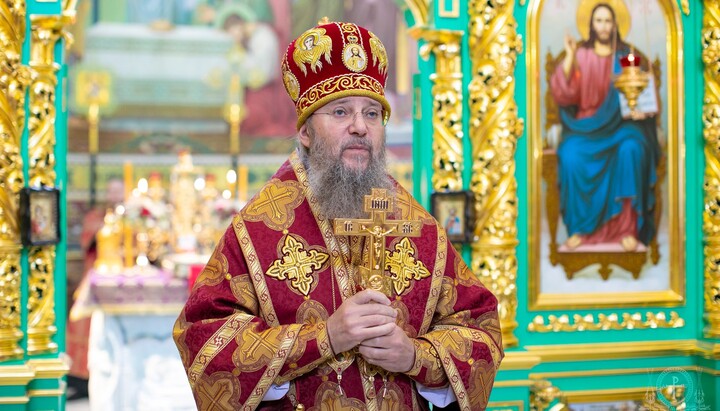
Metropolitan Antony. Photo: Met. Antony's Facebook
The Chancellor of the Ukrainian Orthodox Church, Metropolitan Antony of Boryspil and Brovary, published a material where he described when the pursuit of autocephaly can harm the unity of the Church and the Orthodox consciousness of the people.
He pointed out that autocephaly, in its correct understanding, can be a useful tool for pastoral service to a specific people. However, when it becomes an end in itself, it can harm the unity of the Church.
"The unity of the Body of Christ is the unchanging doctrine of the Orthodox Church. Autocephaly, however, is just one, not the only form of church governance. It does not guarantee either holiness or spiritual development," the material states.
Autocephaly can be harmful if it:
– arises under political pressure rather than in the spirit of church conciliarity;
– destroys Eucharistic unity with other local Churches;
– is based on nationalism, opposing one people to another.
"If the pursuit of autocephaly leads to opposing oneself to other Churches, to the loss of communion in faith and Sacraments, then this is not development but schism," the bishop emphasizes.
When autocephaly becomes an ideology of national exclusivity or a political tool, it ceases to be a church blessing.
According to the metropolitan, if autocephaly becomes a tool of politics, it can erode Orthodox consciousness, replacing it with ethnophyletism or church nationalism.
“If the people begin to think, ‘Our main task, our goal is to create our own personal, independent church,’ this will not preserve but destroy Orthodox consciousness. For Orthodox consciousness is the awareness of being a member of the conciliar Body of Christ, not merely of a national community,” notes the Chancellor.
The text highlights three main dangers of the wrong pursuit of autocephaly.
Firstly, the self-proclamation of autocephaly becomes a cause of isolation from unity with the Kyriarchal Church and other local Churches. History knows cases when local communities, due to political decisions, ended up in schism for decades without recognition by other Churches (for example, the Bulgarian Exarchate in the 19th century, the Macedonian Church in the 20th century).
Secondly, autocephaly proclaimed without free discussion and a true conciliar decision in the spirit of Christ's love becomes a cause of divisions within one people. The most terrible thing in such a situation is the loss of Eucharistic communion.
"If part of the Orthodox faithful cannot partake in communion with others, then not only an administrative but also a spiritual rupture arises. And outside the Eucharist, there is no salvation, for the Eucharist is the very heart of the Church's life», the material states.
Thirdly, there is the danger of replacing spirituality with nationalism. When the people begin to think, “We are a special nation and a special church, different from the others,” this signifies the substitution of spirituality with worldly categories.
"When the Orthodox consciousness of the people is replaced by national ideology, the sense of conciliarity disappears and faith becomes part of political identity. And this always leads to spiritual death," concludes the chancellor of the UOC.
Earlier, Metropolitan Antony in an article for the UOJ examined the topic of autocephaly from the perspective of analyzing biblical events: the fall of the Tower of Babel and Pentecost.
Read also
‘This is not how freedom is done’: Met. Theodosiy on secret Phanar report
The Cherkasy hierarch said the Constantinople cleric’s report on the 2018 “council” shows that the fate of “autocephaly” was determined not by the canons but by the authorities and security services.
UOC lawyer urges police to prevent provocations at upcoming court hearing
The next court hearing in the case seeking the dissolution of the UOC Kyiv Metropolia is scheduled for October 7.
UOC hierarch consecrates new bell tower at church in Behendiatska Pastil
In Transcarpathia, a vicar bishop of the Mukachevo Eparchy celebrated the Liturgy and then performed the rite of consecration of the new bell tower.
Metropolitan Onuphry calls for prayers to Mother of God for peace in Ukraine
On the feast day of the “She Who Is Quick to Hear” icon, the UOC Primate spoke of the Mother of God’s maternal care and urged the faithful to live by the laws of holiness and love.
OCU holds evening of wedding rituals at seized Cherkasy cathedral
An event featuring participants dressing in traditional wedding attire and reenacting folk rituals to bandura accompaniment was held at St. Michael’s Cathedral in Cherkasy.
Volodymyr-Volynskyi Eparchy marks 30 years since restoration
The Pantanassa Icon and relics of Prince Volodymyr have arrived in Kovel and will visit churches across the Volodymyr-Volynskyi Eparchy to mark the 30th anniversary of the restoration of the episcopal see.