The Pochaiv Lavra – Ukrainian Athos: a pilgrim's notes
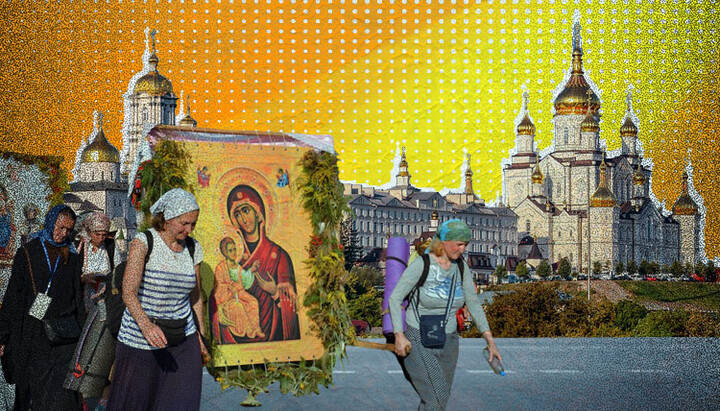
The flow of believers to the holy Pochaiv Hill does not decrease. Photo: UOJ
Books have been written, songs composed, and films made about the Pochaev Lavra. Its history is so extensive that writing about it is challenging. It's easier to come here, stay in the well-equipped pilgrim hotel, visit the shrines, churches, and services to see for yourself: the grace of God truly rests on the Holy Hill.
The Mother of God herself is invisibly present here, who appeared to the monks on the mountain in a fiery pillar in 1240, leaving the imprint of Her right foot on the stone, as if in soft wax. From it, a miraculous spring burst forth, which flows to this day, for almost eight centuries.
According to tradition, the monks of the Kyiv-Pechersk Lavra, fleeing from the Tatar-Mongol yoke, moved west and founded the Pochaiv Monastery in Volhynia in memory of the Pochaina River, where the Holy Equal-to-the-Apostles Prince Vladimir baptized Rus'.
First impression: "There's some kind of mystery here"
The author of these lines has often visited Pochaiv. However, the first encounter with the ancient monastery in the 1980s is most memorable, when the Lavra was under the yoke of Soviet atheism, and the current Pochaiv Theological Seminary building housed a museum of atheism. Tourist groups were always taken to this museum, where the main symbol of propaganda was Lenin’s quote: “Religion is the opium of the people.” Here is how I wrote about this encounter years later:
«I remember being struck by the Trinity Cathedral of the Lavra, built at the beginning of the last century (1906–1912). Academician A. V. Shchusev decided to replicate the Trinity Church of the Trinity-Sergius Lavra on the Pochaiv Hill, a thousand kilometers to the west, at the edge of the Catholic world.
At that time, I was still very far from faith, a young Soviet journalist, as if I saw ancient history firsthand: waves of the human sea swayed between the blue walls with stern faces of saints. The liturgy had just ended, and the people, among whom were many "poor and needy," on makeshift wheelchairs, with bags over their shoulders, headed towards the golden cross held by a hieromonk… I did not know then about the scale of the persecutions against the Church, the sea of blood shed by the confessors of the 20th century. I also did not know about the harsh Khrushchev times when Ternopil party officials implemented atheistic directives, and the local police conducted raids in the Lavra.
"There's some mystery here", I thought then in amazement…"
Lavra's transformation
Today, the monastery lives, as before, in prayers and labors. During the period of independent Ukraine, the Lavra has literally transformed. What was taken from it has been returned: extensive economic territories, workshops, a printing house, etc. The buildings, where the "abomination of desolation" reigned, have been restored. In the former monastic building, where the authorities, as if in retaliation against the believers, placed a clinic for the mentally ill, there is now a wonderful hotel for pilgrims with a marvelous refectory, where everyone rests their soul and body.
But the greatest achievement of the brethren, led by the abbot, Metropolitan Volodymyr (Moroz) of Pochaiv, was the construction of the new unique Transfiguration Cathedral.
In terms of size, it ranks among the first in Europe and amazes with its beauty, decoration, and wonderful mosaic paintings.
As the abbot explained at the time, the construction of the cathedral was prompted by the huge influx of pilgrims who simply could not fit into the two existing cathedrals of the Lavra – the Dormition and the Trinity.
Lavra today: prayer and trials
Recently, I have had the opportunity to talk with some of the Lavra's monks about the life of the monastery in current conditions. The number of brethren has not decreased in recent years, and may have even increased. As for the claims of Greek Catholics and schismatics to serve in the Lavra and the authorities' attempts to convert the monastery into a state reserve, all these hostile initiatives have remained futile.
"For the Mother of God protects the monastery from encroachments", one of the parishioners, a resident of Pochaiv, explained to me.
Some may not believe it, but despite the persecutions that the Ukrainian Orthodox Church is experiencing today, the flow of believers to the holy Pochaiv Hill does not decrease.
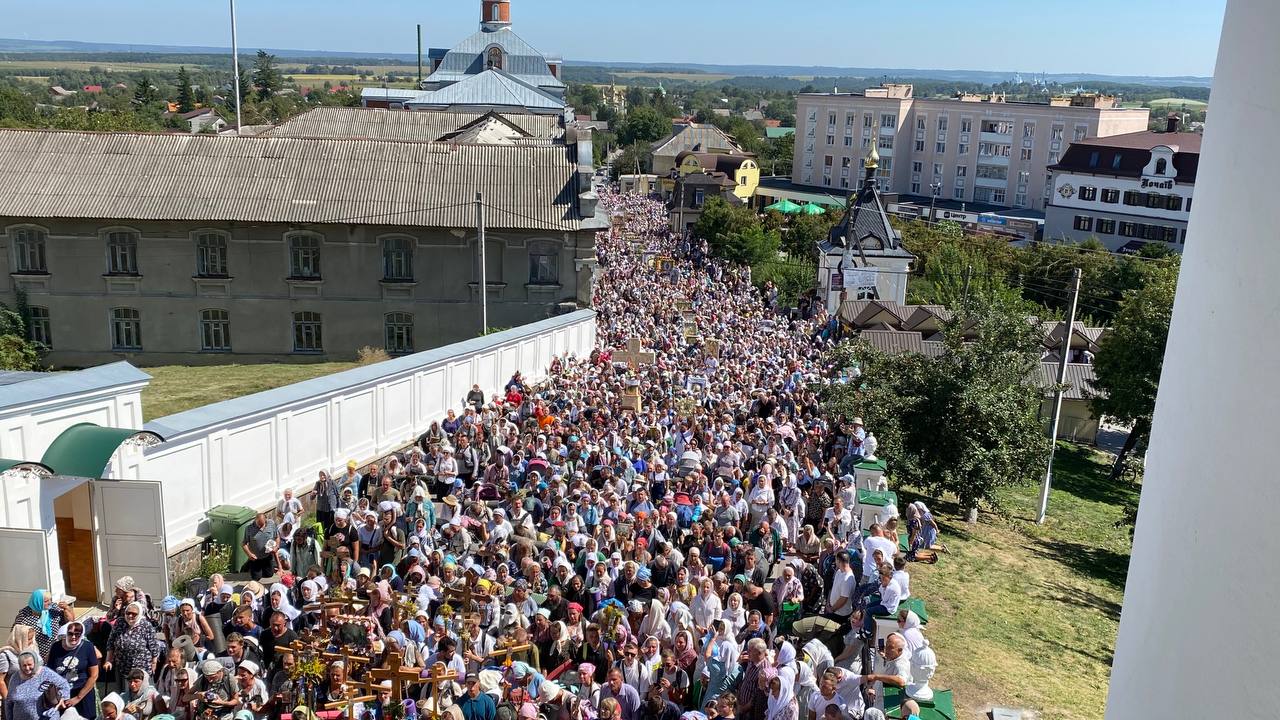
It is enough to recall the recent procession from Kamianets-Podilskyi to Pochaiv, in which about 20,000 believers participated. In the words of the late Blessed Metropolitan Volodymyr (Sabodan), "people do not go to an empty well". The canonical Orthodox Church remains an unshakable testimony of faith in Christ, and the gates of hell, according to the Savior's word, will not prevail against it (Matt. 16:18).
Read also
Why were holy monasteries turned into state prisons?
The history of Christian Europe preserves the memory of times when monasteries served as places of exile imposed by the state. Within their walls, the fates of monarchs and righteous men were decided.
A shepherd boy with a letter from Christ to French king
In the summer of 1212, thousands of pilgrims carrying staffs waited for the sea to part before them. Later chroniclers added ships, slave traders, and a pope's lament to their story.
Facade of bones and facade of light
Antoni Gaudí spent forty-three years building a church in Barcelona, knowing that this construction was for the ages.
Trial of a dead pope
Once in Rome, the body of a deceased pope was seated on the throne and put on trial. The accusation relied on a church canon that had once saved his see.
Monastery built in defiance of king
When Orthodox believers in Minsk were left with just one church, townspeople decided to build another – and even a royal decree did not stop them.
Young Mother and Sleeping Christ
Michelangelo carved a Virgin Mary who looks younger than her Son – and signed his name in marble for the only time in his life. Neither of these peculiarities was accidental.