Euthanasia in Canada raises alarm over organ harvesting ethics – reports
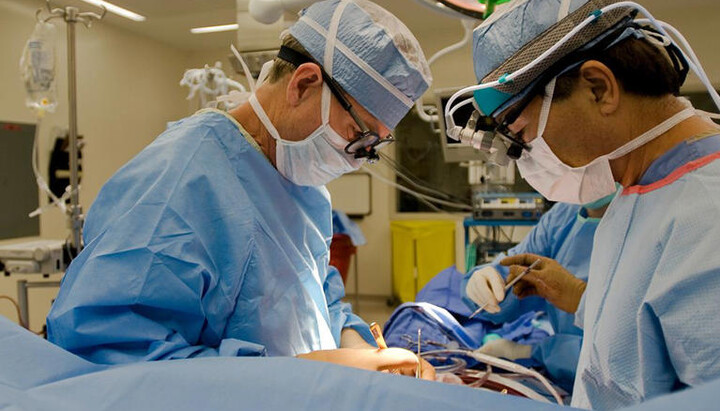
Heart transplant. Photo: Getty Images
The number of organ removals from people who have undergone euthanasia is rapidly increasing in Canada. Pro-life advocates are sounding the alarm, saying this development creates a dangerous precedent of coercion against the most vulnerable.
According to EADaily, an unprecedented case recently took place: the heart of a 38-year-old Canadian who chose euthanasia was removed and transplanted into a 59-year-old American suffering from heart failure. This is only one of hundreds of similar cases.
Official statistics show that since the legalization of euthanasia in 2016, at least 155 Canadians have become “donors” after receiving a lethal injection. However, the real numbers are believed to be much higher: a Dutch study found that out of 286 recorded cases of organ donation after euthanasia (ODE) worldwide up to 2021, 136 occurred in Canada.
The Canadian Institute for Health Information (CIHI) provides even more alarming data: in 2024, 5% of all transplants in the country used organs from euthanized citizens. A total of 235 people “agreed to donate their organs” after undergoing the lethal procedure, and among 894 euthanized donors, organs were extracted in 7% of cases.
Canada has effectively become the global leader in transforming euthanasia into a source of donor organs. Initially, this practice concerned heart transplants, but it has since expanded to include the liver, kidneys, and lungs.
Pro-life and bioethics experts warn that this system creates dangerous incentives to pressure the sick and vulnerable. When the organs of euthanized individuals become a valuable medical resource, there arises a temptation to “convince” patients with poor prognoses to “sacrifice themselves” for the sake of others.
For instance, LifeSite cites examples of people who requested euthanasia simply due to emotional distress: “Consider Mrs. A: isolated, severely obese, depressed, and disconnected from care; she refused treatment and social support but requested MAiD. Instead of re-engaging her with care, MAiD clinicians deemed her incurable because she refused all investigations, and her life was ended.”
Earlier, the UOJ reported that in Canada, a proposal was made to apply euthanasia to infants with severe illnesses.
Read also
OCU сleric: Even those who think in Russian are outsiders in Ukraine
OCU cleric Ivan Rybaruk called Russian-speaking Ukrainians "outsiders" who, in times of danger, would "grab everything and flee like tumbleweeds."
ROC approves procedure for receiving members of Ukrainian schismatic groups
The ROC Synod has adopted a document governing the reception of communities and clergy from the OCU, UOC-KP, and UAOC.
OCU cleric's church preference poll delivers unexpected results
When an OCU cleric from Rivne asked Ukrainians which Church they preferred, most Threads users who responded chose the UOC.
Reports to SBU of weapons in UOC churches were always false, Novynskyi says
The protodeacon said that under Maliuk, inspections began to be accompanied by public accusations against the Church without evidence.
Culture Ministry pledges to speed up seizure of Kyiv-Pechersk Lavra from UOC
Culture Minister Tetiana Berezhna has pledged to personally attend a court hearing in the Kyiv-Pechersk Lavra case.
Kamianske Eparchy honors Dnipro Icon of the Mother of God for first time
A festive service was held at a cathedral in Kamianske, where the Dnipro Icon of the Mother of God was brought out for veneration by the faithful for the first time.