Spiritual world and AI: Can technology be possessed by demons?
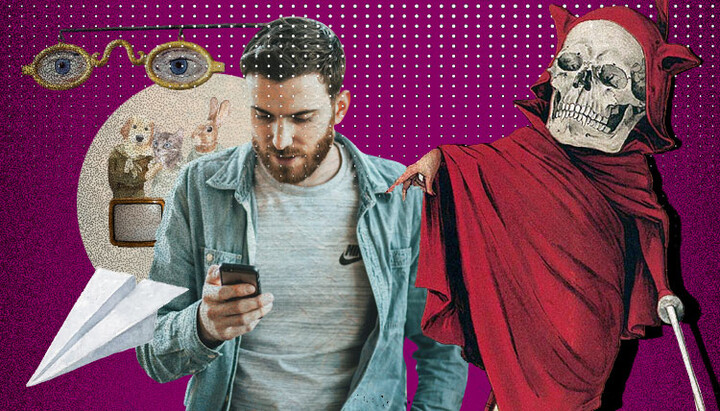
Demonic possession requires a vessel endowed with free will. Photo: UOJ
A question for the modern age
Can artificial intelligence (AI) become an instrument of the devil?
This question troubles many today, especially as reports emerge of AI giving dangerous advice – for instance, encouraging suicidal thoughts or suggesting that children harm themselves or others, as in a recent lawsuit against the service Character.AI. The more this technology develops, the greater the concern grows about the future of humanity.
AI: A tool, not a person
Artificial intelligence will undoubtedly have an ever-increasing impact on our lives. Among its potential negative effects are mass unemployment, the militarization of armies, and the rise of what one might call “soulless beauty”: AI will produce films, books, and paintings that may surpass human creations in technical brilliance, yet will remain devoid of soul. Economics, politics, and the military sphere will all undergo profound transformation.
But what about faith?
It is crucial to remember: AI is merely a tool – a technology.
Like atomic energy or the internet, its consequences depend entirely on the people who design and use it. AI possesses neither morality nor soul, and most importantly, no free will in the human sense. Therefore, it cannot be good or evil in itself. Yet it can become a powerful instrument in the hands of good or evil forces.
The fact that some people today fashion an idol out of AI and view it as a power rivaling the Divine – as seen in movements such as Way of the Future – does not mean that AI has personal attributes. It imitates human behavior without understanding its deeper meaning. Its responses are generated through statistical patterns derived from vast datasets. It has no worldview, no purpose, no inner experience.
Consciousness, above all, is the capacity to feel. AI lacks this completely.
The assumption that one could create an AI endowed with genuine consciousness has no basis in reality. To possess consciousness, one must first be alive. That which is not a person cannot be good or evil, for it lacks the freedom of moral choice.
Nevertheless, AI wields enormous power that can easily be used for evil. Today, for instance, mass media spread lies and hatred through social media algorithms – yet we do not claim that the media themselves are demonic. Likewise, AI may be used to produce and disseminate spiritually corrosive content, to simulate spirituality, or to promote vice and corruption. But AI itself is not a creation of God – it is a product of human intellect.
Can the devil dwell in AI?
This brings us to the central question: Can the devil enter into AI? Can AI become a vessel of demonic power?
There is no direct answer, but there is reasoned opinion.
Instances in which AI appears to “encourage” suicide or violence are not demonic manifestations – they are examples of serious ethical failures and technological risks. These arise not from the “evil will” of AI but from its inherent limitations:
- Its statistical nature: AI generates responses based on probability. If its training data include texts about violence or self-harm, it may reproduce those patterns without understanding their danger.
- Its lack of morality and empathy: AI has no inner moral compass. Restrictions against “harmful content” are externally imposed by developers – and often fail.
Could the devil then “inhabit” AI? No. AI is not a living being but a complex code running on physical hardware. It has neither soul, nor will, nor consciousness – and therefore cannot become the object of demonic possession. Possession requires a vessel endowed with free will. AI has none.
In a religious sense, AI should be regarded more as a potential idol (an object of misplaced worship) or a tool of evil (like a weapon), rather than as a being capable of possession.
Demons cannot possess a program. Only if AI were ever to attain genuine self-awareness – an exceedingly unlikely and much-debated prospect – would the question acquire a different dimension. Yet true consciousness, in the spiritual sense, can belong only to a bearer of spirit, not to a human-made mechanism.
Read also
Why were holy monasteries turned into state prisons?
The history of Christian Europe preserves the memory of times when monasteries served as places of exile imposed by the state. Within their walls, the fates of monarchs and righteous men were decided.
A shepherd boy with a letter from Christ to French king
In the summer of 1212, thousands of pilgrims carrying staffs waited for the sea to part before them. Later chroniclers added ships, slave traders, and a pope's lament to their story.
Facade of bones and facade of light
Antoni Gaudí spent forty-three years building a church in Barcelona, knowing that this construction was for the ages.
Trial of a dead pope
Once in Rome, the body of a deceased pope was seated on the throne and put on trial. The accusation relied on a church canon that had once saved his see.
Monastery built in defiance of king
When Orthodox believers in Minsk were left with just one church, townspeople decided to build another – and even a royal decree did not stop them.
Young Mother and Sleeping Christ
Michelangelo carved a Virgin Mary who looks younger than her Son – and signed his name in marble for the only time in his life. Neither of these peculiarities was accidental.