How to reach heaven: John Climacus on prayer
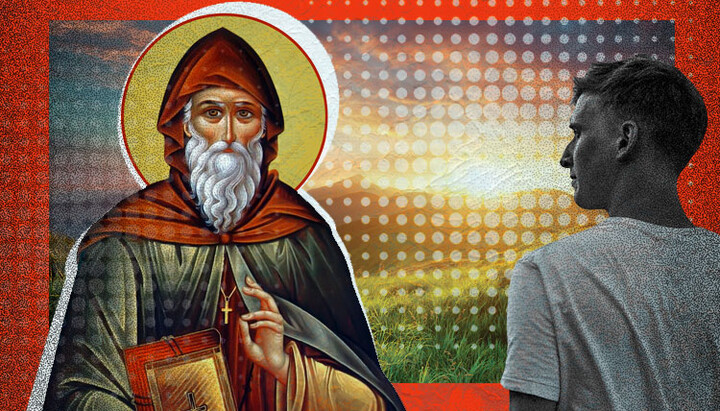
"Prayer is the union of man with God." Photo: UOJ
Our conversations with Abba John Climacus about passions and virtues have been deeply enlightening. We learned that the most destructive attachments are pride and gluttony, while the chief virtues are humility and discernment.
Virtue can be compared to a fine dish that must be properly seasoned. In the same way, prayer and fasting are the “seasoning” of the soul.
The subject of prayer is boundless – one could speak of it endlessly, and each time it would reveal a new depth. Yet today it is especially important for us, living amid the noise of the modern city, to hear from the master of asceticism how to build a life of prayer.
Prayer – union with God
“Why pray at all?” an ordinary person might ask. “After all, God already knows our needs better than we do.” Saint John Climacus emphasizes that prayer is not an obligation, but the natural state of a believer.
“By its quality, prayer is communion and union of man with God; by its action, it establishes peace, reconciles us with God, is the mother and also the daughter of tears, and the propitiation for sins,” teaches the saint.
In simple terms: when we keep prayer in mind, on our lips, and in our hearts, we are united with God; when we neglect it, pushing it aside, God in turn delays extending His helping hand.
Prayer is not merely recited text from a prayer book. It is the breath of spiritual life, the mother of all virtues. Prayer is the oil poured into the engine of the soul so that it does not grow cold and die. Prayer is a dialogue with God – and by refusing this dialogue, we condemn ourselves to a pointless existence in the vanity of the world.
The struggle against distraction
But what if we try to pray and our mind constantly drifts away – to the news, to videos on social media, to office gossip or domestic concerns? The elder answers:
“Strive to bring back your wandering thought, or rather, confine it within the words of the prayer. If it grows weary or falls due to childishness, lead it back again; for inconstancy is natural to our mind. But He who can establish all things can also grant stability to our mind.”
The labor of one who prays may be compared to that of a craftsman at his workbench. Both require concentration. If a carpenter becomes distracted, at best he ruins his workpiece – at worst, he injures himself. Likewise for one who prays: when attention wanders, his effort is fruitless.
Simplicity in prayer and the danger of “emotionalism”
Another common mistake is the search for special feelings in prayer. In the writings of the holy fathers we read about “grace,” “warmth,” and “tears” in prayer, while in our own experience we often encounter dryness. Then begins the self-torment: “What am I doing wrong?”
“Do not be clever or verbose, lest your mind become scattered,” warns the abba. “God is simple... Do not seek visions before their time.”
The elder stresses that exalted spiritual feelings are the fruit of holiness – the result of many sorrows and victories of the saints. For us, it is enough simply to ask God for mercy and give thanks.
The Apostle Peter, still a fisherman, was no great man of prayer. When he began to sink into the waves of the Sea of Galilee, he uttered only: “Lord, save me!” (Matt. 14:30). And Christ did not delay in rescuing him from certain death.
Brevity – the soul of prayer
The shortest prayer we can say without distraction is “Lord, have mercy!” It is often enough to avert danger or to stop ourselves from sin. If, as the classic saying goes, “brevity is the sister of talent,” then brevity is also the soul of prayer.
“The single word of the publican propitiated God, and the single confession of faith saved the thief,” says St John Climacus. “Much talking in prayer often scatters the mind and fills it with fantasies, but one-word prayer usually gathers it.”
A short but fervent prayer can replace many labors. The thief crucified beside the Savior could no longer change his life. But he managed the most important thing – to acknowledge his sinfulness and humble himself before God, saying the simple words: “Lord, remember me when You come into Your Kingdom!” That opened for him the way to Paradise.
Conclusion
Our conversation with the abbot of Sinai draws to a close. He has taught us the most essential truth: prayer is the mother of virtues. From it are born attention in the struggle with thoughts, patience in forcing ourselves to commune with God even when the soul is silent, and finally, peace – the reconciliation of the creature with the Creator.
Thus our dialogues with St John Climacus on passions and virtues come to an end. The elder has shared with us the main ideas of his Ladder, leaving a wide field for reflection on our spiritual journey.
Next, we turn to another Spirit-bearing elder – almost our contemporary – St Paisios the Athonite. We are certain that he will answer many of the questions troubling today’s Christian and offer counsel on how to live as a follower of Christ in our difficult times.
Meanwhile the Elder John sends us off with his parting word: “Be courageous in all circumstances, and the Lord Himself will be your Teacher!”
Read also
The Time of the Soul's Ripening
Modern society has turned youth into a cult and calls old age a period of "living out one's days." The Christian view reveals the deep spiritual meaning of one's later years.
Faith is not a checker piece in a spectator sport
Arguments about faith on social media increasingly resemble no-holds-barred fights. We turn to a saint who, sixteen centuries ago, knew how to speak to those interested only in turning theology into a combat arena.
The metropolitan who fought with a pen
St. Cyprian of Kyiv was robbed, expelled, and barred from his see. He answered with letters, books, and canons – and before his death, forgave everyone.
Loneliness under one roof
Spouses can share a home for years, raise children, and faithfully attend church – yet remain strangers to each other.
The cross – the deepest healing of the human soul
Emotional exhaustion and anxiety have become a way of life. Ancient Christian tradition offers an unexpected way out – embracing one's own cross.
The Prophet Elisha and the mystery of the Bethel massacre
The story of the prophet Elisha and the two bears seems to be the harshest in the Bible. But in reality, it carries a profound theological meaning.