Church of UOC Dormition Convent destroyed by shelling in Prymorske
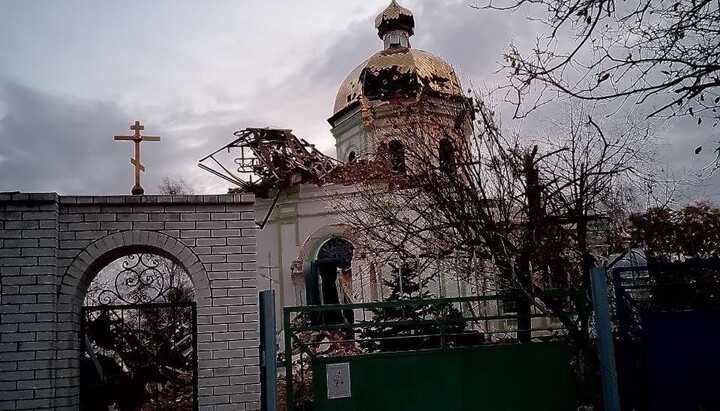
St. Nicholas Church in Prymorske. Photo: UOJ
On October 30, 2025, the St. Nicholas Church of the Dormition Convent of the Ukrainian Orthodox Church in the village of Prymorske, Zaporizhzhia region, was partially destroyed as a result of shelling, UOJ sources in the convent reported.
Ukrainian troops are stationed in the village, so sources believe the shelling was carried out by Russian forces, presumably to eliminate a “height” before a further advance.
The type of munition that hit the church has not been confirmed, but the damage is extensive. It remains unknown whether the building can be restored.
Earlier, the UOJ reported that the Protection Church in Hryshyne caught fire after shelling.
Read also
Ukraine’s Foreign Ministry plans advocacy visits abroad for UCCRO
Members of the All-Ukrainian Council of Churches and Religious Organizations have planned advocacy visits abroad following a meeting with Ukraine’s deputy foreign minister.
UOC priest detained by recruitment officers in Kyiv sent to training ground
UOC priest Maksym Kostiuchenko, who was detained on his way to a church service in Kyiv, has been sent to a military training ground in Chernihiv Region.
25 tons of humanitarian aid from Volyn reach Sviatohirsk Lavra
Around 25 tons of food donated by believers of the UOC Volyn Eparchy arrived at Sviatohirsk Lavra on October 22.
UOC West European Vicariate holds children's camp in Germany
A children’s camp was held in the UOC’s Western Deanery in Germany from October 19 to 23.
Vinnytsia Metropolitan consecrates UOC Intercession church in Luka-Barska
Metropolitan Varsonofy consecrated the Church of the Intercession in Luka Barska, Vinnytsia Region, and celebrated the first Divine Liturgy in the new church.
“Joy of All Who Sorrow” lower сhurch сonsecrated in Korosten
Metropolitan Nikodim of Zhytomyr and Novohrad-Volynskyi presided over the consecration of the church and celebrated the Divine Liturgy at St. Nicholas Church in Korosten.