Seal found in Jerusalem confirms biblical events during Hezekiah's reign
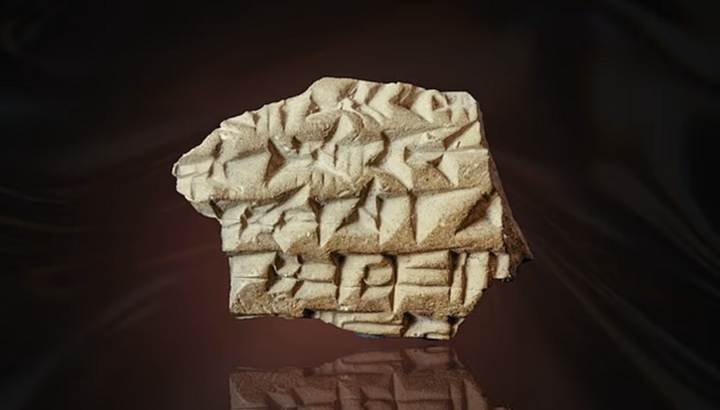
The seal was uncovered near the Temple Mount and dates back approximately 2700 years. Photo: dailymail
Archaeologists have uncovered a unique artifact in Jerusalem that may serve as additional evidence of historical events described in the Old Testament. It is a fragment of a tiny 2.5-centimeter pottery shard inscribed in Akkadian cuneiform, the world's oldest written Semitic language used in the Assyrian Empire, reports Daily Mail.
The find was uncovered near the Temple Mount and dates back approximately 2,700 years. Researchers from Bar-Ilan University deciphered the inscription, revealing what appears to be a complaint from the Assyrian empire regarding a late payment expected from the kingdom of Judah.
The text specifies the first of the month of Av, the 11th month of the Hebrew calendar, as the due date for the delayed tribute, suggesting a formal communication between the Assyrian empire and the kings of Judah.
Scholars noted that this could correspond to events recorded in 2 Kings 18 and 19, during the reign of King Hezekiah. These biblical passages describe Hezekiah being required to pay 300 talents of silver and 30 talents of gold to King Sennacherib of Assyria, a tribute meant to secure Judah from Assyrian aggression.
Dr. Peter Zilberg emphasized that the small size of the shard does not diminish its significance. It is part of a royal seal, a clay bulla, used to seal official letters and documents. According to him, this is the first such evidence of direct correspondence between Assyria and Judah found in Jerusalem.
Petrographic analysis showed that the clay is not local: the minerals correspond to rocks from the Tigris River basin — the region of Nineveh, Ashur, and Calah. This confirms that the artifact has Assyrian origins and could have been part of official diplomatic correspondence.
The researchers note that the find demonstrates the complexity of relations between Judah and one of the largest powers of antiquity. Even small Middle Eastern kingdoms maintained detailed correspondence with the Assyrian Empire, trying to preserve independence and avoid military threats.
Although the text of the seal does not directly quote a biblical story, its nature and dating provide historians with unique material evidence of interaction between the two kingdoms, as recounted in the Holy Scriptures.
As reported by teh UOJ, the wall where Christ healed the blind man was found in Jerusalem.
Read also
DESS finds Balta Eparchy of UOC affiliated with ROC
Yelensky-headed state service said it found signs of affiliation of the Balta Eparchy Administration of the UOC with the ROC.
Upper Lavra court hearing postponed
The next court hearing in the Upper Lavra case has been scheduled for November 3.
UOC priest blesses ambulances at Kamianske medical center
A UOC priest in Kamianske blessed ambulances for a medical facility and wished its doctors God's help in their work.
Dumenko to German ambassador: Law targeting UOC also applies to other groups
Epifaniy Dumenko sought to defend Ukraine’s law restricting religious organizations during a meeting with the German ambassador.
Activists bused to court hearings in UOC cases, media say
A minibus has been spotted transporting protesters to and from courthouses where UOC cases are being heard.
Firefighters save historic UOC church from fire in Zakarpattia
A fire broke out at a UOC church in the Tiachiv district, damaging the altar and church furnishings.