About new martyrs and Metropolitan Arseniy
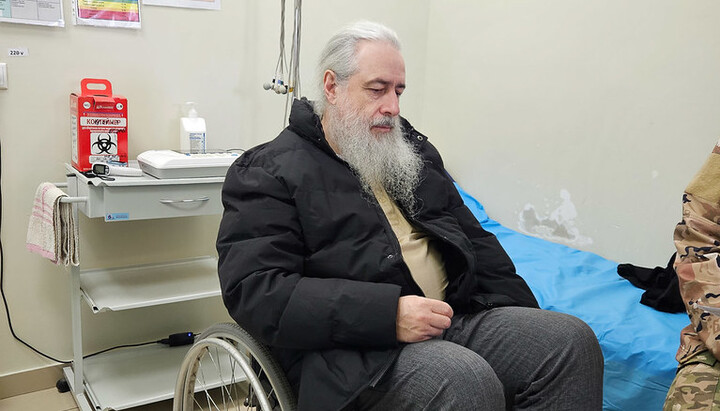
Metropolitan Arseniy in hospital. Photo: Sviatohirsk Lavra
We rarely pause to think about how the confessors of the faith actually lived, how they carried out their spiritual feats, how they were seen by their contemporaries. We look at their icons and turn to them in prayer as saints pleasing to God. Yet in their own time they lived ordinary lives. Just like many of us today, they doubted, they were afraid, and they stood before a choice: conscience or comfort, fidelity to the Church or service to the world.
On November 3, Metropolitan Arseniy was once again thrown behind bars. Thrown there despite his obvious health issues, despite the fact that he has already spent a year and a half in pretrial detention, despite the complete absence of any real necessity to keep him in prison.
We cannot know this with absolute certainty, but everyone understands: the accusations against the hierarch are contrived. The authorities want something from him. Perhaps betrayal of the Church. Perhaps betrayal of his people. Perhaps betrayal of his own conscience. But they have achieved nothing. The metropolitan quietly and without protest returns to prison.
In his words after the court’s decision, he did not utter a single word of condemnation toward those who persecute him. On the contrary, he asked forgiveness of the SBU officers if he had shouted or spoken harshly in the heat of the moment. “Brothers, don’t take it to heart, forgive me,” the hierarch said.
We speak of this now not to place Metropolitan Arseniy on the same level as the confessors of the past – the New Martyrs who suffered under the Soviet regime. Yet it is impossible not to notice the parallels. It is unlikely that any of those confessors a hundred years ago told themselves: “Here I am, a martyr of God, performing a feat for Christ, and for this I will be canonized.” They simply acted as their conscience dictated. With the hope that God would not abandon His chosen ones. And only they themselves knew the price of that choice.
Metropolitan Arseniy does not say that he is performing a feat for Christ. He simply acts as his Christian and episcopal conscience commands him to act. And he accepts the heavy consequences of that choice.
Read also
Honoring the Bolsheviks’ successors at Kyiv Lavra
It was under the Reserve that the relics of the saints were desecrated, Lavra churches were turned into an atheism museum, and toilets were installed in sanctuaries.
"Degenerates" and "stupid animals": anti-UOC activists turn on children
Future historians will wonder how a vast country’s information agenda could have been shaped for so long by people so petty, vicious, and utterly contemptible.
Zelensky sees murder of Polish priest but not of Sviatohirsk monk
Why does Zelensky react so emotionally and swiftly to the murder of a Catholic cleric while remaining completely silent about the murder of an Orthodox monk?
UOC vs. OCU numbers: pollsters count, social media recount
Official polling suggests Dumenko’s structure has an overwhelming lead in the number of parishioners, while social media polls paint a very different picture. Which should we believe?
Who is working for the Kremlin in Poland? OCU, Uniates and Catholics versions
Who in the conflict between Poland and Ukraine is "an agent of the Russian Federation"? Zelensky, who gave the UPA name to an AFU special operations center? Nawrocki, who stripped him of an order for it? Polish MEPs?
Can we judge those who joined the OCU from the military commissariat?
There are many known cases where priests and deacons of the UOC, detained by TRC officers, were offered a simple way to secure their release – to switch to the OCU. Most refused.