Should a Christian hate a military enlistment officer?
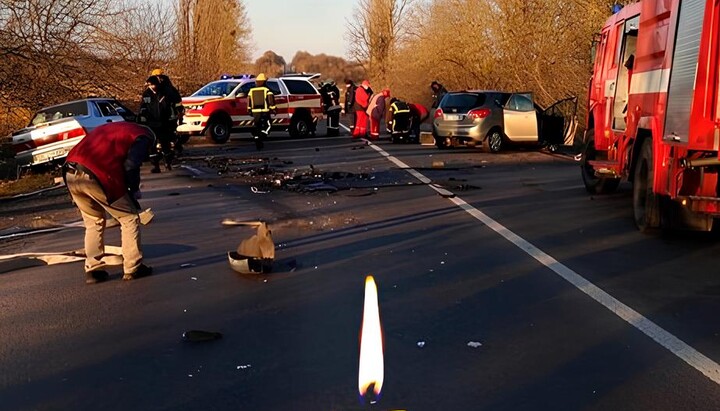
A car accident in Ternopil. Photo: open sources
At the end of October in Ternopil, four employees of a military enlistment office were killed in a car crash. Under a post about the accident on the local Facebook page “Ternopil 1540,” there were 25,000 reactions – but not of sorrow or sympathy. Almost all were likes and hearts. The comments were even worse: out of nearly 10,000, 99.9% expressed joy, gloating, and hatred toward the dead.
Here are some typical comments:
• “A tragedy is when they illegally grab people on the streets. They deserve no pity.”
• “Death for death, blood for blood – the boomerang has started its work.”
• “The more, the better. Lord, forgive me, a sinner, but I don’t feel sorry for such creatures.”
• “Finally, God is cleansing the earth of filth.”
• “This is their payback for those they killed and maimed.”
• “All enlistment officers will get the same. Great joy. More than one mother cries because her sons were taken to war.”
• “God heard us. Thank You, Lord.”
• “What tragedy? This is a holiday.”
Only one woman left a different comment: “People, come to your senses – they are someone’s sons, husbands, fathers. All these men fought at the front, were on the zero line, were wounded and shell-shocked, saw the hell of war. Why such terrible hatred between people? We say that the Russians are evil, but in this case we are no different. How can God do good for us when we hate each other? It feels like these comments aren’t written by Ukrainians.”
But her comment was mercilessly attacked.
What conclusions can be drawn from this? The most obvious one: people passionately hate enlistment officers. But there are also less obvious conclusions.
1. Ternopil region is one of the most “patriotic” and, at the same time, the least affected by the war. It is here that polls show the strongest support for “victory at all costs” and rejection of any peace talks. Yet simple logic says: if the enlistment offices stop working, there can be no talk not only of victory but even of preserving the current situation – which is already difficult enough for Ukraine. Support for war and hatred of enlistment officers are mutually exclusive notions.
2. Not long ago, a popular blogger and cleric of the OCU, A. Filiuk, posted a video claiming that the “man-hunting” done by enlistment officers was “not a sin.” But the backlash was so strong that he deleted the video within an hour. This is not the only such case among Dumenko’s followers. The OCU’s open servility to the authorities is already being judged by society – and the trend will only intensify.
3. Our propaganda constantly insists that Ukrainians are “united.” In the sense used by the authorities, that is a blatant lie. But in the case of the enlistment offices, sadly, it is true. In the comments under “Ternopil 1540,” people themselves wrote: “A very interesting analysis of the reactions – it shows people’s attitude toward the enlistment officers.”
Ukrainians are indeed united – but not in creation, not in love, but in hatred. And even if the enlistment officers deserve it, what difference does that make?
We have been taught for a long time to hate our enemies – both real and, more often, imaginary. And they succeeded: hatred has become our dominant emotion.
But a society in which hatred is the main unifying force is deeply sick – and certainly cannot call itself Christian.
Read also
Who destroyed and restored Kyiv Lavra? MinCulture's video reveals the truth
The Culture Ministry’s propaganda about the Kyiv-Pechersk Lavra has inadvertently revealed the truth.
Ternopil post on Feast of Intercession: Has calendar reformn failed?
A significant number of believers have rejected the new church calendar introduced by the OCU and UGCC with government support.
Shoulder straps or a cassock: who writes the script for UOC "fighters"?
Everything indicates that both Veliar and Pshenychny are ordinary performers of someone else's script. There is only one question – does the scriptwriter wear shoulder straps or a cassock?
Why is it legal to kill a person before birth but not after?
Children are the most privileged members of society. Yet that same society officially permits children to be killed – and on a massive scale.
Honoring the Bolsheviks’ successors at Kyiv Lavra
It was under the Reserve that the relics of the saints were desecrated, Lavra churches were turned into an atheism museum, and toilets were installed in sanctuaries.
"Degenerates" and "stupid animals": anti-UOC activists turn on children
Future historians will wonder how a vast country’s information agenda could have been shaped for so long by people so petty, vicious, and utterly contemptible.