Is the God of the Old Testament "cruel"? How did He become the "God of Love"?
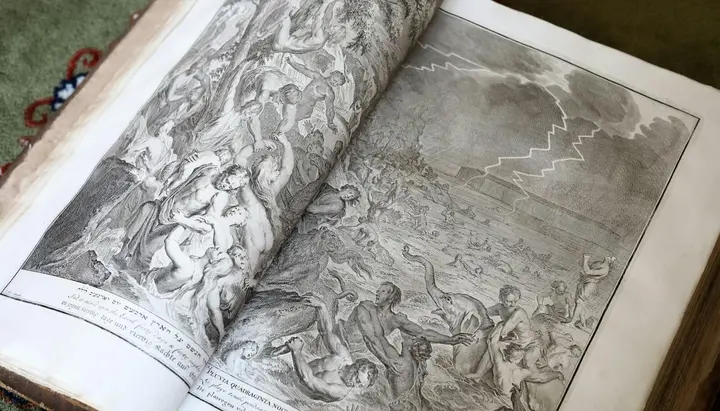
The "cruel God" dilemma. Photo: so-smislom
Similar confusions arose even in the early centuries of Christianity. For example, the heretic Marcion in the mid-2nd century taught that the God of the Old Testament was cruel and vengeful, while Christ was the Son of another, benevolent God. To prove this, he rejected the Old Testament and even "edited" the New Testament, removing from the Gospel everything that connected Christ with the ancient Scriptures.
But the Church decisively rejected this teaching, asserting: God is one and the same, and both the Old and New Testaments speak of Him alone, only at different stages of human history. The reason is that the law of the Old Testament, as the Apostle Paul teaches, was "a tutor to bring us to Christ."
Just as parents establish many specific rules for a small child – what is allowed, what is not – so God educated humanity, still spiritually immature, through strict commandments and vivid examples of how the world is arranged and what its laws are.
The New Testament is not a negation of the old law, but a maturation. We do not reject the knowledge gained in elementary school when moving to higher grades. For example, in elementary school, children are told that the Earth revolves around the Sun in a circle, but in high school or university, it turns out that it is not a circle but an ellipse, and the orbit constantly changes. But for a child's understanding, it was important to explain the essence at a level accessible to them, without which it was impossible to move forward.
So it is with the Law of God: God has not changed, but the degree of readiness of humans to perceive His truth has changed. Now the law is not abolished but overcome by love, as Christ demonstrated in the story of the woman taken in adultery: "He who is without sin among you, let him throw a stone at her first." He did not reject the Law but revealed its deepest meaning – in mercy that surpasses judgment.
God instilled in humans many concepts that to us, people shaped by biblical revelation, seem obvious. But to teach in the New Testament that "whoever is angry with his brother without a cause shall be in danger of the judgment" – first it was necessary to proclaim "You shall not murder." To teach in the Gospel "not to look at a woman with lust", it was first necessary to say – "You shall not commit adultery."
Thus, from generation to generation, and not only between the Old and New Testaments but even with each later book of the Old Testament, revelation becomes deeper and more substantial because humanity becomes more capable of perceiving.
Moreover, if we look closely at the Old Testament books, we will see that even there God, addressing the most spiritually receptive people, speaks of Himself as He truly is.
- "The Lord, the Lord God, merciful and gracious, longsuffering, and abounding in goodness..." (Exodus 34:6).
- The prophet Elijah recognizes God not in the storm, earthquake, or fire, but in "a gentle whisper" (1 Kings 19:11–12).
- The prophet Micah says: "He does not retain His anger forever, because He delights in mercy" (Micah 7:18).
In the times of the Old Testament, God indeed sometimes had to act through thunder and lightning, but in His essence, He is in gentle whisper, in the desire to show mercy, He is "the same yesterday, today, and forever," He is the One of whom it is said: "God is love."
Read also
The mystery of a heart turned to God
A pastoral response to one of the most painful questions believing parents face, reflecting on the difference between a personal encounter with God and growing up in a religious household.
The spiritual sensitivity of a living soul
A pastoral reflection on why witnessing wrongdoing causes spiritual pain – and what our response to the sins of others reveals about the state of our hearts.
Love is stronger than death
The loss of a loved one leaves a deep wound, but the Christian faith emphasizes the eternal nature of love. A conversation about the spiritual bond between spouses beyond the threshold of earthly life.
The true compass of the Christian life
St. Anthony the Great called discernment the highest virtue. The experience of the Desert Fathers shows that the path to spiritual sobriety lies through humility, seeking counsel, and overcoming the passions.
What is the essence of Christian spiritual feat?
Archpriest Vasily Kucher reflects on modern asceticism.
How can one find their purpose in life?
Archpriest Vasiliy Kucher addresses the question of life’s purpose and God-given calling.