“Bitter love”: Elder Paisios on what destroys families
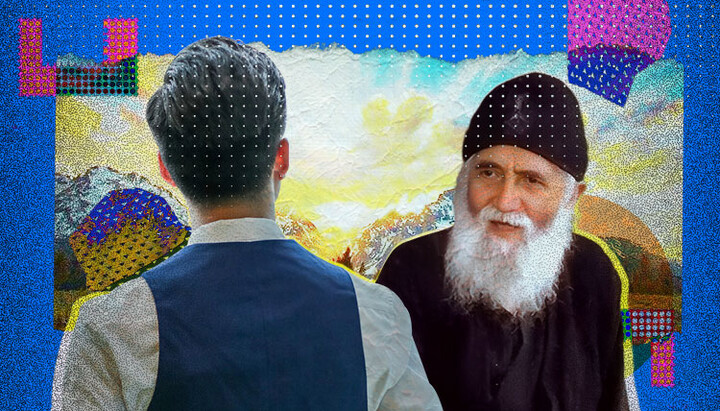
“Jealousy is selfishness, not love.” Photo: UOJ
Family relationships are the most demanding and delicate of all. Business ties end with the working day, friendships fit into the spaces of free time, but the family – that sacred circle – occupies the greater part of our earthly life.
Family life embraces a wide range of relationships: between husband and wife, between parents and children, and between generations under the same roof.
These bonds, hidden from the eyes of outsiders, are precisely what make family wounds so painful and so vulnerable to the soul.
Today we will talk with Elder Paisios about these difficult issues.
Selflessness or selfishness?
Every human being searches for love. Yet why does what begins in warmth and tenderness so often turn into bitterness, resentment, and an urge to control the other? Why do the closest people inflict the deepest wounds? This becomes especially visible once the “honeymoon” fades and everyday life begins, or when children begin revealing their own will and character.
We confuse two completely different realities. There is divine, sacrificial love – the kind that, according to the Apostle Paul, “suffers long, is kind, envies not, is not puffed up…” (1 Cor. 13:4). And there is worldly, selfish love that instead “demands, insists, oppresses”. This very “bitter love” lies at the root of countless family tragedies.
Elder Paisios gives several examples of love:
“Love is of two kinds,” he says. “There is divine, pure love, united with sacrifice, which rejoices in the joy of the beloved… And there is worldly, carnal, selfish love. If such love is not ennobled, it becomes a torment from hell.”
Self-absorbed love is the deadliest poison a person can give their spouse. Egoism distorts life. It drives single people to chase impossible ideals, imposing excessive expectations on others. And it corrodes existing families from within when each spouse tries to pull the blanket of attention over themselves, ignoring the needs of the other.
Jealousy: A sign of selfishness, not love
Jealousy is the clearest symptom of this “bitter love”. In worldly culture it is sometimes condemned, sometimes romanticized – as though it were proof of strong affection. Shakespeare calls it the “green-eyed monster” in Othello, while Lope de Vega in The Dog in the Manger speaks of it as something lofty:
“You cannot love without torment,
Destroying yourself in the fire of jealous sickness.”
Elder Paisios tears off this mask without pity, identifying jealousy as the unrestrained desire to possess another person:
“Jealousy is selfishness – it is not love. A person wants the other to belong only to him. He trusts neither God nor man. This is torment. A person with selfish love tortures himself and tortures the other”.
Jealousy builds a prison. One becomes the warden, the other the captive. Its foundation is not love, but deep distrust and a desire to control another soul.
“When one spouse is jealous, he shows that he has no trust in the other. And if there is no trust, what kind of love is that? It is simply self-love. He wants to control the other as though they were a thing,” the elder concludes.
False care: Pressure disguised as piety
Yet egoism can hide beneath subtler masks. Sometimes it takes on the appearance of piety – of “spiritual concern”. This happens when one spouse or parent tries to “save” the other: forcing prayer, demanding fasting, criticizing for insufficient zeal. Such hyper-care gradually spreads into every sphere of life, suffocating it.
Elder Paisios warns: this is not love, but the same egoism:
“Some in a family want their spouse or children to become saints overnight. They pressure, demand, criticize. But this is not spirituality – this is egoism. This only pushes a person away from Christ. Love must be discerning.”
One cannot drag another person into Paradise by force. If we truly wish to help someone, there is only one path – begin with ourselves and pray for them, rather than remaking them in our own image. God, unlike us, respects human freedom.
“God does not pressure a person,” Elder Paisios affirms. “But we, in our selfishness, want to drag others into Paradise by force. That is impossible. True love is patient and seeks not its own; it respects the freedom of the other.”
The cure: A “small sacrifice” and an art of yielding
How can one be cured of this “bitter love”? In a simple yet profound way: by understanding that family happiness is built not on heroic feats, but on humble daily acts of yielding. To yield in an argument. To stay silent when tempted to rebuke. To do something kind for the other while setting aside one’s own “I want”.
Elder Paisios offers a very practical remedy against egoism – the “small sacrifice”:
“For peace to reign in a family, each must give in a little. Each must strive to cut off his own will for the sake of the other. If one yields, the other will yield, and the Grace of God will come. Family life is a school of sacrifice,” the Athonite Elder teaches.
He gives the image of a wild tree that bears no fruit – a symbol of a person who insists on their own will. Only by cutting off egoism do we graft ourselves onto Christ and begin to bear fruit. And the one who begins to live this way discovers a great mystery: joy lies not in receiving, but in giving.
“True love finds joy in sacrificing for the other. Egoism finds joy in taking. A Christian rejoices when he gives. This is the great mystery of love,” Elder Paisios concludes.
Conclusion: The path to true joy
The saint leaves us with a precious teaching: the path from the bitter love of egoism to the joy of true love lies through self-denial – through the daily offering of small sacrifices. When we overcome jealousy and the compulsion to control, we acquire a love that brings peace and creates a foretaste of Paradise in our own home.
And so, Elder Paisios sends us forth from his humble cell with words addressed to every husband, wife, parent, child, and grandchild:
“Happiness in family life depends on how willing we are to sacrifice our egoism. Where there is sacrifice, there is Christ – and where Christ is, there is Paradise. Paradise begins already here, on earth, if the heart contains the love of Christ”.
Read also
Honest atheism vs. spiritual hypocrisy
The 70th anniversary of Albert Camus’s Nobel Prize recalls an uncompromising challenge to Christianity. An honest unbeliever brings theology back to the mystery of the Cross.
The valley of trouble and the gateway of hope
One soldier buried an expensive cloak and some gold beneath his tent. Because of this, all Israel lost a battle. Why did one man’s sin bring disaster upon an entire nation?
From love spells to bishop's throne
Antioch’s most powerful sorcerer sent demons against a devout young Christian woman three times – and failed every time. In the end, a demon himself revealed the truth that led to his conversion.
The Weeping Queen of Blachernae
On the night of the Feast of the Protection, only two people witnessed the miracle in the Church of Blachernae. Everyone else prayed and saw nothing. Yet they, too, received grace.
Deadly spiral of human hatred
The tragedy of Lebanon's civil war lays bare how dehumanization and fear can turn human beings into monsters.
Woe to expectant mothers – or to those of little faith?
God commanded one prophet not to have children, yet told his people in exile to bear sons and daughters. What does this apparent contradiction tell us today?