The UOC and the end of the Yermak era
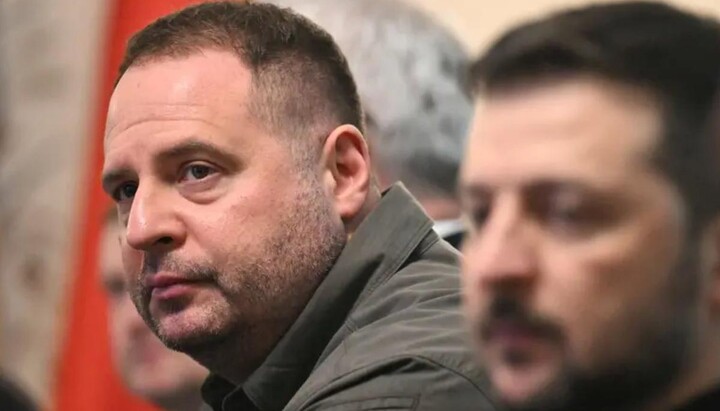
Yermak is gone, Zelensky remains. Photo: Getty Images
Andriy Yermak has long been called a gray cardinal – the figure who coordinated all state institutions and, in addition, wielded enormous influence over Zelensky himself.
The head of the Presidential Office rarely spoke publicly about the UOC, but his “contribution” to the state-driven persecution of the Church is undoubtedly significant.
In the early months of the war, Yermak, like Zelensky, did not take a hostile stance against the Church. His well-known social-media post called those who were inciting hatred toward the UOC “useful idiots.”
But later, something in the government seemed to flip a switch, and the entire leadership, headed by Zelensky, unleashed the full power of the state’s repressive machine upon the Church. The culmination of this onslaught was the law banning the UOC.
On the eve of the vote, Yermak declared:
“The Church in Ukraine will be stripped of Moscow’s influence. When, today, there are people in Ukraine who are ready to defend the influence of the Moscow Church… this is not normal. And this is not about freedom, but about something else entirely.”
And on the very day of the vote – August 20, 2024 – Yermak published a lengthy, overtly manipulative text attacking the Russian Orthodox Church, making it clear that, in his view, the UOC bore responsibility for all the sins of the ROC.
That, in essence, is the visible portion of Yermak’s activity concerning the UOC. But the submerged part of this iceberg is vast. “Friendly requests” to the SBU to open criminal cases against clergy; the siege and pressure campaign against the Kyiv–Pechersk Lavra; the relentless harassment of the UOC in government-aligned media; inflammatory statements from assorted MPs; the use of the All-Ukrainian Council of Churches and Religious Organizations as a convenient set of “tame advocates” for Western audiences; and much more.
Of course, the decisions were made by the president. But the one who implemented them – who orchestrated, fine-tuned, and supervised these processes – was a highly capable and talented organizer.
Now that talent is departing. His era has come to an end. And the next ones are already stepping forward.
“Do not fret because of evildoers, nor envy those who act unjustly – for they will soon be cut down like grass and wither like the green herb” (Ps. 36:1–2).
Read also
Why is Jerusalem “wrong” about OCU, but Constantinople isn’t?
In the eight years since the OCU was established, we have never once heard its leader suggest that the Patriarch of Constantinople is capable of error.
Who destroyed and restored Kyiv Lavra? MinCulture's video reveals the truth
The Culture Ministry’s propaganda about the Kyiv-Pechersk Lavra has inadvertently revealed the truth.
Ternopil post on Feast of Intercession: Has calendar reformn failed?
A significant number of believers have rejected the new church calendar introduced by the OCU and UGCC with government support.
Shoulder straps or a cassock: who writes the script for UOC "fighters"?
Everything indicates that both Veliar and Pshenychny are ordinary performers of someone else's script. There is only one question – does the scriptwriter wear shoulder straps or a cassock?
Why is it legal to kill a person before birth but not after?
Children are the most privileged members of society. Yet that same society officially permits children to be killed – and on a massive scale.
Honoring the Bolsheviks’ successors at Kyiv Lavra
It was under the Reserve that the relics of the saints were desecrated, Lavra churches were turned into an atheism museum, and toilets were installed in sanctuaries.