Met. Nikodim: Every day we pray for 2,000 soldiers by name
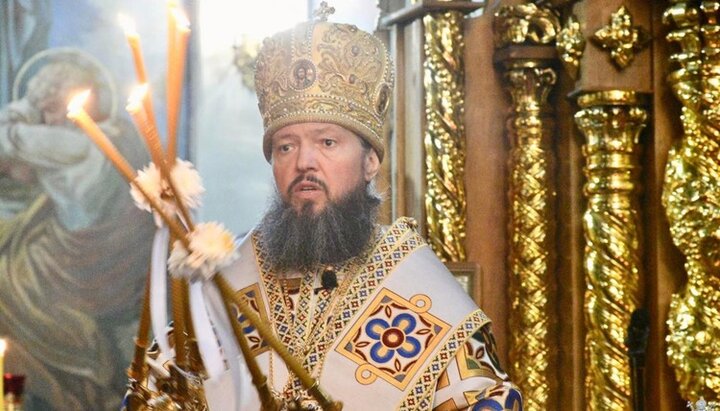
In an interview published on Facebook, the UOC hierarch Metropolitan Nikodim of Zhytomyr and Novohrad-Volynskyi spoke about the eparchy's aid to Ukrainian soldiers and how the Church's detractors are trying to put pressure on the families of fallen defenders.
"As soon as the war started, our parishioners were the first to respond. And it wasn't just humanitarian aid or refugee issues. Our young men, our soldiers went to the front line and give their lives," stressed Bishop Nikodim.
The claims "you don't want to bury" and "you don't want to read the last rite over AFU soldiers" are obviously far-fetched. "Our Ukrainian Orthodox Church reads a funeral service for our soldiers, mourns, expresses its sympathy to the relatives, loved ones," the UOC hierarch noted.
"There are just such moments of political nature, funding and others, when rumours are spread: "don't go there because you won't be compensated, you will go bury yourself"," Metropolitan Nikodim said. He added that, however, both in cities and villages, Ukrainian soldiers are buried by the Ukrainian Orthodox Church.
"There are already more than 2,000 soldiers - a list we pray for in the eparchy every day. Our soldiers go to our Church and we bless them to defend the state. Our mothers send their sons to the front line and come to us to pray for them," said the bishop.
Metropolitan Nikodim of Zhytomyr and Novohrad-Volynskyi spoke of how people try to intimidate church servants saying "soldiers will come back from the front and show you". That is, until now, detractors of the UOC are trying to use the stereotype of "Moscow priests" for their manipulations.
"And for them, for those on the front line, faith is especially important today. And they do not find out who is in which language and which church they attend. And, as our President said, if it were not for the South and East of Ukraine, where would the Russian Federation be today? If it were not for our Church and our Orthodox people, where would the aggressor be by now, where would it reach?" commented the hierarch.
Vladyka stressed that the Church prays for the soldiers to return alive. "God grant that they will return alive. And then no one will come near us," he noted. And those who are now trying to stir up the situation around the UOC are taking advantage of the moment that the parishioners, the soldiers are at the front.
"Deputies need PR, they are afraid to show themselves at the front, but they need to earn political dividends – and they raise the Church question. Who raises the question today? Those who are afraid themselves," Metropolitan Nikodim concluded.
As reported, Metropolitan Nikodim of Zhytomyr and Novohrad-Volynskyi spoke about the position of the UOC and its Primate after the outbreak of the war with Russia.
Read also
Upper Lavra court hearing postponed
The next court hearing in the Upper Lavra case has been scheduled for November 3.
UOC priest blesses ambulances at Kamianske medical center
A UOC priest in Kamianske blessed ambulances for a medical facility and wished its doctors God's help in their work.
Dumenko to German ambassador: Law targeting UOC also applies to other groups
Epifaniy Dumenko sought to defend Ukraine’s law restricting religious organizations during a meeting with the German ambassador.
Activists bused to court hearings in UOC cases, media say
A minibus has been spotted transporting protesters to and from courthouses where UOC cases are being heard.
Firefighters save historic UOC church from fire in Zakarpattia
A fire broke out at a UOC church in the Tiachiv district, damaging the altar and church furnishings.
Volyn Eparchy faithful collect six tons of aid for Sviatohirsk Lavra
Believers in Volyn collected food and warm clothing for people displaced by the war who have found shelter at Sviatohirsk Lavra.