The "itchy ears" syndrome: Why we embrace lies and bristle at the Gospel
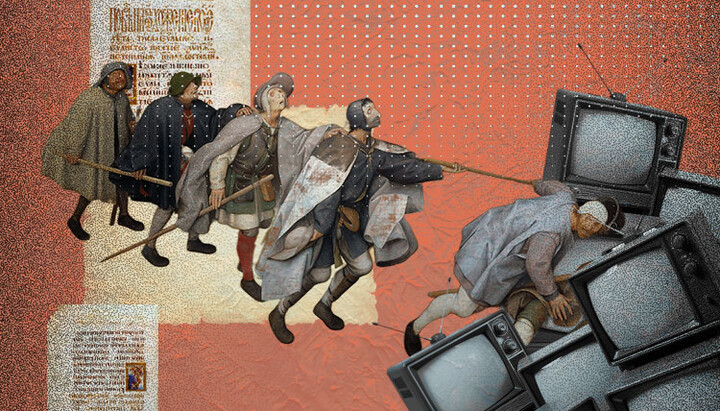
The blind leading the blind. Photo: UOJ
We often think that social media algorithms are an invention of the 21st century. A smart feed that serves us only what we like. News we agree with. Opinions that flatter us. Bloggers who confirm that we are right. But if we open the New Testament, we will be surprised to find that the Apostle Paul described this mechanism two thousand years before Mark Zuckerberg.
In the Second Epistle to Timothy, there are lines that read like a diagnosis of our time. Paul writes to his disciple about the future. That is, about our present.
"For the time will come when they will not endure sound doctrine, but according to their own desires, because they have itching ears, they will heap up for themselves teachers; and they will turn their ears away from the truth, and be turned aside to fables" (2 Tim. 4:3-4).
In the Greek original, there is a very precise medical term - knēthomenoi. Literally – "those who have itching ears". This is a condition where a person physically cannot listen to the truth if it causes them discomfort. They need not a doctor but someone who will scratch the sore spot.
Information cocoon
How does it work today? We have created around ourselves a perfect information bubble. If someone on the network writes things that are unpleasant to us, we block them. If a news channel provides information that destroys our worldview, we unsubscribe, "turn away our ears".
We form our feed so that it works like an endless mirror. So that every morning it tells us: "You are right. You are good. And they are bad. You are on the side of light, and they serve darkness." It's pleasant. It's soothing. It scratches the ears.
The problem extends to spiritual life as well. We begin to seek preachers and theologians by the same principle. We like a priest who talks about geopolitics instead of preaching the Word of God. We repost him, like him, and write: "Axios! Finally, someone told the truth!" But in reality, we rejoice not in the truth. We rejoice that our own passions – anger, pride, and vanity – received a "blessing" from a man in a cassock. After all, we were so praised. Our ears were scratched.
A bitter pill
The Apostle Paul contrasts this "itch" with another concept – "sound doctrine". In the original – hygiainousēs. Hence our word "hygiene." This is a healthy, beneficial teaching, but often – tasteless.
The true Gospel is always inconvenient. It does not flatter. It hurts.
Christ did not tell the crowd: "You are great, you are the chosen people, the Romans will fall, everything will be fine." He said things that made people's fists clench. "Love your enemies" (Matt. 5:44). "He who is without sin among you, let him throw a stone first" (John 8:7). "Woe to you, scribes and Pharisees, hypocrites" (Matt. 23:13).
Sound doctrine is a scalpel. When we hear the word of God, it should hurt us. The conscience should hurt. If a sermon only causes us self-satisfaction and a sense of superiority over "sinners", it is not a sermon. It is flattery.
Today, the demand for flattery is colossal. We are wounded, we are scared, we want comfort. And the simplest surrogate for comfort is the lie about our exclusivity. The false teachers Paul warns about are not necessarily heretics distorting the dogmas of the Trinity. They are those who sell us spiritual comfort instead of repentance.
Blind guides
Pieter Bruegel the Elder has a painting "The Blind" (or "The Parable of the Blind"). Six people walk in a chain, holding onto each other. The front one has already fallen into a pit, the second is flying after him, the rest are next in line. Why do they follow the guide? Because they trusted him. But why did they trust the blind?
Bruegel illustrates a terrifying thought: often we consciously choose a blind leader.
We do not need a sighted one who will say: "Friends, we are heading towards a cliff, we need to turn back." Going back is difficult. There you need to climb, and admit a mistake. We prefer someone who will say: "Let's go forward! We are on the right path! The road is smooth!" Even if this road leads to a ditch. We choose teachers "according to our own desires". We hire a guide who will not upset us with the sight of real danger.
Test for truth
How to understand that our ears are being scratched? How to distinguish sound doctrine from spiritual fast food? The test is very simple. You need to honestly track your reaction after reading an article, watching a video, or listening to a sermon.
If inside there is a sweet feeling: "Yes! We are saints, and they are demons! We will be saved, and they will perish!" - be careful. This is a flattery.
Your ego has been massaged. A sound doctrine works differently. It causes silence. Sometimes – shame. A desire to be silent and look inside yourself, not around. The true word of God always turns the spotlight on you. It does not say: "Look how bad your neighbor is." It says: "Look how much dirt is in your own heart. Let's clean it."
It's unpleasant. It doesn't gather millions of views. But only this heals.
Afterword
We live in an age when truth has become a commodity. It is packaged, flavored with enhancers, and sold to a target audience. But the Church is not a service supermarket, nor a club built around political interests. We do not come here to be praised or to have our geopolitical views affirmed. We come to the Doctor.
And the doctor does not always prescribe sweet syrup. Sometimes he prescribes a bitter mixture or puts you on the operating table.
If the Gospel hurts us, it means we are still alive. It means the healing process is ongoing.
But if we are always "pleasant" and "comfortable" from the words of the preacher, it is worth remembering the warning of the Apostle Paul: "For the time will come when they will not endure sound doctrine..."
It seems that time has already come. And now the main thing is not to scratch your ears to the point of losing hearing.
Read also
Drinking priest, or the flip side of parish life
In his epistle, the Apostle Jude describes a scene familiar to anyone who has seen a church meal turn into a drinking party.
A lesson from a speechless donkey
The famous seer struck his donkey three times for refusing to go forward. All the while, she was saving his life – and seeing what he could not.
The time when the soul ripens
Modern society has turned youth into a cult and old age into a period of merely “living out one’s days.” The Christian perspective reveals the profound spiritual meaning of our later years.
Faith is not a checker piece in a spectator sport
Arguments about faith on social media increasingly resemble no-holds-barred fights. We turn to a saint who, sixteen centuries ago, knew how to speak to those interested only in turning theology into a combat arena.
The metropolitan who fought with a pen
St. Cyprian of Kyiv was robbed, expelled, and barred from his see. He answered with letters, books, and canons – and before his death, forgave everyone.
Loneliness under one roof
Spouses can share a home for years, raise children, and faithfully attend church – yet remain strangers to each other.