The saint's broken nose: What doctors found in Nicholas the Wonderworker's tomb
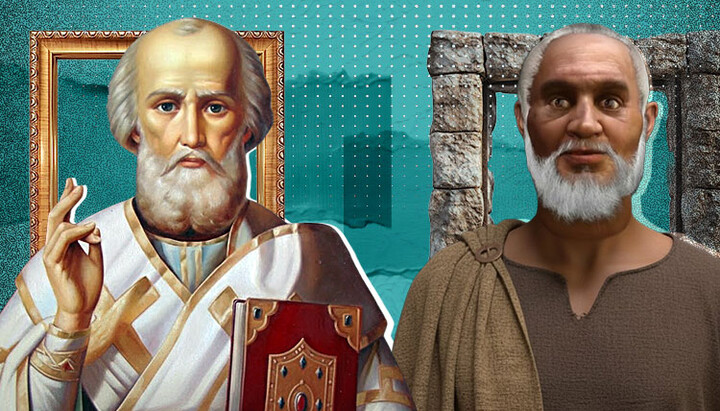
The face of the confessor saint. Photo: UOJ
Today is the feast day of St. Nicholas of Myra. For most people, it is a day of gifts and Christmas fairy tales. Yet behind the golden covers of the saint’s icons lies a story many would rather forget – a story of living, tangible pain.
In 1953, scientists received permission from the Vatican to open the saint’s tomb in the Italian city of Bari – for the first time in nine centuries. The lead expert was Professor Luigi Martino, an anatomist. A pragmatist. A man of numbers. He worked with the relics for forty days. What he saw shook him. Before him lay the bones of a man who had passed through a true hell.
Special operation in Myra
The year is 1087. Three ships from Bari. A special operation. Sailors burst into a church in Myra of Lycia, in present-day Turkey. The city is on the brink of capture by the Saracens. Chronicles say they acted harshly. They smashed the marble floor with crowbars. When the lid of the sarcophagus was pushed aside, fragrance filled the church.
The chronicler Nikephoros, a participant in the raid, wrote: “When we moved the lid of the tomb, a fragrance spread through the church such as we had never known. The bones of the saint floated in clear liquid, and each of us felt fear and awe.”
The sailors were in a hurry. They scooped up the bones with their hands, wrapping the wet remains in tunics. In the chaos, some small fragments were left at the bottom. They would later be taken by the Venetians. Modern DNA analysis would confirm that the bones in Bari and those in Venice belonged to the same person.
The physiology of asceticism
Professor Martino began his study. The first finding – this man ate almost exclusively plant-based food. No meat. No excess. Before us was a strict ascetic.
Imagine a bishop of a wealthy port city. Abundance all around. Fishermen bring fresh catch. The market sells succulent lamb. Wealthy citizens invite him to lavish feasts. And he refuses. He eats like a poor monk.
Why? Because St. Nicholas remembered the hungry and the destitute.
He knew that as long as there was even one child without bread in his city, the bishop had no right to satiety. His body was an instrument of prayer, not a source of pleasure.
The saint’s height was about 167 centimeters. A strong, lean man. Accustomed to walking a great deal. To standing for long hours.
The prison record
X-rays of the bones revealed more about the saint than any invented legend. Martino diagnosed severe arthritis of the spine and pelvis. The vertebrae were deformed. The joints damaged.
In medicine, this is a marker of many years spent in dampness and cold. The story unfolds. The year is 303. Emperor Diocletian unleashes a machine of repression. The saint is thrown into prison. A Roman prison is a stone sack below ground level. Cold. Mold. Icy water underfoot. St. Nicholas spent years there.
Try to feel this pain. Every movement is an effort. Every morning a struggle with a numb body. Rising from the wooden bunk – sharp pain. Ascending the ambo – piercing pain. He lived with this for decades. He understands us when we suffer. He went through it himself.
The injury of fidelity
The most powerful discovery awaited Martino when he examined the skull. The saint’s nasal bridge was crushed. The nose had been broken and healed improperly, with severe distortion. There were traces of damage on the cheekbones.
This is not the face from an icon. This is the face of a confessor.
Imagine the scene. A Roman interrogator demands renunciation. “Sprinkle a pinch of incense on the emperor’s altar, and you are free.” The saint remains silent. A blow from a heavy object to the face. The crunch of bone. Blood on the clothes. He falls, but rises. And speaks of Christ again.
They beat him professionally. They tried to break his will. They did not succeed. St. Nicholas carried that crooked nose to the end of his days as his highest reward – as an order for fidelity that cannot be bought.
The mystery of moist bones
After the work was completed in 1958, the relics were returned to the sarcophagus. Scientists recorded that the bones were dry. But decades later, the tomb again filled with clear liquid.
The Italians call it Manna di San Nicola. Chemists can only shrug.
It is almost distilled water. A sterile medium. With no signs of decay.
Bones in a damp crypt below sea level should turn to dust within a hundred years. That is the natural process of decomposition. But here everything is reversed. The saint’s bones remain dense and white. They exude moisture.
Science has no explanation. Faith has an answer. It is a sign of the victory of spirit over matter.
Our contemporary
Why should we know these details? To understand that St. Nicholas is not a fairy-tale character. He is our companion in today’s trials.
Today, when believers are deprived of churches, when we are pushed into a ghetto of silence, look at that broken nose. At those joints mutilated by prison. The Roman Empire was all-powerful. It had legions, laws, courts. Diocletian considered himself a god. He could crush anyone. But where is Diocletian now? His palaces are ruins. His empire has crumbled. The names of his servants are forgotten.
And the name of St. Nicholas is known to billions. His tormented bones, seventeen centuries later, give life. They exude water in the desert of our unbelief.
This is victory. Not in golden domes. But in fidelity that neither prison nor a blow to the face can break. We pray to him not as to a distant heavenly figure, but as to a man who knows the price of suffering.
Read also
Facade of bones and facade of light
Antoni Gaudí spent forty-three years building a church in Barcelona, knowing that this construction was for the ages.
Trial of a dead pope
Once in Rome, the body of a deceased pope was seated on the throne and put on trial. The accusation relied on a church canon that had once saved his see.
Monastery built in defiance of king
When Orthodox believers in Minsk were left with just one church, townspeople decided to build another – and even a royal decree did not stop them.
Young Mother and Sleeping Christ
Michelangelo carved a Virgin Mary who looks younger than her Son – and signed his name in marble for the only time in his life. Neither of these peculiarities was accidental.
Orthodox books from a Uniate printing press
In the 18th century, Uniate monks at Pochaiv printed books used in prayer by Orthodox Christians and Old Believers alike.
The story of the honey brotherhood
The Mogilev Brotherhood began with members pooling money to brew honey drinks for feast days – and eventually grew to have its own printing press.