Don’t put life off until “after the war” – Elder Paisios’s farewell lesson
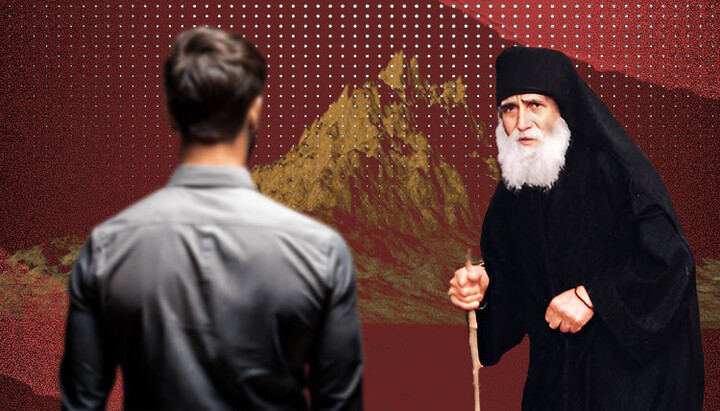
"Do not count the days, weigh them." Photo: UOJ
A winter evening on Athos falls swiftly. It seems the sun had only just gilded the tops of the cypresses, and now a damp fog is already crawling in from the sea toward the Panagouda cell, wrapping everything around in a thick white shroud. The woods grow quiet and biting-cold. We sit on the same wooden stumps by the wall where we have sat so many times – but today the air trembles with a special tension. This is farewell.
We came to Elder Paisios not with theological questions and not for a miracle. We brought him our leaden exhaustion. We are like people stuck in a railway-station waiting hall where all the trains have been canceled. We are not living – we are waiting. We are afraid to make plans, afraid to rejoice, afraid to dream.
Our life has turned into an endless rough draft that we hope to rewrite in clean copy “when all this is over.”
“Geronda,” we finally dare to break the silence, “how much longer must we endure? We have no strength left. We wake up and fall asleep in fear. Has God really forgotten us? Doesn’t He see what is happening?”
The question hangs in the cold air. We expect the elder to begin speaking about sins or the need for repentance. But he is silent. He looks at us not like a strict teacher, but like a father whose children have been wounded in war.
God in the trenches
Elder Paisios tosses more wood into the small stove. The fire lights his face, carved by wrinkles. He knows what we are asking. He knows how bullets whistle, how the wounded cry out, and how terrifying it is when the line goes dead.
“Do you think God is far away right now, because everything around you is thunder?” he asks softly. “Then I will tell you this – God is never as close to a person as He is during trials.”
He recalls his years in the army. The elder says that in war, when death walks beside you, Christ descends into the dirtiest trenches.
“God has not forgotten you,” Abba Paisios says firmly, and his voice sounds like an order issued to a platoon – an order that is not up for debate. “He is not merely holding your hand. He is holding you in His embrace. But because of the pain and the roaring, you cannot yet feel His warmth.”
The saint explains to us a law of spiritual physics he discovered under shelling. The good God permits trials not to destroy us, but to help us. Where the pain is greatest – there Christ is. He is like a tender mother: when a child hurts, she presses the child to her all the more tightly.
We feel a little lighter. The thought that we are not abandoned – that, on the contrary, we are in the very epicenter of God’s attention – warms the chilled soul. But the main question remains.
The stolen-time syndrome
“But Geronda, how are we supposed to live now?” we ask. “We’ve put everything off until later. We don’t buy new things, we don’t fix the house, we don’t even let ourselves smile without necessity. It feels as if living now is a betrayal of grief. We are simply waiting for the war to end.”
The elder looks straight into our eyes. He sees the trap that has ensnared millions.
“Tangalashka” (as he calls the devil) “is a clever thief,” the geronda says. “He wants to steal Eternity from you – but he has decided to begin by stealing your ‘today.’”
He explains: when we live only in fear of the future or in the pain of the past, we lose the only moment in which we can truly meet God – the present. You cannot live life as a “draft.”
“Don’t count the days,” the elder advises. “Weigh them.”
The phrase strikes us. We are used to measuring time by calendars and news bulletins. But the elder offers another kind of measure.
“One day lived in fear and grumbling weighs nothing, even if the world around you is peaceful,” he continues. “But one day under fire, when you comforted your neighbor, shared a piece of bread, or simply did not let hatred into your heart – that is a gold ingot for Eternity.”
The saint teaches us not to put life off. If you can do something good today – do it. If you can embrace someone you love – embrace them. If you can pray – pray.
Do not hand your day over to anxiety, the elder says. Do what you can, and in what you cannot, entrust yourself to God. If you keep peace within yourself, then God will give peace to the earth as well.
We understand: the war is not only on maps. The main front line runs straight through our heart. If we let fear paralyze us, we will lose our personal battle even if a bullet never touches us.
Connection with the Commander
Dusk thickens. It is time to go. We do not want to leave this cell where everything feels so warm and safe. But we know we must return to a world that is still storming.
The elder walks us to the gate. He gives no political forecasts. He names no dates. But he gives something greater – hope.
“Hold on a little longer,” he says, looking into the darkening sky where the first stars are lighting up. “Clouds, no matter how black, always break apart. And you will see the sun again. History is governed by God, not by the madness of men.”
He lays a hand on our shoulder like an old, seasoned radio operator – to a young soldier.
“The main thing is this – don’t lose contact with the Commander. Keep the frequency clean. Prayer, trust, a good thought – that is your radio. While you are in touch with God, you are not surrounded. You are under cover.”
We walk down the path toward the sea. In our pocket the phone buzzes with yet another set of headlines, but we are not as afraid now. The backpack on our shoulders feels lighter. We understood the main thing: life does not begin “after.” Life is happening now. And in this life, even in the middle of winter and worry, we are not alone. The Commander is on the line.
Read also
Prayer commemorations instead of loving embraces
At every Orthodox wedding, the choir sings a hymn to the martyrs. For families separated by war, these words carry a special meaning.
Honest atheism vs. spiritual hypocrisy
The 70th anniversary of Albert Camus’s Nobel Prize recalls an uncompromising challenge to Christianity. An honest unbeliever brings theology back to the mystery of the Cross.
The valley of trouble and the gateway of hope
One soldier buried an expensive cloak and some gold beneath his tent. Because of this, all Israel lost a battle. Why did one man’s sin bring disaster upon an entire nation?
From love spells to bishop's throne
Antioch’s most powerful sorcerer sent demons against a devout young Christian woman three times – and failed every time. In the end, a demon himself revealed the truth that led to his conversion.
The Weeping Queen of Blachernae
On the night of the Feast of the Protection, only two people witnessed the miracle in the Church of Blachernae. Everyone else prayed and saw nothing. Yet they, too, received grace.
Deadly spiral of human hatred
The tragedy of Lebanon's civil war lays bare how dehumanization and fear can turn human beings into monsters.