God with our blood type: Why Christmas isn’t just a birthday
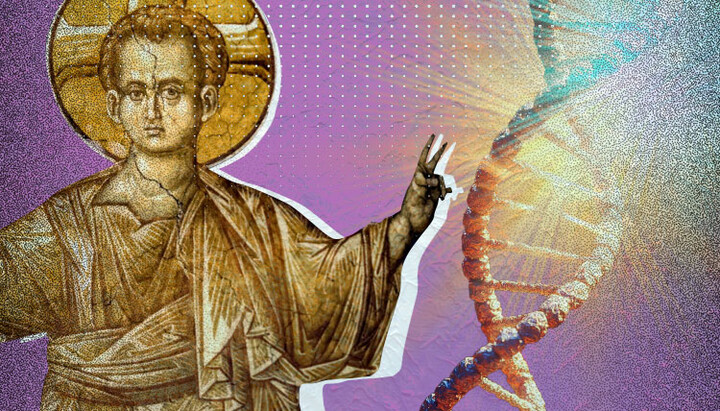
Christ brought the world a new DNA in which divinity is inseparably bound to humanity. Photo: UOJ
If we think that January 7 is merely the “birthday of a good Man,” or just an excuse to be kinder, then we have understood nothing. Christianity is not an ethics course and not a personal-growth workshop. What happened in Bethlehem looks far more like an unimaginably complex biological operation than a children’s holiday.
We celebrate the day when the Creator of galaxies, the Absolute Spirit who has no form and no size, became the biological species Homo sapiens. Let that medical fact sink in. God acquired anatomy. He acquired a liver, kidneys, lungs that breathe our air. He acquired a nervous system capable of feeling pain. And most of all, He acquired blood. His own blood type, His own Rh factor, His own set of leukocytes.
This is not a metaphor. It is a radical mutation in the very structure of being. The Immortal united Himself with the mortal. Why this abasement? Why would the Architect become a brick in the wall?
Diagnosis: genetic failure
To grasp the meaning of Christmas, we have to look honestly at our medical chart. Humanity is terminally ill. This is not a sniffle you can cure by reading the right book or listening to a lecture on morality.
Our diagnosis is corruption. After the Fall, a virus of death penetrated our nature, our “spiritual genetics.”
We are born in order to die. Our cells age, our will is paralyzed by sin, our mind is clouded. We are a corrupted file.
God could not heal us remotely. He could not simply shout from Heaven, “Stop being sick!” He could not send us another tablet of rules. Rules do not cure cancer. An instruction manual cannot raise the dead.
We needed a Donor. We needed healthy, eternal life poured into humanity. But there was nowhere to take it from – everyone was infected.
And then the Physician makes the decision to lie down on the operating table Himself. God enters the quarantine zone called Earth. He takes upon Himself our infected nature – assumes a human body and a human soul – in order to heal them from within by His divinity.
Donor blood
In the fourth century, Saint Athanasius the Great gave the formula that still detonates the mind of any philosopher: “God became man so that man might become god.”
Not “so that man might become nice.” Not “so that man might stop swearing.” But so that man might become god – by grace. This is called theosis, or deification.
Christmas is the beginning of a great blood transfusion.
Christ does not merely teach us how to live. He grafts His life into us. Like a wild, dying apple tree into which a branch of a noble cultivar is grafted so that new sap begins to surge through the trunk.
In Bethlehem’s manger lies not merely an Infant. There lies the Donor who brought into the universe a new DNA – DNA in which there is no death. He united in Himself two natures: the divine and the human. Now they are inseparable. Through Christ, divinity has been “stitched” into humanity forever.
This means the way to Heaven is opened to us not juridically (as though our debts were merely forgiven), but ontologically (our nature has been changed).
We are family now
In a world where human life has been cheapened into casualty reports, where blood is spilled daily, the thought of the “Blood of God” sounds piercing. We are used to calling ourselves “slaves of God.” But Christmas changes our status.
We are no longer merely creatures molded from clay. We are relatives. God now has human kin – us. And we have a Father – not figuratively, but in the most direct, “genetic” sense.
When we approach the Chalice of Communion, we receive the Body and Blood of Christ. We literally become of one blood with Him. His Eternity begins to flow in our veins.
This is a crushing blow to our despondency and our inferiority complex. You cannot feel like “biowaste,” you cannot call yourself an “accident,” if God Himself has made Himself your kin. Your body is not merely a shell that will rot in the grave. It is a sacred vessel in which God can live.
The properties of the new nature
But genetics is not only status. It is also the manifestation of traits. If I claim that Christ’s life flows in me, then the “symptoms” should correspond.
Deification is not glowing in the dark or levitating over the couch. Mysticism has nothing to do with it.
Deification is when your reactions to the world begin to match Christ’s reactions.
A person with the “old genetics” responds to a blow with a blow in return. A person with the “gene of God” responds by turning the other cheek – or by pitying the one who strikes. An ordinary person fears death. A person in whom Christ lives knows that there is no death – only a door. An ordinary person lives for himself. A “genetic relative” of God cannot be happy while someone nearby is suffering.
It is a hard mutation. The old man in us resists – he wants to live by jungle law. But Christmas has already happened. The “vaccine” of immortality has already been injected into the organism of humanity.
Look in the mirror today. You will see not merely a tired face, not merely a set of wrinkles and scars. You will see a bearer of the divine nature.
God became one of us so that we might become like Him. The operation succeeded. Now comes rehabilitation – learning to live with this new, fiery heart that has been transplanted into us.
Read also
Prayer commemorations instead of loving embraces
At every Orthodox wedding, the choir sings a hymn to the martyrs. For families separated by war, these words carry a special meaning.
Honest atheism vs. spiritual hypocrisy
The 70th anniversary of Albert Camus’s Nobel Prize recalls an uncompromising challenge to Christianity. An honest unbeliever brings theology back to the mystery of the Cross.
The valley of trouble and the gateway of hope
One soldier buried an expensive cloak and some gold beneath his tent. Because of this, all Israel lost a battle. Why did one man’s sin bring disaster upon an entire nation?
From love spells to bishop's throne
Antioch’s most powerful sorcerer sent demons against a devout young Christian woman three times – and failed every time. In the end, a demon himself revealed the truth that led to his conversion.
The Weeping Queen of Blachernae
On the night of the Feast of the Protection, only two people witnessed the miracle in the Church of Blachernae. Everyone else prayed and saw nothing. Yet they, too, received grace.
Deadly spiral of human hatred
The tragedy of Lebanon's civil war lays bare how dehumanization and fear can turn human beings into monsters.