Russian Сhurch comments on learning Ukrainian in the occupied territories
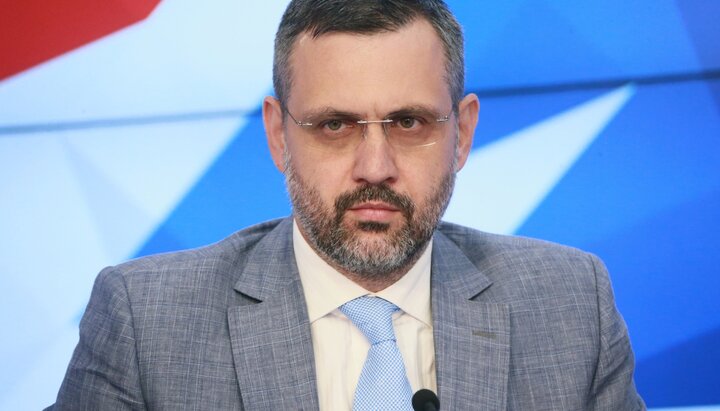
Vladimir Legoyda, Сhairman of the Synodal Department for Relations between the Church, Society and the Media of the Russian Orthodox Church, considers it reasonable to preserve the study of the Ukrainian language in the territories occupied by the Russian Federation. He wrote about this in his Telegram channel.
“We are not abolishing the Ukrainian language – everything should be right,” Legoyda said.
Earlier, the Ministry of Education of the Russian Federation reported that schoolchildren in the occupied territories of Ukraine will be able to study the Ukrainian language as a native tongue or optionally.
As the UOJ reported, by decision of the Department of General, Preschool and Secondary Education of Ukraine, the school curriculum will include works by Russian writers, whose creativity is related with Ukraine.
Read also
Medieval сhurch сrumbles as Culture Ministry сites missing agreement
The 14th–15th-century St. Nicholas Church in Chesnyky, Ivano-Frankivsk Region, is falling into disrepair.
Poland сondemns Lviv Regional Council's decision to declare 2007 year of UPA
Polish Prime Minister Donald Tusk says the Lviv Regional Council's decision to dedicate 2027 to the UPA and Roman Shukhevych is harmful to Ukraine.
OCU seeks court recognition of ownership of seized Cherkasy cathedral
The Cherkasy Regional Commercial Court will hear an OCU lawsuit seeking ownership of St. Michael's Cathedral, which was seized from UOC believers.
Lithuanian bishop: Ukraine is no model for believers' rights
Vicar of Vilnius Diocese voices concern over attempts to import Ukraine's religious conflict into Lithuania.
Hundreds of believers honor St. Alexis of Carpatho-Russia in Khust Eparchy
At the St. Nicholas Monastery in the village of Iza-Karputlash, Metropolitan Mark of Khust led a festive liturgy, concelebrated by six metropolitans, five archbishops and three bishops.
Court upholds UOC parish appeal in Voloshky over OCU switch dispute
The Northern Commercial Court of Appeal has upheld the appeal of the St. Nicholas parish of the UOC in the village of Voloshky, Volyn region, in a dispute over a transfer to the OCU.