Strangers in their own palaces: Why Eliot called Christmas a “bitter agony”
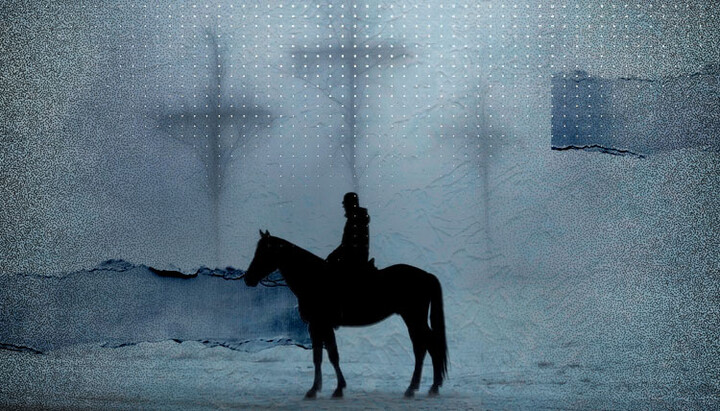
Loneliness in the world after encountering God. Photo: UOJ
We took down the tree. Finished the salads. Unplugged the garlands. The calendar, inexorable, points to mid-January. Outside – gray weekdays, news bulletins, work, black ice, routine. The feast we prepared for throughout the fast flared up and went out. Many people now feel a strange emptiness – as if we were fooled, as if the miracle did not “work.”
If you recognize that feeling of post-holiday hangover, if it’s hard for you to return to your familiar world – then you need to read one poem.
In 1927, Thomas Stearns Eliot, a Nobel laureate and one of the most demanding poets of the twentieth century, wrote Journey of the Magi.
It is an antidote text. It rinses the sticky Christmas “syrup” from our eyes and shows a harder truth: meeting God is not always joy. Often it is a catastrophe for the life you had before.
A business trip into hell
Eliot begins not with “good tidings,” but with the physiology of exhaustion. He takes his opening from an actual Christmas sermon preached by Bishop Lancelot Andrewes in 1622, giving the poem a documentary weight.
The narrator is one of the Magi. But he is not a fairytale sage. He is an old, tired man, exhausted to the point of death. He remembers that road not as pilgrimage, but as the worst work trip of his life.
“A cold coming we had of it,
Just the worst time of the year
For a journey, and such a long journey:
The ways deep and the weather sharp,
The very dead of winter.”
Instead of pious reverie – household grime. The camels "galled, sore-footed, refractory, lying down in the melting snow." The camel-men cursed, demanding “liquor and women,” and bolt at the first chance. Fires went out. Cities and towns – hostile and unfriendly; villages – dirty. And high prices. Eliot underlines that detail with grim practicality. Finally, he says:
"A hard time we had of it.
At the end we preferred to travel all night,
Sleeping in snatches,
With the voices singing in our ears, saying
That this was all folly."
This is not tourism. It is the grinding labor of faith.
How often we expect spiritual life to feel like flight and inspiration – and receive this instead: cold, dirt, resistance from the world, and our own aching joints. Eliot is brutally honest: the road to God can be a "cold coming."
Three trees on a low sky
And then the Magi arrive. So what? We are waiting for culmination – radiance, angels, sweetness.
Eliot snaps those expectations with one dry phrase, as if stamped on a form: “It was (you may say) satisfactory.”
“Satisfactory.” Not “magnificent.” Not “overwhelming.” Why? Because Eliot is a master of symbol. He knows you cannot look at Christmas without Pascha. The shadow of the Cross already lies across the manger.
As the Magi move down into the valley, they begin to see signs. They do not yet understand them – but we, the readers, flinch with recognition.
- “three trees on the low sky,” – Golgotha. Three crosses are already rising on the horizon of history.
- “an old white horse galloped away in the meadow,” – a hint that can be read as apocalyptic, or victorious, or both.
- “vine-leaves over the lintel” – the wine of Communion, the Blood that will be poured out.
- “hands dicing for pieces of silver” – not just gambling, but a glint of betrayal, an echo of Judas.
The Child is still swaddled – and yet the world is already preparing treachery and execution. The Magus looks at it all and does not feel “holiday.” He feels the weight of prophecy.
Strangers in their own palaces
But the most important part of the poem is its ending.
The Magi return home. It should be a happy ending: warm palaces, soft cushions, servants, sherbet – everything as before. And that is precisely the tragedy: everything is as before, but they are not.
"We returned to our places, these Kingdoms,
But no longer at ease here, in the old dispensation,
With an alien people clutching their gods.
I should be glad of another death."
Eliot’s line hits like a diagnosis: “no longer at ease here, in the old dispensation,” among those who clutch their idols.
The phrase “old dispensation” is not just mood – it is a theological term: the old order of things. The world you once belonged to.
The Magus looks at his subjects, his kin, his friends – and sees “strange” people. He watches them bow to their wooden gods, live by their little passions. Once, he was a part of this. Now he is an alien man.
That is exactly what overtakes us after the feast. We go back to work, listen to colleagues talk about politics, discounts, gossip – and suddenly it’s cramped. Airless.
As if we have become emigrants inside our own life. Same apartment, same city – but we are alien people.
Eliot tells us: this is normal. Not “depression,” but a symptom that the meeting truly happened. Whoever has truly seen Christ will never again settle comfortably into the old order. He will always feel a draft of Eternity.
Death as medicine
The poem ends with a line that may sound bleak – but is, in fact, full of hope.
The old Magus asks himself: what was that journey for – birth, or death?
"I had seen birth and death,
But had thought they were different..."
He has seen something that kills his former world from within. The Nativity of Christ becomes the death of his old self – the pagan, the “normal man” content with life as it was.
And he says, with startling clarity: “I should be glad of another death.”
Not because he loves darkness, but because he no longer wants to live forever in an old, cozy, dead world. He is ready to die in order to be finally united with the One he saw in the manger.
The death of the old “I” hurts. That is the “bitter agony” Eliot names – but without that death there is no resurrection.
So if today, looking at a gray January landscape, you feel uneasy – don’t be afraid. Don’t rush to drown it out with series and noise.
It is a good pain. A true one. A sign that you, like Eliot’s old Magus, did make it there. You saw it. And now you are a stranger in a kingdom of idols – which is the surest sign that your real citizenship is already somewhere else.
Read also
Why were holy monasteries turned into state prisons?
The history of Christian Europe preserves the memory of times when monasteries served as places of exile imposed by the state. Within their walls, the fates of monarchs and righteous men were decided.
A shepherd boy with a letter from Christ to French king
In the summer of 1212, thousands of pilgrims carrying staffs waited for the sea to part before them. Later chroniclers added ships, slave traders, and a pope's lament to their story.
Facade of bones and facade of light
Antoni Gaudí spent forty-three years building a church in Barcelona, knowing that this construction was for the ages.
Trial of a dead pope
Once in Rome, the body of a deceased pope was seated on the throne and put on trial. The accusation relied on a church canon that had once saved his see.
Monastery built in defiance of king
When Orthodox believers in Minsk were left with just one church, townspeople decided to build another – and even a royal decree did not stop them.
Young Mother and Sleeping Christ
Michelangelo carved a Virgin Mary who looks younger than her Son – and signed his name in marble for the only time in his life. Neither of these peculiarities was accidental.