Theology of touch: Why God touched lepers and embraced enemies
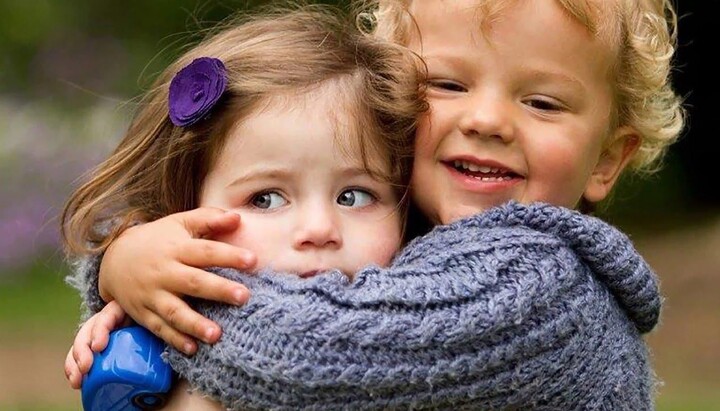
We are called to be "God's hands" in this world. Photo: open sources
January 21 is International Hugging Day. But our conversation is not about “huggies”. It is about the mystery of perichoresis – mutual indwelling. When people embrace, they exchange not only bodily warmth, but also “the warmth of the spirit”. In the sacred kiss and in a friendly embrace, the saints passed from heart to heart their “peaceful spirit” without a single word.
The modern world is becoming the glass kingdom of the Snow Queen. Our fingers run for kilometers across smartphone screens; we see thousands of faces in monitor windows, and yet we do not feel their warmth and breath. It is a dead, empty, cold realm of loveless loneliness.
We live in an era of digital autism. Existentialist philosophers – from Sartre to Heidegger – spoke at length about man’s abandonment in the world. We are born and we die alone, locked inside the cocoon of our own “I”.
A breaker of taboos
The theology of touch begins with the Savior Himself. Christ repeatedly violated the laws of ritual purity. He touches lepers – those from whom society recoils in disgust – and He allows a woman with a hemorrhage to touch Him, which was considered the same as defilement.
The Jews painted tombs with whitewash so that, God forbid, no one would touch a place of burial – but Christ takes the dead daughter of Jairus by the hand, and without fear touches the bier where the dead body of the widow of Nain’s son lies. All of this ran directly against ritual law.
But the theology of touch is not merely the demolition of a religious taboo. Faith is not only “from hearing” – it is also from touch.
The Apostle Thomas is the first practitioner of the theology of touch. He touches the wounds of the Risen Christ. And the very fact that the Savior does not appear in a radiant, “photoshopped” body with every trace of pain erased – already says more than a thousand sermons.
The Lord shows His wounds to Thomas as an eternal witness to His suffering for each of us. The theology of loving touch entered the liturgies of the first Christians, where they offered the “kiss of peace” – that is, they embraced and kissed one another, confessing a common faith.
The universal embrace
What is the theology of touch in essence – and how is it practiced? Sin is separation; it is the fragmentation of one humanity into billions of shards that cut one another whenever they try to draw near. Against this stands the miracle of the embrace.
To embrace, you must open your arms. In that moment your chest – where the heart is – becomes completely unprotected. You open your very center to another human being.
This is Christ’s gesture on the Cross.
Saint Gregory of Nyssa saw in the outstretched arms of the Savior a “universal embrace” by which God gathers all creation to Himself in order to heal it. When we embrace our neighbor, we imitate that gesture. We are saying, “I take off my armor. I entrust you with my vulnerability, so that I may heal yours.”
Descending into another’s hell
When a person is drowning in grief, any consoling words can sound like mockery. The only thing you can do is put your arms around the suffering one’s shoulders and draw them close. It means you have entered their personal hell. By your warmth and love you become present within their sorrow. You pull them up from that abyss.
My favorite image in the Gospel story is the outstretched arms of the Heavenly Father, embracing with immeasurable love His wayward prodigal son. The son still reeks of pigs and road dust. But the Father does not keep him at a distance, waiting for explanations. He collapses the distance to zero. In that embrace is the whole essence of the Gospel.
Bodily prayer
In hospices, or at the bedside of a dying loved one, the theology of touch reveals its utmost power. When a doctor or volunteer, in a moment of hopelessness, simply takes the dying person by the hand – or embraces their relatives – medicine ends and something else begins. A quiet force passes from hand to hand, and the person grows calm.
To hold someone’s hand in their final hours is the purest form of “bodily prayer”.
You touch the hand that is about to let go of this world, and through that contact you testify: “You are not alone. I am here. God is here.” Your palm becomes a visible sign of the invisible presence of the Creator.
The biochemistry of miracle
The first experience of God that a human being receives is not the reading of Scripture, but the touch of a mother’s warmth. When an infant cries from an unexplainable terror before the vast world, it does not need arguments. It needs touch. In neonatology there is the “kangaroo method”, when a premature baby is placed on the mother’s chest, skin to skin. The biochemistry of this process is a great miracle. The rhythm of the mother’s heart steadies the baby’s breathing.
This is a living illustration of Saint John of Damascus’s words that the body is a “fellowship”. Through a mother’s touch, divine peace is transmitted. Here the flesh becomes a channel through which flows that peace “which surpasses all understanding”.
When a mother presses a crying child to herself, she does not merely calm the nervous system. She transmits the fundamental truth of existence: “You are not alone. You are loved.”
It is very important that those who live as a family understand how necessary it is to embrace one another at least once a day. Children deprived of parental tenderness grow up hardened and no longer recognize love even from their parents. Without these embraces the child’s soul becomes calloused; they grow into a spiritual invalid.
The liturgy of the handshake
There was a case with a volunteer who fed the homeless. One of them said, “Thank you not only for the food, but also for not putting on gloves when you shook my hand.” An ordinary handshake without disgust is an act of recognizing human dignity. By this you tear down the wall between a “clean” self and an “unclean” world, bringing into it Christ’s healing.
The philosopher of dialogue Martin Buber taught that a person becomes a person only through encounter with another. Buber distinguished two kinds of relations: the consumerist and the sacred. When we simply pass someone by, they are for us an “It”, part of the scenery, a function. But in the moment of a sincere embrace there is a breakthrough into the sacred. “All real life is meeting,” the philosopher taught.
In a soteriological sense this means: we cannot be saved alone.
An embrace is the moment when two isolated persons cease being objects to one another and become a single spiritual whole.
In this gesture we overcome our finitude and touch Eternity, which is always dialogical.
The face as commandment
Another thinker, Emmanuel Levinas, built his philosophy on the “epiphany of the Face” – the revelation of the other person’s visage as a wordless commandment: “Thou shalt not kill”.
The face of the other is the highest form of our responsibility.
When people shoot and kill one another, it is, in essence, the highest degree of satanism one can devise on earth. And the highest form of cynicism and profanation of Christianity is to raise murder to the level of virtue.
The hands of God
We live in a world where, as Jean-Paul Sartre said, “Hell is other people”. And we can break that hell directly through the theology of touch.
We must understand that every everyday handshake, every sincere embrace, is a small liturgy.
In a world where everything strives toward division and entropy, touch becomes an act of resistance against chaos.
Saint Maximus the Confessor taught that man’s task is “to unite what is divided”. An embrace is precisely the symbol of such a universal joining. In it, for a moment, the boundary between my “I” and your “You” is erased. We acknowledge the divine dignity of the other person by touching their flesh as a sacred vessel in which the Spirit dwells.
We must learn this language again – not to “grab” the world, but to “touch” it with reverence.
The theology of touch calls us to come out from behind our smartphone screens and return ourselves to the reality of real life, where there is so much pain – a life that needs our love.
And may every embrace become a “Little Pascha” – a witness that life has conquered death, and love has taken on flesh.
For if God did not disdain to touch our dust-like nature, then we have no right to refuse our touch to those beside us. In the end, at the Last Judgment we will be asked not how many clever books we have read, but how many suffering souls we warmed with the heat of our hands. For it is precisely where the Other begins that the Kingdom of Heaven begins.
The theology of touch is not a theory, but a practice of presence. We are called to be “the hands of God” in this world. When we embrace the suffering – we comfort Christ. When we shake an enemy’s hand – we shatter hell. When we feed the hungry, touching their palm – we commune with the mystery of the Incarnation. And these are not philosophical metaphors. This is the plain, unvarnished truth of life.
Read also
Drinking priest, or the flip side of parish life
In his epistle, the Apostle Jude describes a scene familiar to anyone who has seen a church meal turn into a drinking party.
A lesson from a speechless donkey
The famous seer struck his donkey three times for refusing to go forward. All the while, she was saving his life – and seeing what he could not.
The time when the soul ripens
Modern society has turned youth into a cult and old age into a period of merely “living out one’s days.” The Christian perspective reveals the profound spiritual meaning of our later years.
Faith is not a checker piece in a spectator sport
Arguments about faith on social media increasingly resemble no-holds-barred fights. We turn to a saint who, sixteen centuries ago, knew how to speak to those interested only in turning theology into a combat arena.
The metropolitan who fought with a pen
St. Cyprian of Kyiv was robbed, expelled, and barred from his see. He answered with letters, books, and canons – and before his death, forgave everyone.
Loneliness under one roof
Spouses can share a home for years, raise children, and faithfully attend church – yet remain strangers to each other.