A mirror for the pastor: a priest's morality is a matter of safety
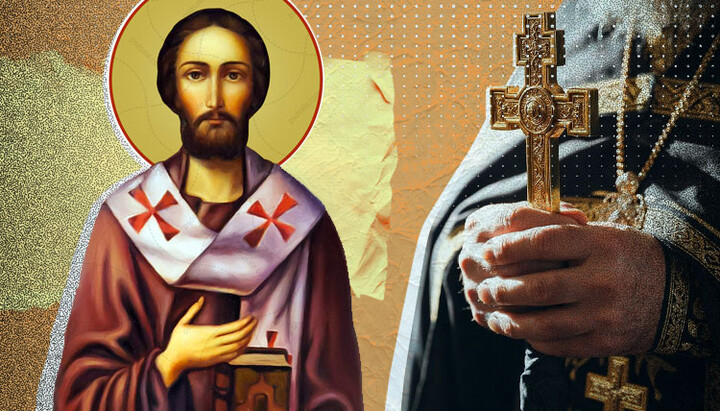
Apostle Timothy, an example for the clergy. Photo: UOJ
Timothy was probably in his early twenties when the Apostle Paul appointed him to head one of the most corrupt communities in the ancient world.
In Ephesus stood the temple of Artemis – one of the Seven Wonders of the world. Thousands of priestess-prostitutes, vulgar processions where drunkenness, debauchery and violence were considered acts of worship to the goddess. The devout young man with a weak stomach and a timid character was thrown in this cauldron. Paul writes to the Corinthians: "See that he may be with you without fear" (1 Cor. 16:10). That is, he needed to be protected even from his own flock.
He had no administrative resources. No army. No political influence. He had only one weapon: his unique personality.
Paul writes to him: "Be an example to the believers in word, in conduct, in love, in spirit, in faith, in purity" (1 Tim. 4:12).
Typos ("example") literally translates as "imprint," "matrix," "stamp." Timothy was a matrix. And if the matrix is crooked, all the parts stamped from it will be defective.
What happens when a priest breaks down
We are used to thinking of a priest as a "ritual specialist". He baptizes, performs weddings, conducts funerals, etc. We come to him for a service. He performs it. We part ways. But that's not how it works.
A priest is not a ritual services factory. A priest is the load-bearing wall of a building. Or, if you will, a reactor.
If a crack appears in a building, it will collapse on people's heads. If a reactor malfunctions, contamination begins. Saint John Chrysostom wrote: "The soul of a priest must be purer than the rays of the sun itself, so that the Holy Spirit does not leave him. If a priest sins, he becomes a wolf within the flock."
This isn’t about a priest having to be perfect. It’s about the fact that if he lives a double life – saying one thing and doing another – he becomes a source of radiation. Invisible, yet deadly.
Vicarious trauma. Psychologists know this term. A therapist can be "infected" by a patient's trauma if they don't protect their boundaries. Spiritually, it works the other way around as well. A priest in depression, cynicism, or burnout transmits this state through confessions, sermons, and the liturgy.
Parishioners come for comfort but leave with heaviness. They don't understand what happened. They just feel: something's not right. The Geiger counter of the soul starts crackling.
Take heed to yourself: safety protocol
Paul writes to Timothy: "Take heed to yourself and to the doctrine. Continue in them, for in doing this you will save both yourself and those who hear you" (1 Tim. 4:16).
This is the oxygen mask rule on an airplane. If you're suffocating yourself, you can't help the child next to you. If you're drowning spiritually yourself, you can't pull out someone who's drowning.
Paul doesn't say: "Learn theology." He says: "Watch your soul. Check it every day. Like a pilot checks devices before takeoff."
Because if a priest doesn't watch himself, he becomes dangerous.
He's like a doctor operating with dirty hands. The patient dies not from the disease, but from the infection brought in by the doctor. Saint Gregory the Dialogist wrote: “The words of a preacher lose their power if his life does not correspond to his words.”
We sense falsehood. Always. We may not understand what's wrong. But we feel it. A priest speaks of humility but is proud himself. Speaks of forgiveness but is vindictive himself. Speaks of mercy but is cruel to those weaker than him. So his words crash against the wall of his life and fall dead to the floor.
False teachers: when words are lifeless
In Ephesus, where Timothy served, there were false teachers. Paul mentions them by name: Hymenaeus and Alexander. They turned faith into chatter. They spoke beautifully but lived corruptly. Paul writes that they “have suffered shipwreck in the faith” (1 Tim. 1:19). Why? Because they rejected good conscience.
Faith without morality drowns.
One can know all the dogmas. One can quote the Church Fathers. One can serve liturgy with perfect accuracy. But if conscience is silent, if there's emptiness or rot inside, the ship goes to the bottom. And the passengers (parishioners) drown along with the captain.
Timothy's task was not to out-argue the false teachers intellectually. His weapon was purity, agnia – innocence, transparency, absence of filth. He couldn't defeat them with words. He defeated them with his life.
Sacraments are valid, but the pipe is rusty
People often say: "Sacraments are valid regardless of the priest's morality. Christ acts through an unworthy minister." This is true. Dogmatic truth. But this doesn't cancel another truth: the community is poisoned by an atmosphere of lies.
It's like clean water flowing through a rusty pipe. You can drink it, but it's unpleasant. And over time, rust corrodes the pipe completely.
Paul warns: "Do not lay hands on anyone hastily, nor share in other people's sins" (1 Tim. 5:22).
The sin of the ordinand falls upon the one who ordains. This is a direct connection. This is radiation.
If a bishop ordains someone who isn't ready, who lies, who enters the priesthood not for Christ's sake but for money or status, this sin falls on the bishop and on the entire parish that will be poisoned by this priest.
War and an island of safety
Now the world is cracking at the seams. People are living in chronic stress. They're tired. They're afraid. They're not looking for a clever orator. They're looking for an island of safety. A priest should be this island. Not because he's strong. Timothy was weak. Sick. Timid. But he was honest.
If a priest is in panic, anger, and cynicism, the parish falls apart. People leave. Not because they're weak in faith. Because they're suffocating.
The Spirit is not where they speak about the Spirit. The Spirit is where they breathe Him. Parishioners feel when a priest is breathing. And when he's suffocating.
Co-responsibility: protect your pastors
But this works both ways. Laypeople cannot simply demand holiness from a priest while turning him into a ritual services factory.
A priest is not a machine or robot who should work 24/7 without weekends and vacations. A priest is a human being, first and foremost. With his own wounds, fears, and fatigue. And if a community turns him into a slave who must serve their spiritual whims, it kills him slowly and methodically.
And then one may wonder: why did the priest burn out? Why did he become cynical? Why did he stop believing? Because you sucked all the strength out of him and gave nothing in return: no support, no prayer, no basic human warmth.
Prayer for priests is not a pious tradition. It's the parish's survival instinct.
If your priest breaks down, your community breaks down too. Because he's the load-bearing wall. Because he's the reactor. If he malfunctions, you all get contaminated.
Protect your pastors, pray for them. Don't turn them into a function. Don't demand the impossible from them. Give them the right to be human: weak, tired, and wounded. But don't give them the right to lie.
An example that shapes souls
The Apostle Timothy died as a martyr around 93-97 AD. He was beaten to death with stones and clubs by pagans when he tried to stop a lewd procession in honor of Artemis. He didn't out-argue them. He didn't convince them. He simply stood in their way and said: "No."
They killed him. But his life continued to speak. His life became the mold by which the souls of the Ephesian Christians were shaped. His blood became the seed of the Church.
A priest is not one who says the right words. A priest is one whose life cries out about Christ even when he's silent. His strength is in his weakness. His authority is in his humility. His victory is in his readiness to die for those he shepherds.
Timothy was weak. Sick. Timid. But he was honest. And this proved sufficient to change Ephesus.
Read also
Drinking priest, or the flip side of parish life
In his epistle, the Apostle Jude describes a scene familiar to anyone who has seen a church meal turn into a drinking party.
A lesson from a speechless donkey
The famous seer struck his donkey three times for refusing to go forward. All the while, she was saving his life – and seeing what he could not.
The time when the soul ripens
Modern society has turned youth into a cult and old age into a period of merely “living out one’s days.” The Christian perspective reveals the profound spiritual meaning of our later years.
Faith is not a checker piece in a spectator sport
Arguments about faith on social media increasingly resemble no-holds-barred fights. We turn to a saint who, sixteen centuries ago, knew how to speak to those interested only in turning theology into a combat arena.
The metropolitan who fought with a pen
St. Cyprian of Kyiv was robbed, expelled, and barred from his see. He answered with letters, books, and canons – and before his death, forgave everyone.
Loneliness under one roof
Spouses can share a home for years, raise children, and faithfully attend church – yet remain strangers to each other.