Presentation сandle: a light to lighten the Gentiles or a magical amulet?
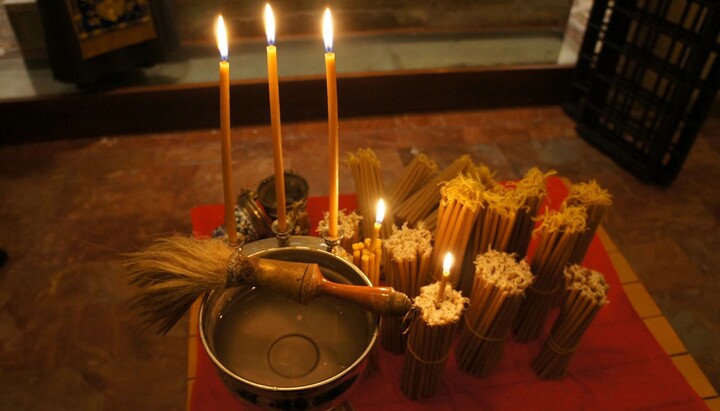
Presentation (Candlemas) candles. Photo: open sources
On the Feast of the Presentation of the Lord, candles are blessed in the church. There is a special rite for this, which is called: "The rite of blessing candles for the Presentation of the Lord." People, even those who frequently attend church, may wonder: why is this necessary, to bless candles with a special rite, when they are already blessed in the church?
To answer this question, we should turn to history. In the ancient Church, literally from the first centuries of its existence, processions with candles or lamps were very popular. Such processions became prototypes of our religious processions, including those on Great Saturday, on the Dormition of the Most Holy Theotokos in the burial rite, and on Pascha.
One of the first mentions of a Christian prayer procession with lamps is contained in the accounts of a pilgrim from Gaul, an educated woman named Etheria or Sylvia of Aquitaine. Sylvia lived at the end of the 4th century, and as she wrote herself, she dreamed of seeing the place of the Nativity and Crucifixion of the Savior and telling her sisters about it.
Western and Eastern traditions
After Pope Gelasius established the celebration of the Feast of the Presentation of the Lord in the Roman Church, such processions became increasingly popular. In the Life of Abba Theodosius (5th century), the text no longer simply describes a festive procession with wax candles, but recounts the celebration of the Presentation in the Church of the Mother of God, built by the pious Roman woman Vitcelia between Bethlehem and Jerusalem during the tenure of Patriarch Juvenal of Jerusalem (420–458).
Over time, such processions became increasingly magnificent and festive.
Under Roman Pope Sergius I (687–701), such a procession was held from the basilica of St. Adrian to the Сhurch of Santa Maria Maggiore through the central streets of Rome. Thus the Western Church, in addition to glorifying Christ and the Mother of God, tried to distract its flock from pagan festivals associated with fire worship. Later in Catholicism, the procession with candles on the Feast of the Presentation of the Lord acquired a rather penitential character. And the blessing of candles remained, accompanied by the singing of the antiphons "Light to Revelation" and "Now Lettest Thou."
In Byzantium, such processions often took place as early as the 6th century. However, their purpose was somewhat different from that in the Roman Church. At that time, plagues and epidemics of infectious diseases were frequent in Byzantium. Chroniclers tell us about difficult times when the plague was followed by sudden earthquakes. The epidemic of the plague of bubonic fever in October 541 was especially terrible.
Then people turned to God with pleas for deliverance from calamities, priests walked around the city in religious processions, holding lit candles in their hands and entrusting the city's inhabitants to God's protection.
Candles for the procession were blessed in advance, before going out on the religious procession at a special prayer service, where the light of the candles was combined with the words of righteous Simeon the God-Receiver, with which he met the Savior: "For my eyes have seen Your salvation, which You have prepared before the face of all peoples: a light to the revelation of the Gentiles, and the glory of Your people Israel." Later this tradition was formalized in ancient church Typicons and became the basis for religious processions on the Feast of the Presentation of the Lord.
Petro Mohyla and the struggle against paganism
In our lands, the rite of blessing candles on the Presentation of the Lord became known in the 17th century. Then Kyiv Saint Petro Mohyla published his Trebnik, also called "The Euchologion, or Prayer Book." It included 37 new rites, never before encountered in the liturgical books of the Orthodox Church, for example, the blessing of liturgical vestments and bells. These were reworked translations of the Roman Rituale Romanum by the saint. Among them was the rite of blessing candles on the Presentation of the Lord.
Why did this rite enter Petro Mohyla's Trebnik? Let us also turn to history, but now of our lands. In ancient times, pagan Slavs celebrated Hromnitsa or Imbolc on the first day of February, echoing myths about the thunder god and his wife, halfway between the winter solstice and the spring equinox. It was believed that the fire of the candles on this day possessed magical power, protecting the home and family from evil and preparing them for the renewal of spring.
An Orthodox rite of blessing was established to eliminate the pagan roots of the existing tradition.
And the tradition has been preserved in Europe. In Poland, for example, these days celebrate the day of the Mother of God of Thunder or Fiery Mary. It is believed that candles blessed on this day protect from fire and lightning strikes. In Ireland, Imbolc is still celebrated today and is known as St. Brigid’s Day. On this day, people make a “St. Brigid’s Cross,” which protects against fires and lightning.
Meeting of two worlds
For Orthodox Christians, the feast of the Presentation of the Lord is the meeting of the old world in the person of Simeon the God-Receiver with the new, evangelical world. Taking the Christ Child in his arms, righteous Simeon testified that Christ is "a light to lighten the Gentiles" (Luke 2:29-32).
If, standing at the service during the blessing of Presentation candles, we carefully listen to the words of the prayers, we will notice that there is nothing in them about thunder, lightning, and fires. Although in our days and in our country we pray every day that the Lord would protect us from all this. But the prayers speak of purification by the true light of Christ's Gospel.
We ask the Lord: "Pour forth the grace of Thy blessing upon these candles: that they may so afford us light outwardly that by Thy gift, the gift of thy Spirit may never be wanting inwardly to our minds," to become like righteous Simeon the God-Receiver:
And Simeon’s soul held the form of the Child —
its feathery crown now enveloped in glory —
aloft, like a torch, pressing back the black shadows,
to light up the path that leads into death’s realm,
where never before until this point in time
had any man managed to lighten his pathway.
The old man’s torch glowed and the pathway grew wider.
(Joseph Brodsky, trans. by George L. Kline)
Read also
Brother of tax collector and brother of Lord
The Gospel is silent about the son of Alphaeus, and commentators have argued for centuries over who he was. And the Church commemorates two apostles named James in close proximity.
Prayer commemorations instead of loving embraces
At every Orthodox wedding, the choir sings a hymn to the martyrs. For families separated by war, these words carry a special meaning.
Honest atheism vs. spiritual hypocrisy
The 70th anniversary of Albert Camus’s Nobel Prize recalls an uncompromising challenge to Christianity. An honest unbeliever brings theology back to the mystery of the Cross.
The valley of trouble and the gateway of hope
One soldier buried an expensive cloak and some gold beneath his tent. Because of this, all Israel lost a battle. Why did one man’s sin bring disaster upon an entire nation?
From love spells to bishop's throne
Antioch’s most powerful sorcerer sent demons against a devout young Christian woman three times – and failed every time. In the end, a demon himself revealed the truth that led to his conversion.
The Weeping Queen of Blachernae
On the night of the Feast of the Protection, only two people witnessed the miracle in the Church of Blachernae. Everyone else prayed and saw nothing. Yet they, too, received grace.