In Afghanistan, Taliban introduces life imprisonment for women who renounce Islam
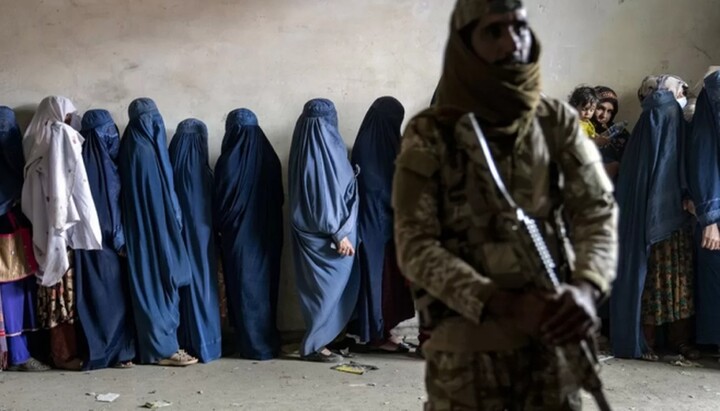
For refusing Islam, women in Afghanistan will receive life sentences. Photo: avesta
The new criminal procedure code of the Islamic Emirate of Afghanistan, signed by Taliban emir Hibatullah Akhundzada on January 7, 2026, provides for life imprisonment for women accused of apostasy, with accompanying corporal punishment every three days.
According to Article 58 of the new code, a woman found guilty of apostasy is sentenced to life imprisonment. Throughout the entire term, she is assigned ten lashes every three days – “with the aim of forcing her to accept Islam”. Notably, a similar provision regarding men is absent from the document, meaning that punishment for apostasy is established exclusively based on gender.
The document, consisting of 119 articles, three chapters and ten sections, did not undergo any public discussion. Its existence became known only after the Afghan human rights organization “Rawadari” published the original text in Pashto on January 21.
The code contains a number of other controversial provisions. Article 32 establishes that a husband is recognized as a criminal only if his blows result in fractures, wounds or visible bruises on his wife, for which he faces up to 15 days of imprisonment. Article 34 criminalizes a wife's unauthorized departure to relatives without her husband's permission, prescribing three months of imprisonment for this – both for the woman herself and for the relatives who sheltered her.
The code legally establishes the division of Afghan society into four classes: religious scholars, nobility (elders and merchants), middle class and “lower class”. Article 9 directly establishes different punitive measures depending on the accused's position: scholars and nobility face only verbal warnings, while representatives of the “lower class” face threats and corporal punishment. Along with this, Article 15 recognizes the legal status of “free” and “enslaved” persons, which human rights defenders qualify as the legalization of slavery.
Earlier, the UOJ wrote that Russia was the first in the world to officially recognize the Islamic Emirate of Afghanistan.
Read also
OCU cleric's church preference poll delivers unexpected results
When an OCU cleric from Rivne asked Ukrainians which Church they preferred, most Threads users who responded chose the UOC.
Reports to SBU of weapons in UOC churches were always false, Novynskyi says
The protodeacon said that under Maliuk, inspections began to be accompanied by public accusations against the Church without evidence.
Culture Ministry pledges to speed up seizure of Kyiv-Pechersk Lavra from UOC
Culture Minister Tetiana Berezhna has pledged to personally attend a court hearing in the Kyiv-Pechersk Lavra case.
Kamianske Eparchy honors Dnipro Icon of the Mother of God for first time
A festive service was held at a cathedral in Kamianske, where the Dnipro Icon of the Mother of God was brought out for veneration by the faithful for the first time.
Kyiv conscription officers abduct UOC priest
TRC officers reportedly abducted Maksym Kostiuchenko, a cleric of a UOC church in the Ukrainian capital.
Court grants DESS lawsuit to dissolve UOC’s Rovenky Eparchy
The appeals court partially granted the DESS lawsuit seeking to dissolve the Rovenky Eparchy but rejected the request to seize its property, citing a gap in Ukrainian legislation.