Two weeks of OCU’s “brotherhood” talk to UOC: Any fruits yet?
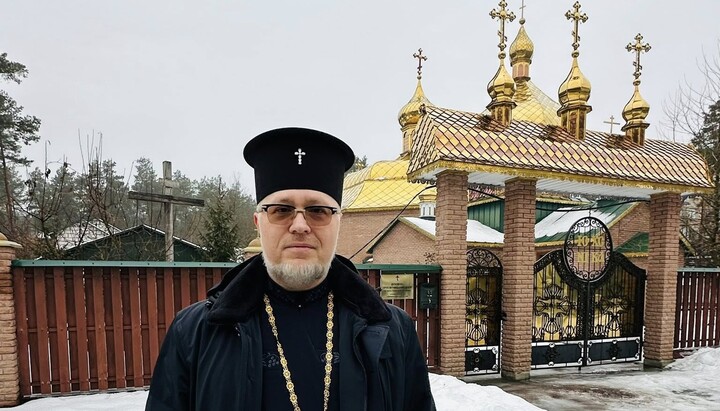
Horobtsov against the backdrop of the seized Church of St. John the Warrior in Kyiv. Photo: Horobtsov's Facebook
On February 2, the OCU Synod addressed the UOC with a call for “constructive dialogue” and even set up a special commission to liaise with the UOC for the sake of “unity and fraternal peace.”
Two weeks passed. And what did we get?
Perhaps Dumenko’s team suggested the obvious first step for anyone who really wants peace – return at least some of the seized churches and say, plainly, “We were wrong”? Perhaps they appealed to the authorities: stop stripping the UOC of its historic shrines, stop pressuring communities, stop turning the Church into a battlefield?
No. Of course not.
Instead, we saw a neat little “fruit basket” – not of reconciliation, but of seizures.
February 9 – the Nativity of the Theotokos church in Kuzmyn, Khmelnytskyi Region, is taken.
February 12 – in the Cherkasy Eparchy, the OCU announced it would seize a UOC bishop’s residence in the city, citing a sham “meeting” of a community that exists only on paper, in someone’s imagination, or in a conveniently drafted set of minutes.
And February 14 – the grand finale: a group of radicals in hoods and balaclavas seizes the UOC church of the Martyr John the Warrior in Kyiv – the traditional method included, naturally: doors cut open with an angle grinder. Very “fraternal.” Very “constructive.” Very “peace-making.”
Now the place is being “managed” by the “Metropolitan of Donetsk,” Serhii Horobtsov – who, on the side, tries to smear the church’s real owners. He posts photos of empty bottles of Cahors used for Communion and makes snide remarks, as if to suggest UOC priests are close to being alcoholics: “Something like contemporary installation art: ‘empty bottles as a path to enlightenment.’”
Truly – the highest form of spiritual discourse: grab the church, then lecture the victims on morality.
And who blessed Horobtsov for this “mission”? Serhii Dumenko – the very same man who signed the “Appeal” about dialogue with the UOC. That’s quite an approach: preach brotherhood by day, bless bolt-cutters by night. It’s almost poetic. Almost.
Picture this.
A neighbor spends years sabotaging you – petty tricks, bigger attacks, constant hostility. Then one day he shows up with a warm smile and a bouquet of words: friendship, love, reconciliation. You start to wonder, for a second, whether something has changed.
And that same night he comes back, sets your door on fire, and dumps filth into your yard – then, with an expression of pure innocence, insists the “friendship offer” is still valid.
That is exactly what the OCU’s “dialogue” looks like.
One hand signs “appeals” about brotherhood. The other blesses people with angle grinders.
“S” – for sincerity.
Read also
Who destroyed and restored Kyiv Lavra? MinCulture's video reveals the truth
The Culture Ministry’s propaganda about the Kyiv-Pechersk Lavra has inadvertently revealed the truth.
Ternopil post on Feast of Intercession: Has calendar reformn failed?
A significant number of believers have rejected the new church calendar introduced by the OCU and UGCC with government support.
Shoulder straps or a cassock: who writes the script for UOC "fighters"?
Everything indicates that both Veliar and Pshenychny are ordinary performers of someone else's script. There is only one question – does the scriptwriter wear shoulder straps or a cassock?
Why is it legal to kill a person before birth but not after?
Children are the most privileged members of society. Yet that same society officially permits children to be killed – and on a massive scale.
Honoring the Bolsheviks’ successors at Kyiv Lavra
It was under the Reserve that the relics of the saints were desecrated, Lavra churches were turned into an atheism museum, and toilets were installed in sanctuaries.
"Degenerates" and "stupid animals": anti-UOC activists turn on children
Future historians will wonder how a vast country’s information agenda could have been shaped for so long by people so petty, vicious, and utterly contemptible.