“There are no people persecuted for their religious beliefs in the USSR”
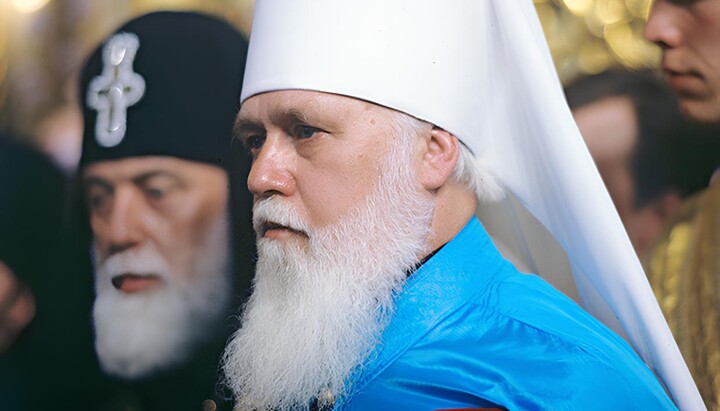
Filaret Denysenko in his years as Exarch of Ukraine. Photo: open sources
Members of the RCC, the UGCC, the OCU, Protestants, and various Jewish representatives are dispatched abroad without the slightest embarrassment to attend international events where, together with government officials, they insist that Ukraine enjoys exemplary freedom of religion and that there is no persecution of the Church whatsoever. Anyone who says otherwise is branded a Kremlin agent.
For example, RCC Bishop Vitaliy Kryvytskyi spoke about his latest “advocacy” trip to the United States in these terms: “We repeatedly encounter this reproach – this allegation – that there is religious persecution in Ukraine. As the All-Ukrainian Council of Churches and Religious Organizations, we say: today in Ukraine there are no signs of persecution precisely for faith.” He emphasized that under the USSR there were persecutions – but now, he says, they do not exist.
And now let us quote a church figure from the 1970s – from that very same USSR – speaking in an interview with the APN agency:
“It surprises me that our Church and the faithful are called persecuted. In the Soviet Union there are no people persecuted for their religious beliefs. Believers and non-believers in our country form a single society, engaged in active, constructive labor for the good of their Fatherland. The Soviet state treats the needs of the Church with understanding. Unfortunately, the Western press, using slanderous and biased information, seeks to mislead world public opinion.”
Knowing what the Bolsheviks actually did to the Church, can anyone seriously call these words truthful? The answer is obvious. Something else is just as obvious: replace “the USSR” in that quote with “Ukraine,” and you will have today’s statements – word for word in spirit – from Kryvytskyi, Zoria, Shevchuk, or whichever “chief rabbi” happens to be on duty.
The real author of the quote is Filaret Denysenko. These days he is older, weaker – no longer able to court the authorities with the vigor of his youth. But he has been blessed with remarkably gifted successors.
“Bishop, to the cause of serving the powers that be – be ready!”
“Always ready!”
Read also
Who destroyed and restored Kyiv Lavra? MinCulture's video reveals the truth
The Culture Ministry’s propaganda about the Kyiv-Pechersk Lavra has inadvertently revealed the truth.
Ternopil post on Feast of Intercession: Has calendar reformn failed?
A significant number of believers have rejected the new church calendar introduced by the OCU and UGCC with government support.
Shoulder straps or a cassock: who writes the script for UOC "fighters"?
Everything indicates that both Veliar and Pshenychny are ordinary performers of someone else's script. There is only one question – does the scriptwriter wear shoulder straps or a cassock?
Why is it legal to kill a person before birth but not after?
Children are the most privileged members of society. Yet that same society officially permits children to be killed – and on a massive scale.
Honoring the Bolsheviks’ successors at Kyiv Lavra
It was under the Reserve that the relics of the saints were desecrated, Lavra churches were turned into an atheism museum, and toilets were installed in sanctuaries.
"Degenerates" and "stupid animals": anti-UOC activists turn on children
Future historians will wonder how a vast country’s information agenda could have been shaped for so long by people so petty, vicious, and utterly contemptible.