DESS: Ramadan is a time of special closeness to the Almighty
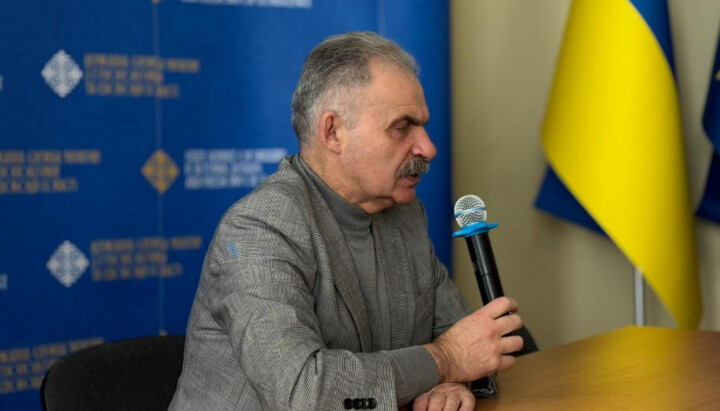
Viktor Yelensky. Photo: DESS Facebook page
Ukraine’s State Service for Ethnopolitics and Freedom of Conscience (DESS) has congratulated Muslims in Ukraine on the start of Ramadan, according to the agency’s press service.
Officials said that for them Ramadan is “a time of special closeness to the Almighty and to one another – a time when support carries the weight of bread, a spoken word has the strength of an embrace, and shared prayer becomes a source of strength.”
The statement adds that Muslims “are fasting in difficult conditions, performing namaz where explosions can be heard nearby, and at the same time remaining faithful to their religion, their oath, and their state.”
DESS also expressed the wish that Ramadan would draw nearer the day when the muezzin’s voice will “ring out in free mosques.”
Earlier, the UOJ reported that, according to Mufti Ismagilov, the war Ukraine is waging against Russia is jihad.
Read also
OCU сleric: Even those who think in Russian are outsiders in Ukraine
OCU cleric Ivan Rybaruk called Russian-speaking Ukrainians "outsiders" who, in times of danger, would "grab everything and flee like tumbleweeds."
ROC approves procedure for receiving members of Ukrainian schismatic groups
The ROC Synod has adopted a document governing the reception of communities and clergy from the OCU, UOC-KP, and UAOC.
OCU cleric's church preference poll delivers unexpected results
When an OCU cleric from Rivne asked Ukrainians which Church they preferred, most Threads users who responded chose the UOC.
Reports to SBU of weapons in UOC churches were always false, Novynskyi says
The protodeacon said that under Maliuk, inspections began to be accompanied by public accusations against the Church without evidence.
Culture Ministry pledges to speed up seizure of Kyiv-Pechersk Lavra from UOC
Culture Minister Tetiana Berezhna has pledged to personally attend a court hearing in the Kyiv-Pechersk Lavra case.
Kamianske Eparchy honors Dnipro Icon of the Mother of God for first time
A festive service was held at a cathedral in Kamianske, where the Dnipro Icon of the Mother of God was brought out for veneration by the faithful for the first time.