Phanar hierarch: Kyiv Lavra is transformed into a center of sad conflicts
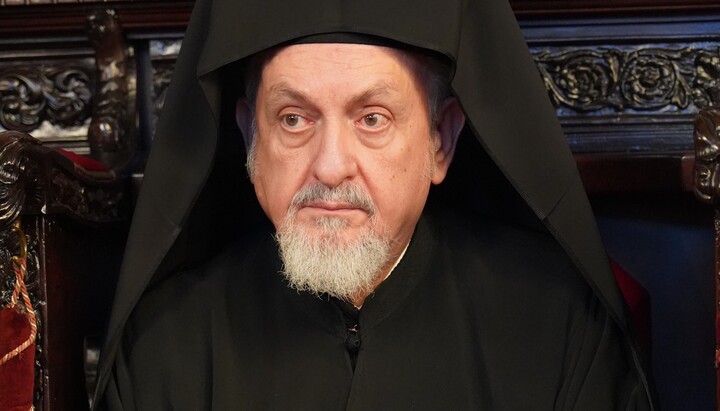
Elder Metropolitan Emmanuel of Chalcedon. Photo: Patriarchate of Constantinople
At a conference in Vilnius on February 24, 2026, Metropolitan Emmanuel of Chalcedon delivered a programmatic address devoted to the church history of Ukraine and the relations between Constantinople and Moscow.
The metropolitan noted, "Behind the cold legal words of 'jurisdiction' and 'canonical changes,' pulsates the agony of man for his integration, for the true meaning of ecclesiastical property and the determination of his spiritual homeland. These questions, instead of being archived, live inside the people, scourge consciences, dissolve families and shake whole communities."
Speaking about the OCU, the metropolitan called the consequences of its creation “a wound to the Body of the Church.” At the same time, he placed responsibility for inflicting that wound on the Russian Church, which, as he said, “severed communion with the Phanar, placing the remaining Orthodox Churches before the painful dilemma: Constantinople or Moscow?”
“We know that the faithful in Kyiv or in Lviv, who go to church every Sunday, carry their personal pain and their human need, instead of the Canons of Chalcedon (a reference to Canon 28 of the Council of Chalcedon on Constantinople’s primacy. – Ed.). The institutions often arbitrarily confront this human need, striking the ecclesiastical body in a way that canonical science and diplomacy are unable to heal,” Metropolitan Emmanuel said.
According to him, “Burning remains the question of the property – of temples and of monasteries, like the two Lavras.”
“The Lavra of the Caves in Kyiv is transformed into a centre of sad conflicts. There, the invocation of the 'canon' seems distant, almost offensive,” the Constantinople hierarch emphasized. He believes the way forward lies in repentance: “The healing requires primarily repentance and a readiness to assume our own responsibilities, instead of the exclusive casting of them to the other side.”
The metropolitan did not specify why "sad conflicts" have arisen in Ukraine around churches and monasteries, or who exactly is in need of repentance.
Commenting on a thesis that ecclesiastical choices always bear the heaviest human consequences, Metropolitan Emmanuel said that "ecclesiastical freedom also emerges through agony, conflict, and many times through blood itself."
Earlier, the UOJ reported that Patriarch Bartholomew promised he would not take the Tomos away from the OCU.
Read also
UOC delegation meets with Patriarch Shio in Georgia
Catholicos-Patriarch Shio III received a delegation of the Ukrainian Orthodox Church at the Georgian Patriarchate.
UOC marks Synaxis of Poltava Saints
Metropolitan Philip celebrated the Divine Liturgy at the Horbanivka Monastery in Poltava on the feast of the Synaxis of the Saints of Poltava.
Rector of UOC church in Kramatorsk sent for second military medical exam
Lawyers have secured a second military medical examination for Archpriest Oleg Kruchinin, who was unlawfully detained by TRC officers.
Jews, Muslims, Catholics, and OCU pray together at St. Sophia Cathedral
Representatives of Jewish, Muslim, Catholic, and OCU communities held an ecumenical prayer service for Ukraine in Kyiv.
Horbanivka Theootokos Icon honored at Poltava Eparchy monastery
Metropolitan Philip of Poltava and Myrhorod led a festal service at the Horbanivka Convent.
Greek hierarch: Clergy should use social media to bring people to Church
The Church of Greece hierarch stressed that while the internet and YouTube can be useful, they cannot replace in-person participation in church life.