Hierarch of Lviv RCC: Church and language issues fuel unnecessary tensions
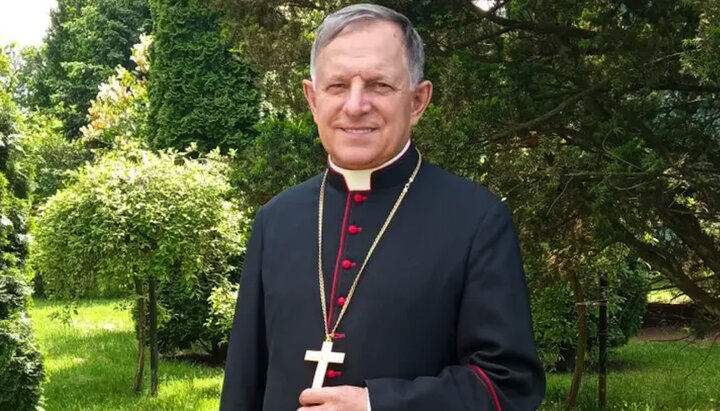
Archbishop-Metropolitan of the Lviv Archdiocese of the RCC Mieczysław Mokrzycki said that the issues related to the Church and language inflame disagreements in Ukrainian society, according to the Italian edition Avvenire.
In the context of the conversation that today in Ukraine everything Russian is considered “hostile”, the archbishop said that “this is a completely understandable reaction”, which is “an external sign of protection and protest: protection from an aggressor who has been devastating the country and sowing death, pain, separation for eight months; protest to reiterate that no one here wants war.”
He noted that "most of the refugees who come here, to Lviv, speak Russian, but this does not make them less Ukrainians." “On the contrary, in many cases they have relatives and friends who are fighting at the front for the freedom of the country,” Mieczysław Mokrzycki stressed.
“Therefore, banning the Russian language, as it was decided at the state level, can be dangerous. This means the marginalization of part of the country,” the Catholic hierarch believes.
“When the governor of the region visited one of our diocesan reception centers, he heard one of the refugees say: ‘We feel good here in Lviv, and we thank you. But if we go outside and speak Russian, we are immediately singled out,’” said Mokrzycki and advised Ukraine to take Switzerland as a model, "where there are four official languages."
According to him, the Apostolic Nunciature in Kyiv is against any restrictive measures affecting the church community. “Pointing a finger at the language or the Church can become a source of even greater pain for the people and fuel tensions that Ukraine does not need,” the Catholic Archbishop of Lviv emphasized.
Earlier, the UOJ wrote that, according to Mokrzycki, the UOC is the Church of the people.
Read also
Mobilized priest of Volodymyr-Volynsky Eparchy of UOC killed
A funeral service for Fr Andrii Korynchuk, a priest killed in the war, to be held at UOC Resurrection Cathedral in Kovel.
TRC officers draft UOC priest in Chernihiv
TRC officers have detain Archpriest Pavlo Tovstohon of the Christ's Nativity Church.
Patriarch Bartholomew and Shevchuk discuss obstacles to ecumenical unity
The head of the UGCC said that replacing Christian patriotism with the idea of loyalty to a "warring god" is an obstacle to ecumenical dialogue.
Ukraine’s Foreign Ministry plans advocacy visits abroad for UCCRO
Members of the All-Ukrainian Council of Churches and Religious Organizations have planned advocacy visits abroad following a meeting with Ukraine’s deputy foreign minister.
UOC priest detained by recruitment officers in Kyiv sent to training ground
UOC priest Maksym Kostiuchenko, who was detained on his way to a church service in Kyiv, has been sent to a military training ground in Chernihiv Region.
25 tons of humanitarian aid from Volyn reach Sviatohirsk Lavra
Around 25 tons of food donated by believers of the UOC Volyn Eparchy arrived at Sviatohirsk Lavra on October 22.