Albanian Archbishop: First in Orthodoxy does not mean supreme
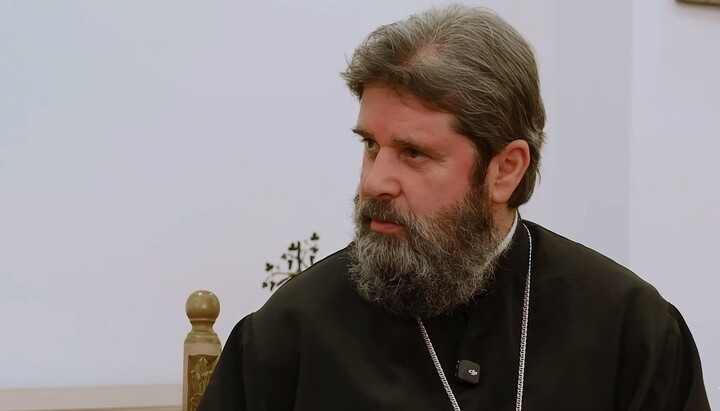
Archbishop Joan. Photo: UOJ
In an interview with UOJ-USA, Archbishop Joan, Primate of the Orthodox Church of Albania, spoke about the nature of Orthodox unity and how the Orthodox Church should respond to today’s challenges – including the conflict between Constantinople and Moscow.
Asked about growing pressure in the Orthodox world – with each Church increasingly expected to choose between Constantinople and Moscow – Archbishop Joan said there should be no “sides” at all.
“One side is always the Truth with Christ. But there are different opinions, and we have to solve this through love and through dialogue. If you create ‘sides,’ you create a war,” he warned.
The archbishop stressed that Orthodoxy is not a federation of national Churches, though this is often forgotten.
“There is no separate Greek Church, Russian Church, Romanian Church, or Albanian Church. There is one Orthodox Church – in Albania, in Russia, in Greece, in Romania, wherever,” the primate said.
The Church does not deny ethnicity or national identity, he added, but it is unacceptable to view everything through the prism of nationalism.
Despite any disagreements, breaking communion is a mistake, Archbishop John said.
“There has never been a time in history when everyone thought the same way. Even at the Ecumenical Councils, decisions were made by majority – not everyone agreed. We will always have discussions. But still we have to be together,” he said.
Speaking about the primacy of Constantinople in world Orthodoxy, Archbishop John cited the position of his predecessor, Archbishop Anastasios: to be the protos means to be the first among equals, because the second and the third are inasmuch "major" as the protos. All Churches are equal; otherwise the Church will lose control and unity.
“Unity always requires humility, truth, and love,” the archbishop concluded.
According to Archbishop Joan, the Albanian Church has consistently upheld this position. Archbishop Anastasios sent letters to all the Churches written in a spirit of love, setting out what he believed to be true while remaining open to dialogue. That, Archbishop John said, is how the Orthodox Church of Albania has responded – and continues to respond – to all contemporary challenges.
Earlier, the UOJ reported that the Albanian archbishop had commented on his position regarding the OCU.
Read also
Upper Lavra court hearing postponed
The next court hearing in the Upper Lavra case has been scheduled for November 3.
UOC priest blesses ambulances at Kamianske medical center
A UOC priest in Kamianske blessed ambulances for a medical facility and wished its doctors God's help in their work.
Dumenko to German ambassador: Law targeting UOC also applies to other groups
Epifaniy Dumenko sought to defend Ukraine’s law restricting religious organizations during a meeting with the German ambassador.
Activists bused to court hearings in UOC cases, media say
A minibus has been spotted transporting protesters to and from courthouses where UOC cases are being heard.
Firefighters save historic UOC church from fire in Zakarpattia
A fire broke out at a UOC church in the Tiachiv district, damaging the altar and church furnishings.
Volyn Eparchy faithful collect six tons of aid for Sviatohirsk Lavra
Believers in Volyn collected food and warm clothing for people displaced by the war who have found shelter at Sviatohirsk Lavra.