How St. Peter (Mohyla) won the Church back from the state
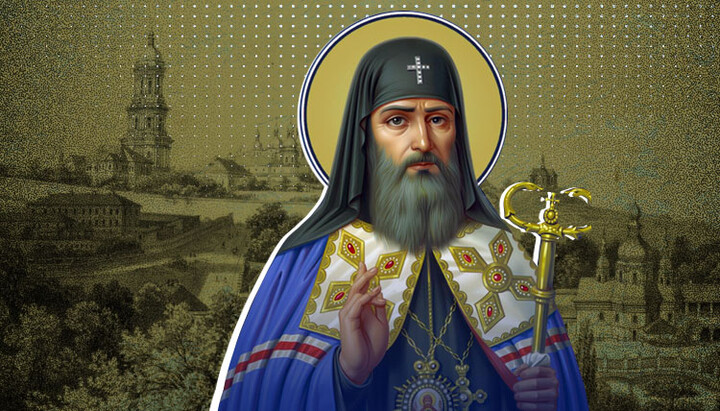
Saint Peter (Mohyla). Photo: UOJ
In 1596, the Orthodox Church in the Polish-Lithuanian Commonwealth ceased, in legal terms, to exist. The Union of Brest transferred all rights to churches and church property to the Greek Catholics. The Orthodox found themselves in a condition best described by the word “dissidents” – the official name used for them, a word in which one hears not so much theology as bureaucratic contempt. The dissidents had no legal hierarchy. The churches they had built over centuries now, quite lawfully, belonged to others.
What had become of St. Sophia of Kyiv by the 1630s
St. Sophia was not destroyed. Something worse was done to it: it was abandoned. The Uniate metropolitans did not use it – they had cathedrals of their own. The church stood roofless, its western wall had collapsed, and trees were growing inside. The people of Kyiv drove cattle through its ruins. Officials of the metropolitan administration, to whom the cathedral formally belonged, stripped away whatever could still be sold: marble slabs, fragments of mosaics. Archdeacon Paul of Aleppo, who later visited the restored cathedral, recorded from eyewitnesses that St. Sophia had been reduced to such a state that notices were posted on roadside crosses inviting settlers to move to the deserted hill of St. Sophia – yet no one wanted to live beside the ruins.
This desolation was systemic. Across the Commonwealth, Orthodox churches stood empty, were leased out to the nobility, or turned into storehouses.
In a charter of 1635, St. Peter (Mohyla) wrote of this with the cold fury of a man drafting an indictment: “The holy churches, the places of our prayer, have been turned into ruins, and some even into stables.”
A chess move beside an open grave
Mohyla waited thirty-six years. Or rather, the whole Orthodox community of the Commonwealth waited – but it was Peter (Mohyla), Archimandrite of the Kyiv Caves Lavra, a Moldavian prince with a Jesuit education and the wolfish grip of a lawyer, who turned waiting into a precise plan.
In April 1632, Sigismund III died – the fanatic king under whom the Union had been imposed with fire and parchment alike. An interregnum began. The nobility gathered for the electoral sejm to choose a new king – Władysław IV. It was the kind of window that opens once in a generation, and the saint seized it with both hands.
He united the Orthodox nobility and the Cossack leadership into a single bloc and issued an ultimatum: votes in exchange for legalization.
The Cossacks spoke plainly: “Let the Union be abolished; then we shall lay down our lives for the integrity of the fatherland. But if it be otherwise, we shall seek other means.” It was a threat of rebellion wrapped in the parchment of loyal address. Władysław, who needed Cossack sabers for war with Muscovy, accepted the soldiers’ terms.
The result of that struggle was the “Articles for the Pacification of the Ruthenian People” – a document that restored to the Orthodox the right to hierarchy, to legal recourse, and to property. Not all property, and not all at once – commissions for the division of church holdings would not be appointed until 1635 and would meet with fierce resistance – but this document laid the legal foundation.
The keys no one wanted to surrender
In 1633, Peter (Mohyla) received the royal privilege to the Kyiv Metropolia together with St. Sophia Cathedral. But paper is not the same thing as keys. The Uniate governor in Kyiv refused to hand the cathedral over. The Catholic clergy backed him. Everyone expected the saint to bring in the Cossacks and seize the church by force – and then he could be accused of rebellion, and his privilege could be annulled.
Mohyla gave them no such chance. On July 7, 1633, he made his solemn entry into Kyiv, and on July 24 he came to St. Sophia with royal commissioners, lawyers, and an armed escort of Orthodox noblemen. The privilege was read aloud. The procedure for reclaiming the cathedral was carried out according to all the rules of enforcement – by execution, as it was called in the legal language of the time.
The Uniates could not advance a single legal argument, because to object meant to oppose the king himself. Thus the keys to the shrine were handed over to the Orthodox.
What Mohyla saw inside the desecrated cathedral he described in two words: “without roof” and “without adornment.” Of the church vessels, there remained one Chalice, one censer, three vestments, and a few books. Some of the silver had been pawned by earlier metropolitans and never redeemed.
Material evidence
The saint did not stop with St. Sophia. In 1635, using his own funds, he organized excavations at the Church of the Tithes – the first stone church of Rus’, destroyed by Batu Khan in 1240. Beneath the ruins, marble sarcophagi were discovered, which Mohyla identified as the burial places of the Equal-to-the-Apostles Prince Volodymyr and his wife Anna. He solemnly transferred the skull of St. Volodymyr to the Dormition Cathedral of the Lavra.
This gesture could be read in two ways – both as a religious act and as a legal argument.
In a country where the Uniates challenged the Orthodox right even to call themselves the heirs of the Baptism of Rus’, the bones of the baptizer, discovered by an Orthodox metropolitan and transferred to an Orthodox monastery, became material evidence no court could easily dismiss.
Latin as a weapon of defense
Mohyla understood that royal privileges alone were not enough. Today the king gives – tomorrow the sejm may take away, if there is no one capable of drafting a proper appeal. What he needed was not Cossacks, but lawyers. Not sabers, but arguments written in Latin – the language in which the courts and sejms of the Commonwealth spoke.
He transformed the Kyiv Brotherhood School into a collegium where Orthodox young men were taught rhetoric, philosophy, and Roman law according to Jesuit models. The idea was audacious in its simplicity: if you are to defeat the Jesuits in their own courts, you must speak their language better than they do.
Orthodoxy ceased to be the faith of the “ignorant peasants,” as Catholic propaganda portrayed it. From the walls of that collegium emerged a generation of men capable of defending their Church not with shouting, but with the paragraph of the law.
In 1644, Peter (Mohyla) published the treatise Lithos – “The Stone” – in response to the anti-Orthodox pamphlet of the renegade Kassian Sakovych. This was not a theological book in the usual sense. It was a legal memorandum, constructed in such a way that even the court in Warsaw was compelled to reckon with its argumentation.
A document among the ruins
The Lord Jesus Christ warned His disciples: “Behold, I send you forth as sheep in the midst of wolves: be ye therefore wise as serpents, and harmless as doves. Beware of men: for they will deliver you up to the councils” (Matt. 10:16–17). Mohyla heard in these words not only prophecy, but instruction. If they will bring you before tribunals, then you must know how to prevail in those tribunals.
He died in 1647, before living to see the age of Khmelnytsky, which would overturn the entire map of the region. But by the time of his death, the Orthodox Church in the Commonwealth possessed a legal hierarchy, restored churches, a functioning higher school, and a body of legal precedents to which it could appeal in court. All this had been won not by a Cossack pogrom, but by a paper bearing the royal seal, held in the hands of a man who knew how to read laws better than those who wrote them.
Today, when churches are once again being taken away under cover of court rulings and ministry decrees, the experience of St. Peter (Mohyla) sounds like a manual for action.
Holiness does not eliminate the need for an impeccably drafted property deed. Prayer does not replace a lawyer. And a Church that cannot defend itself in the language of the law will sooner or later find itself where St. Sophia of Kyiv stood in the 1630s: without a roof, without sacred vessels, and with cattle standing where the altar once was. The lesson of that age is clear: steadfast faith and deep knowledge of one’s lawful rights make the Orthodox Christian firm and courageous in the struggle to preserve the Church.
Read also
Golgotha in the midst of a pogrom
In the autumn of 1938, the Jewish artist Marc Chagall painted the crucified Christ. Synagogues burn and refugees flee around the cross, while the Crucified One Himself is wrapped in a prayer shawl.
Stories of the Early Church. Level of governance: patriarch
How did several episcopal sees rise above the rest, why did the Church’s administrative map come to mirror that of the empire, and is the patriarchate a sacred form of Church governance?
A Chronicle without an author
We are accustomed to calling The Tale of Bygone Years the work of St. Nestor. Yet another monk left his signature on it, while the chronicle itself passed from one generation of scribes to the next.
How a wedding stopped a war
The young princess of Slutsk was married off to keep two powerful noble families from drowning the city in blood. Soon afterward, a Uniate metropolitan complained that Orthodoxy had been reborn in Slutsk.
Man before the forces of nature
A solitary figure on the shore seems insignificant before the immense power of the sea, yet it is he who stands before the Creator.
The mysteries of Golgotha in the light of archaeology
The veil of centuries obscures what really happened in the fourth century. Archaeology and ancient texts shed light on the true history of one of Christianity’s greatest sacred sites.