The saint surgeon proved that a human being is more than his brain
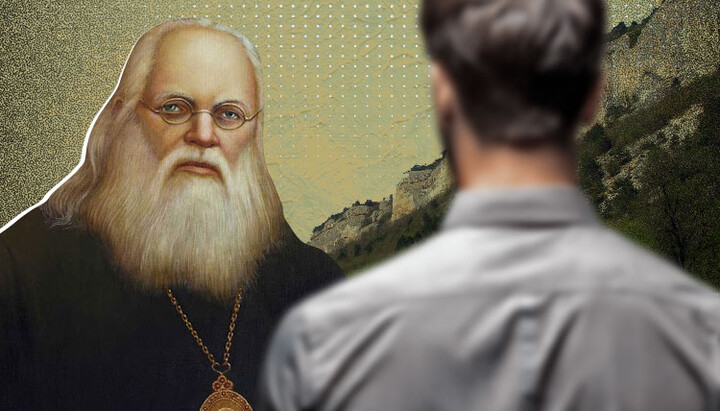
A lesson of Saint Luke on spirit, soul and body. Photo: UOJ
We are used to explaining our actions through chemistry. We take it out on the near and dear – our serotonin must have dropped. We feel a groundless sadness – there must be a dopamine deficiency. We can’t bring ourselves to pray – iour neurotransmitters are depleted; we need to rest, take some magnesium, fix our sleep. The brain has become our chief advocate: whatever we do, it always has a biochemical justification. We have even learned to explain conscience through evolution – supposedly, it's not the voice of God, but a survival mechanism of the pack, encoded in genes.
And here we come with this to a man who knew brain anatomy as few knew in the 20th century. He opened thousands of skulls, held a living human brain in his hands, saw how damage to a tiny section of cortex could shut off speech or vision. And he wrote a book in which he said: the brain does not produce thought.
A receiver rather than an organ of thought
– Your Grace, we commonly think that consciousness is a product of the brain. Damage the brain – and consciousness disappears. Isn't this proof that we are dependent on biochemistry?
– If you destroy a telephone station, Saint Luke replies, communication will be interrupted. But it does not follow from this that the caller's voice was born inside the apparatus.
The brain is not the organ of thought, feelings, and consciousness. It is only what binds consciousness to real life, compels thoughts to listen to the needs of the body, and makes them capable of useful action.
But between sensation and thought lies an abyss. The brain processes signals from eyes, ears, and skin. It assembles sensations into a picture of the world. But who looks at this picture?
In his answer, the saint relies on data he drew from the operating room. He saw patients with the most severe brain damage – destroyed lobes, abscesses, tumors – who retained clarity of consciousness and will. And he saw people with anatomically healthy brains whose spirit was dead long before their heart stopped.
The heart that knows more than the head
– But if not the brain, then what? Where is our center of consciousness located?
– Scripture speaks of the heart, the saint replies. And this is not a metaphor. The human heart is connected to the brain by the densest network of nerve fibers through the vagus nerve and sympathetic system. It receives and sends impulses that we don't even suspect.
The brain operates with logic. But intuition, conscience, the ability to instantly distinguish truth from falsehood – even before reason kicks in – all this is the work of the heart.
In the human heart there are strings that sound when touched by the Spirit of God. And no X-ray machine will see these strings, because they belong not to anatomy but to eternity.
The saint wrote these lines not in a professor's office. He conceived the treatise "Spirit, Soul and Body" in prison cells and exile, beginning in the 1920s, and completed it in 1945–1947. The Soviet system wanted to reduce his personality to biology – to a piece of meat behind bars, to a set of reflexes that could be broken and reprogrammed. And in response, he wrote the most serious apology for immortality of the 20th century. And he wrote it not despite science, but relying on its achievements.
Thirteen days without sleep
– Your Grace, You yourself went through what should have destroyed the mind. Thirteen days of interrogation without sleep in 1937. What happens to a person when the brain fails?
– My body surrendered completely, the saint says. Hallucinations began, my legs swelled so much that fluid oozed from them, my heart stopped. Biology demanded one thing: sign anything, just let me sleep. The brain, if it truly is the master, should have capitulated on the third day. But I did not sign a single false accusation.
This is not boasting. This is a precise observation of a surgeon on his own organism. When the body is completely destroyed, and the brain – that very "organ of consciousness" – is plunged into toxic delirium from exhaustion, something continues to make decisions. Something says "no" – contrary to every neuron screaming "yes." The saint called this "something" spirit and believed that the prison cell proved his point more convincingly than any laboratory.
Immortal spirit and mortal soul
– But if the spirit is immortal, why then the body? Why this biology on which we so depend?
– The spirit can exist without soul and body, the saint replies. The body dies, but the spirit is immortal. However, during life they are intertwined. The body is an instrument through which the spirit acts in the material world. The soul is the connecting link between spirit and flesh, the realm of feelings, emotions, and memory. All this dies with the body. But the spirit is higher; and all our thoughts, words and deeds leave an imprint on it, like a chisel on stone.
How our spirit will depart into Eternity depends on what we fed it during life.
The Apostle Paul wrote to the Thessalonians: "Now may the God of peace Himself sanctify you completely; and may your whole spirit, soul, and body be preserved blameless" (1 Thess. 5:23). Three categories are as three separate realities. Not just "body and mind," as modern psychology teaches. And not one "organism," as materialism teaches. But three: the body, which gets sick and dies; the soul, which feels and suffers; and the spirit, which stands before God and answers for everything.
Relics as the final argument
Tomorrow the Church will commemorate the finding of the relics of Saint Luke. In 1996, his remains were found incorrupt – a body that biology was obliged to have long turned to dust turned out to be free from this sentence.
For a materialist, this is an inexplicable failure of chemistry. For a believer, it is the result of what the saint wrote about all his life: spirit, permeated with grace, changes the physics of the body, subjecting matter to laws that science does not yet know how to describe.
We began with the fact that we commonly reduce ourselves to a set of hormones and diagnoses. A drop in serotonin means sadness. A release of adrenaline means anger. Everything is explainable and predictable, and therefore – everything is curable with a pill. And here before us stands a man who knew this chemistry better than us, who himself was a product of his biology – sick, tormented, blind in one eye. And this man says: you are immeasurably more than your cardiogram. Within you lives something that will not fit into any tomograph, cannot be described by any blood test, and will not be broken in any interrogation unless you yourself allow it to be broken.
Read also
Honest atheism vs. spiritual hypocrisy
The 70th anniversary of Albert Camus’s Nobel Prize recalls an uncompromising challenge to Christianity. An honest unbeliever brings theology back to the mystery of the Cross.
The valley of trouble and the gateway of hope
One soldier buried an expensive cloak and some gold beneath his tent. Because of this, all Israel lost a battle. Why did one man’s sin bring disaster upon an entire nation?
From love spells to bishop's throne
Antioch’s most powerful sorcerer sent demons against a devout young Christian woman three times – and failed every time. In the end, a demon himself revealed the truth that led to his conversion.
The Weeping Queen of Blachernae
On the night of the Feast of the Protection, only two people witnessed the miracle in the Church of Blachernae. Everyone else prayed and saw nothing. Yet they, too, received grace.
Deadly spiral of human hatred
The tragedy of Lebanon's civil war lays bare how dehumanization and fear can turn human beings into monsters.
Woe to expectant mothers – or to those of little faith?
God commanded one prophet not to have children, yet told his people in exile to bear sons and daughters. What does this apparent contradiction tell us today?