
A black eye for the unjust judge
The Savior takes the image of a corrupt official to teach us never to give up. A historical analysis of a first-century Palestinian court changes the way we look at prayer.
Christ is walking with His disciples toward the end of His earthly journey, and at this moment one of the most astonishing parables in the Gospel is told. The Savior presents His listeners with a story that would have left a devout first-century Jew utterly stunned.
At the center of the narrative is a city judge – a member of a local judicial tribunal or a Roman official who cares nothing for the laws of the Torah or basic conscience. In the text of the Gospel of Luke he is described with striking conciseness: he neither feared God nor respected men.
Before us is not merely a callous man, but a functional link in a thoroughly corrupt system.
In the Palestine of that time, a legal proceeding was reduced to simple bargaining. No money for a bribe, and your case is lost before it begins.
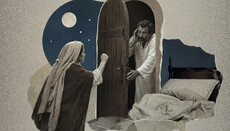
On the other side of this legal abyss stands a widow. In ancient Near Eastern society, a woman without a husband, father, or adult son was stripped of all legal capacity. She had no right to appear in court on her own. She needed a guardian. There was no one to defend her, and no money to bribe the official. By every law of the time, her situation was utterly hopeless. Her offender takes the last of what she has, while her defender who should have protected her shuts the heavy oak door in her face.
The position of such a woman went beyond ordinary poverty. A widow in Jewish society was considered a symbol of complete defenselessness. If a craftsman or a peasant could at least offer his hands in labor, a woman alone found herself on the edge of survival. The judge knew this perfectly well. He understood that no one would stand up for her, that no influential relatives would come to avenge her, and that her complaints would be swallowed up by the noise of the marketplace.
A boxing term in a court record
The rightless woman has only one weapon left – persistence. A real, unbearable, rule-breaking persistence. The widow begins to literally besiege the judge's house. Every day, bright and early, the moment the official steps outside, he hears her monotonous, insistent voice: “Give me justice against my adversary.”
For a long time the judge simply ignores the widow. He is used to curses and tears; he has built up an impenetrable armor of indifference. But the woman does not leave. She knocks at his doors, follows him through the streets, and cries out her petition before the eyes of the whole city.
At last the judge says to himself: "Though I do not fear God or respect man, 5 yet because this widow troubles me, I will avenge her, lest by her continual coming she will weary me" (Luke 18:4–5).
The translation "weary" softens all the sharpness of the original. The Greek text uses the verb ὑπωπιάζω (hypōpiazō). This is a rare, stinging word borrowed directly from the world of ancient boxing. Literally, it means “to give someone a black eye,” “to strike someone in the face,” or “to wear someone down with blows.”
The judge fears neither God's wrath nor human judgment. He is simply afraid that this desperate woman will exhaust him completely or give him a figurative black eye in front of everyone.
Christ here describes a genuine sporting contest. The widow pelts the official with an unrelenting series of petitions, like a boxer in the ring, until the corrupt judge surrenders and signs the necessary document, if only to reclaim his peace and quiet.
The rabbinic lesser-to-greater argument
The Savior's listeners were astonished. How could one compare the Creator to a corrupt, shameless official?
Yet Christ here employs a classic Jewish rhetorical principle – reasoning from the lesser to the greater, or from the worse to the better. Jesus takes a deliberately repellent character not in order to draw a direct analogy with God. The meaning of the parable is built on a logical chain: if even a scoundrel who neither fears God nor respects men yields to unceasing knocking and renders a verdict for the sake of his own comfort, how much more swiftly will the Merciful Father answer His chosen ones who cry out to Him day and night?
God is not an official demanding bribes or hiding behind closed doors. But sometimes He is silent.
And when a person feels that his requests are breaking against a wall of unanswered silence, the Gospel forbids falling into apathy.
St. Theophylact of Bulgaria emphasizes that constant and fervent prayer is given to man as the one sure remedy against the misfortunes of life. In the saint's understanding, if even a man full of every kind of malice was softened by a persistent request, how much more will God respond to the plea of those whom He has chosen.
Two battles described by one word
Remarkably, the word for a black eye, which our translators rendered as "to weary", appears in the New Testament only one more time. And it is used by the Apostle Paul in his First Epistle to the Corinthians.
Describing his Christian life and spiritual struggle, the apostle writes: "But I discipline (ὑπωπιάζω) my body and keep it under control, lest after preaching to others I myself should be disqualified" (1 Cor. 9:27).
In the Gospel of Luke the athletic verb describes the fierce widow wearing down the judge with her ceaseless knocking. In the Apostle Paul, the same boxing term denotes his own relationship to the passions and the weakness of his flesh.
Prayerful persistence and asceticism speak the same language in the New Testament.
The widow wrests a verdict from the unjust judge, while the Apostle Paul subdues his own self-will for the sake of the Kingdom of Heaven. In both cases, the person is required to summon maximum concentration of strength, to abandon self-pity, and to press on with uncompromising resolve to the very end.
The Christian life, as the apostles understood it, is not a relaxed contemplation but an intense contest in which victory belongs to the bold.
A verdict for the bold
The parable ends with an unexpected question from Christ: "Nevertheless, when the Son of Man comes, will He find faith on earth?" (Luke 18:8).
This question overturns familiar notions of piety. What is faith in the context of the whole parable? It is not merely agreement with a set of dogmas. It is not memorized texts or outward observance of rites.
True faith is the capacity to keep knocking at a locked door when it seems as though there is no one behind it.
It is a stubborn persistence that refuses to believe in the deafness of Heaven, even when every circumstance insists otherwise.
We often confuse false passivity with humility. It seems to us that if there is no answer to prayer, we must fold our hands and sigh quietly. But Christ calls us to something altogether different. He demands holy boldness. He teaches us to literally importune God with our petitions, showing the utmost trust in His love.
The Lord is open to our prayers. He is simply waiting for them to cease being a formal ritual and become that very knocking before which no closed door can stand.