Main petition and weakness of will

What to do when heart aches with pain, yet God demands to forgive another's debt?
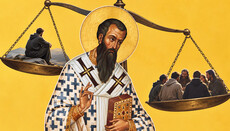
During prayer, there are moments when the tongue literally sticks to the roof of the mouth. This happens every time we come upon a line that strikes at our self-justification: "And forgive us our debts, as we forgive our debtors." At that moment, the face of a person who treated you unjustly rises before your eyes. Perhaps he betrayed you, slandered you, or simply failed to live up to your trust. And everything inside you tightens into a knot.

You realize that right now you are pronouncing a harsh sentence upon yourself. If you have not let go of the offense, it means you are asking God not to let go of your own sins either. A thought begins to turn over in your mind: would it not be better to skip this line, to pretend that nothing has happened? But it is pointless to dissemble before the Creator; He sees through our soul.
The Condition of Our Own Judgment
The ancient pastors knew this inner struggle. Saint Cyril of Jerusalem told the newly baptized that in the Lord's Prayer we make a covenant with God. We ourselves set Him the condition by which we ask Him to judge our deeds. And Saint John Chrysostom emphasized that our sentence lies in our own hands.
The Philokalia contains a story about a monk who had been gravely wronged by an acquaintance. The offended monk decided to go to the city judge to obtain retribution. Before leaving, he stopped by to see an elder to ask for his blessing and to pray together. Venerable Abba Silouan stood before the icon and said aloud: "And forgive us not our debts, as we forgive not our debtors."
The monk immediately interrupted him: "Father, but that is not what the prayer says!" To which Venerable Abba Silouan replied: "Is it not so, my child? If you have decided to go to court and take revenge, then the Creator will deal with you in exactly the same way." This lesson pierced his hardened heart, and the monk abandoned his plan.
The Choice of the Mind Against Feeling
The Gospel commandment to pray for those who offend us has no grace period. In the Gospel of Mark it is stated clearly: "And when ye stand praying, forgive, if ye have ought against any." Christ does not say: wait half a year until the pain subsides or the offender comes crawling with apologies. Forgiveness is required right now, in the very epicenter of the soul's turmoil.
But what are we to do when our feelings rebel? When the mere memory of the evil done to us takes our breath away with anger?
In August 2025, in the Agapit Church of the Kyiv Caves Lavra, His Beatitude Metropolitan Onuphry delivered a sermon on the parable of the unmerciful servant. The archpastor addressed the situation when the human heart turns to stone. Vladyka explained: if our feelings do not yet obey us, we must take a step toward forgiveness at least at the level of the mind.
A person can stand before the icons and honestly say: "Yes, Lord, I cannot yet humble my heart, but in my mind I forgive my neighbor." This is a volitional decision of a Christian who acknowledges God's authority as higher than his own wounded feelings.
The Dangerous Poison of Hidden Resentment
The reason we hold on to offenses is hidden in their bittersweet nature. Saint John Climacus wrote that keeping resentment is "the disgrace of prayer, the severing of supplication, the estrangement of love, a nail driven into the soul."
We carry this rusty nail inside us, stirring the wound with our memories, and yet we wonder why our spiritual life has turned into a dry desert.
The Venerable compared a person who tries to repent while harboring malice to someone running in a dream. In a dream it seems that you are racing with all your might, yet your body lies motionless in bed. Our feats of prayer remain an illusion as long as we thirst for retribution against the offender.
The Abbot of Sinai gave a criterion of healing from this illness of the soul. The Venerable stressed that freedom from resentment lies not in having spoken the right words or given the person a gift. True cleansing comes when you learn that your offender has fallen into misfortune, and you weep for him sincerely, as for yourself.
This is exactly how the ascetics acted. When robbers attacked the Sarov forest, the Venerable Seraphim humbly lowered his axe to the ground and offered his hands. And when the robbers were caught, the elder demanded that they be released and threatened to leave the monastery if they were sent to hard labor.
A gift asked of the Creator
If we still have much growing to do before reaching such spiritual heights, where should we begin our path to love? The Venerable John of the Ladder advises us to restrain the tongue. When you want to hurl a venomous remark after the offender or once again stir up another's guilt, you must compel yourself to keep silent. This verbal humility gradually calms the rebellion of thoughts.
Another practical counsel was left by the Venerable Abba Dorotheus. The saint proposed a prayer that knocks the arrogance out of pride: "O God! help my brother and me, for the sake of his prayers." By speaking these words, you voluntarily place your offender above yourself.
But the main thing is to realize that the ability to love one's enemies cannot be produced artificially.
The Venerable Silouan the Athonite wrote with sincere bitterness: "Lord, You commanded us to love our enemies, but it is hard for us sinners if Your grace is not with us." Love for the one who has caused you pain is always a gift of the Holy Spirit. It cannot be generated by an effort of will; it can only be begged for, as a beggar begs for bread to live on.
In the Paterikon there is an instructive account of two inhabitants of Antioch — the priest Saprikios and the layman Nikephoros. They had been friends for a long time, but then enmity came between them. Nikephoros recognized that he was in the wrong, sent envoys to his friend, and himself fell on his knees before him, begging forgiveness. But Saprikios shut himself off completely and refused reconciliation.
Soon persecutions began. Saprikios was seized for his faith, steadfastly endured the tortures, and was already standing before the executioner. And at that moment the rejected forgiveness burned him from within. Grace withdrew, Saprikios was seized with fear and renounced Christ. And Nikephoros, who was standing in the crowd, loudly confessed the faith and mounted the scaffold in place of the priest.
Forgiveness is necessary not only to bring to reason the one who has offended us. It is necessary for ourselves, so that we do not find ourselves spiritually naked before God at the decisive moment of life. And even if today we cannot physically approach and embrace our offender, we should at least lay a firm beginning of reconciliation with him in our own soul.