Ethnophyletism: The heresy of 1872 and the Phanar’s modern paradoxes
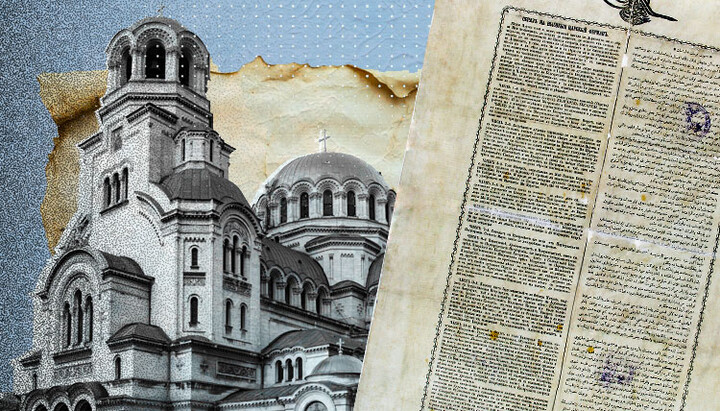
Bulgarian schism - source of the heresy of ethnophyletism. Photo: UOJ
In the closing weeks of summer and the opening days of autumn in 1872, Constantinople witnessed an event that would permanently alter the rules of the game in the Orthodox world. Around the great oak table of the patriarchal residence gathered the leaders of the Greek clergy. There they signed a document that, for the first time in history, condemned nationalism within the Church. The phenomenon was given the name ethnophyletism – from the Greek words for “nation” and “tribe.” A century and a half later, that text reads with striking urgency, because the questions raised in the nineteenth century now resonate in unexpected ways with the rhetoric of Constantinople itself.
How secular power legalized church schism
The conflict that led to the Council was born not in the altar, but in the office of the Ottoman sultan. In 1870, Sultan Abdulaziz issued a decree establishing the independent Bulgarian Exarchate. The Bulgarian national revival had begun to demand ecclesiastical independence: people were weary of seeing the higher clergy made up entirely of Greeks, while Slavic culture in the parishes was being steadily suppressed.
The sultan accommodated them and inserted into the decree an unprecedented clause: he allowed parishes themselves to vote on whether they would belong to the Greeks or to the Bulgarians.
In effect, the secular authority had legalized the formation of church structures not on a territorial basis, but on a national one.
Within a single city, two parallel jurisdictions could now lawfully exist. Before long, the Bulgarian exarch unilaterally proclaimed independence, and the Phanar answered with severity.
At the Great Local Council of 1872, the Patriarchs of Constantinople, Alexandria, and Antioch, together with the Archbishop of Cyprus, declared the Bulgarians schismatics. Of the Eastern Patriarchs, only Patriarch Cyril II of Jerusalem refused to sign the document. He left the session, unwilling to proclaim a schism, and soon paid the price: under heavy pressure from Constantinople and the Ottoman governor, his own Synod deprived him of his see.
The Council’s official document, the Horos, gave a clear diagnosis: to divide the Church along national lines is heresy.
Its logic rested on the ancient rule of “one city – one bishop,” in which the nationality of the flock is irrelevant. “We reject and condemn tribal division… Those who accept such division… we proclaim to be genuine schismatics,” the text declared.
Historical irony: what was left unsaid
But behind those ringing words lay a historical irony to which many scholars now draw attention. The Council condemned Bulgarian nationalism while deftly passing over its own in silence.
Not a single non-Greek hierarch was among the signatories of the Horos. Historians and canonists often note that in those years the Phanar itself was actively pursuing a policy of Hellenization of the empire’s Slavic and Arab populations.
The Greek hierarchs never stopped to ask where the natural right of a people to its own language ends and the heresy of national superiority begins.
The Council defended the territorial principle of church administration, yet it never set out the canonical boundaries of cultural domination. That omission would prove a time bomb hidden inside the document itself.
Modern paradoxes: From “equal” to “first without equals”
If we move from the nineteenth century into the twenty-first, the picture grows still more paradoxical. Church analysts increasingly point out that the contemporary theological rhetoric of the Patriarchate of Constantinople has entered into a complex conflict with that very Horos of 1872.
A vivid example is the concept advanced in 2014 by Metropolitan Elpidophoros (Lambriniadis), now Archbishop of America. In his theological essay, he proposed viewing the Ecumenical Patriarch not as the traditional “first among equals” (primus inter pares), but as “the First without equals” (Primus sine paribus).
This original concept, which provoked fierce debate in academic circles, attempts to justify supra-jurisdictional authority for one see by drawing a direct analogy with the place of God the Father in the Holy Trinity. It is a bold position, but one for which there is no pan-Orthodox conciliar consensus.
Alongside the promotion of this concept of exceptional authority, official speeches by representatives of the Phanar have increasingly placed emphasis on cultural exceptionalism as well. The term Romiosyni – the Byzantine Hellenic inheritance – has been actively brought into circulation and presented as the normative matrix for the whole Orthodox world.
The culmination of this rhetoric came in the speech delivered by Patriarch Bartholomew of Constantinople on October 21, 2018. Addressing representatives of the Greek diaspora in Istanbul, he uttered a phrase recorded verbatim in the official transcript: “Our Slavic brothers cannot tolerate the primacy of the Ecumenical Patriarchate and of our nation in Orthodoxy” (in the Greek original, the word used was γένος – race, nation, people).
Questions without ready answers
At this point, canonists and historians are forced to lay two documents side by side on the table. On the one hand, there is the decree of 1872, categorically condemning any situation in which national belonging is placed above the unity of the Church and used to obtain special status. On the other hand, we see the Phanar’s modern theories of the “First without equals,” reinforced in the public sphere by assertions of the special primacy of one particular nation or people in Orthodoxy.
When these facts are set next to one another, one cannot help but ask the natural question: is not the assertion of the cultural and administrative primacy of one nation precisely the same ethnophyletism that was condemned so harshly a century and a half ago?
The Bulgarian schism lasted 73 years and was lifted only in 1945, when the political reality had changed. This proves that living history is always more complex than dry decrees. The document of 1872 remains a grave warning against dividing the Church by passport and blood. Yet today it has also become a stern historical mirror – one into which the authors of modern theories about the exclusivity of one nation or one see would do well to look far more often.
Read also
Golgotha in the midst of a pogrom
In the autumn of 1938, the Jewish artist Marc Chagall painted the crucified Christ. Synagogues burn and refugees flee around the cross, while the Crucified One Himself is wrapped in a prayer shawl.
Stories of the Early Church. Level of governance: patriarch
How did several episcopal sees rise above the rest, why did the Church’s administrative map come to mirror that of the empire, and is the patriarchate a sacred form of Church governance?
A Chronicle without an author
We are accustomed to calling The Tale of Bygone Years the work of St. Nestor. Yet another monk left his signature on it, while the chronicle itself passed from one generation of scribes to the next.
How a wedding stopped a war
The young princess of Slutsk was married off to keep two powerful noble families from drowning the city in blood. Soon afterward, a Uniate metropolitan complained that Orthodoxy had been reborn in Slutsk.
Man before the forces of nature
A solitary figure on the shore seems insignificant before the immense power of the sea, yet it is he who stands before the Creator.
The mysteries of Golgotha in the light of archaeology
The veil of centuries obscures what really happened in the fourth century. Archaeology and ancient texts shed light on the true history of one of Christianity’s greatest sacred sites.