OCU spokesman: St. Nicholas did not take part in First Ecumenical Council
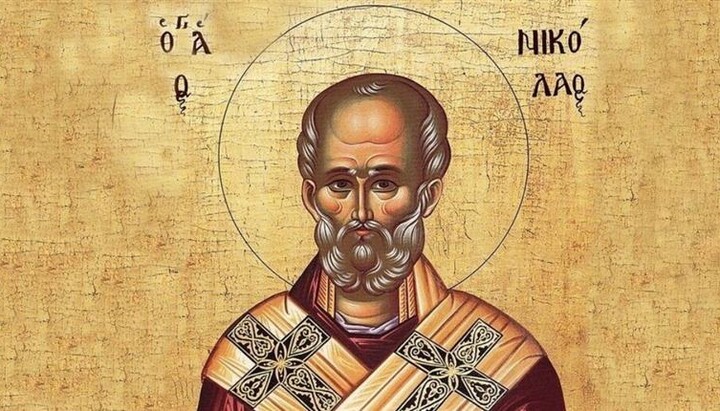
Icon of St. Nicholas. Photo: open sources
OCU spokesman Yevstratiy Zoria has said that St. Nicholas of Myra was not a participant in the First Ecumenical Council of 325. He made the comment under a Facebook post by OCU cleric Andriy Dudchenko.
“St. Nicholas was definitely not among the members of the First Council – this is only the product of a later perception of the real fact that this entire region had numerous councils over the course of decades, from metropolitan councils to councils of large provinces; there were dozens of them,” Zoria wrote.
According to him, such gatherings today would be called synods, bishops’ councils, and local councils, and their main subject was the struggle against heresies and the establishment of rules for church life.
“Therefore, it is quite obvious that, as a hierarch, the saint took part in such councils. But much later authors, reading in early sources about participation in a council, imagined that this was specifically the Council of Nicaea,” the OCU spokesman explained.
Zoria also said that, in his view, the Life of St. Nicholas combines information about two different figures. “The fact that some authors mixed together information about the lives of two different saints named Nicholas who served in this region is a scientifically established fact,” he claimed.
In Zoria’s opinion, authors who lived a thousand years or more later added details about another saint to the biography of the better-known Nicholas, believing that they were writing about one and the same person.
Church tradition, however, testifies to St. Nicholas’s participation in the First Ecumenical Council and to his zeal in defending the Orthodox faith against the heresy of Arius. This episode is reflected in the iconography of the “Miracle at Nicaea” and is widely present in liturgical texts dedicated to the saint.
The “two Nicholases” hypothesis mentioned by Zoria goes back to the work of German philologist Gustav Anrich, Hagios Nikolaos (1913–1917), in which he suggested that the Life of St. Nicholas of Myra (4th century) combined material about him with information about Nicholas of Pinara, archimandrite of the Monastery of Sion, who died in 564. This hypothesis remains a matter of debate and is not generally accepted in church scholarship.
It should be especially emphasized that the argument from the absence of St. Nicholas in the lists of participants at the Council of Nicaea is not convincing. The Council itself left no single official protocol with a named list of bishops. The lists were compiled separately and have come down to us in several languages – Greek, Latin, Syriac, Coptic, Arabic, and Armenian – and they differ significantly from one another, containing distorted names, omissions, and later corrections.
None of the surviving versions is complete. The participants themselves gave different figures for the bishops present, ranging from 250 to 300, while the number 318, fixed in tradition, has symbolic significance.
Given this state of the sources, the absence or presence of a particular bishop’s name in one list or another proves nothing in itself. There are many known cases where a hierarch’s participation in the Council is confirmed by other evidence, while his name is missing from the surviving lists. St. Nicholas’s name, moreover, appears in a number of Greek lists, and church scholarship has no grounds for excluding him from among the participants in the Council.
Earlier, the UOJ reported that the Vatican had once again granted representatives of the OCU the opportunity to hold a service at the relics of St. Nicholas the Wonderworker.
Read also
UOC delegation meets with Patriarch Shio in Georgia
Catholicos-Patriarch Shio III received a delegation of the Ukrainian Orthodox Church at the Georgian Patriarchate.
UOC marks Synaxis of Poltava Saints
Metropolitan Philip celebrated the Divine Liturgy at the Horbanivka Monastery in Poltava on the feast of the Synaxis of the Saints of Poltava.
Rector of UOC church in Kramatorsk sent for second military medical exam
Lawyers have secured a second military medical examination for Archpriest Oleg Kruchinin, who was unlawfully detained by TRC officers.
Jews, Muslims, Catholics, and OCU pray together at St. Sophia Cathedral
Representatives of Jewish, Muslim, Catholic, and OCU communities held an ecumenical prayer service for Ukraine in Kyiv.
Horbanivka Theootokos Icon honored at Poltava Eparchy monastery
Metropolitan Philip of Poltava and Myrhorod led a festal service at the Horbanivka Convent.
Greek hierarch: Clergy should use social media to bring people to Church
The Church of Greece hierarch stressed that while the internet and YouTube can be useful, they cannot replace in-person participation in church life.