Court voids state “expert review” on UOC – so where is “Moscow link” now?
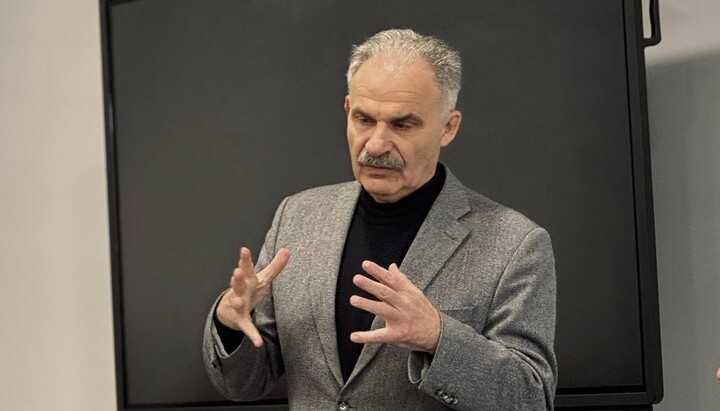
Head of the State Service of Ukraine for Ethnopolitics and Freedom of Conscience V. Yelensky. Photo: DESS
The appellate court has annulled Viktor Yelensky’s order of January 27, 2023 – the very order that approved the so-called “expert review" by the State Service of Ukraine for Ethnopolitics and Freedom of Conscience (DESS), alleging ties between the Ukrainian Orthodox Church and the Moscow Patriarchate. In substance, the “expert review” has been struck down.
The formal reason is damning enough: Yelensky’s agency ignored the UOC’s motions to recuse biased “experts.” And those motions were fully justified, because the “experts” built their accusations not on the documents of the UOC, but on the documents of the Russian Orthodox Church.
The court has now instructed the DESS to conduct a new review, taking into account its findings on the need to examine the recusal motion properly. But the consequences go far beyond procedure. This ruling calls into question the entire state policy pursued against the Church.
After all, the DESS document in which “experts” supposedly discovered the UOC’s link to Moscow became one of the chief instruments of today’s religious persecution:
- It was produced at the request of the NSDC and President Zelensky – and became, in effect, the authorities’ green light for a campaign to harass and destroy the UOC: sweeping SBU searches of dioceses and monasteries, the confrontation at the Kyiv-Pechersk Lavra, mass criminal cases against clergy, and much more.
- It became the “foundation” for illegal local bans on the activity of the UOC.
- It was used as the main argument at meetings where UOC communities were pressured into transferring to the OCU.
- And it served as an indulgence for mass defamation – in the media, in society, and in the corridors of power. After its publication, the UOC could be branded “Moscow’s” and “hostile” with an air of official legitimacy.
Last summer, DESS officials conducted separate “studies” into the status of the Kyiv Metropolis of the UOC and several monasteries. Now they are trying to liquidate them through the courts. These attempts have dragged on for a long time – and so far, without success. The appellate court’s ruling on the 2023 “expert review” will undoubtedly make those efforts even harder.
More than that, it may be the first warning bell for those who organized this entire machinery.
Persecution for faith is a crime. And sooner or later, it receives its verdict. Those who launch such campaigns from presidential offices usually remain in the shadows. It is the executors who are left to answer.
Viktor Yelensky, the current head of the State Service of Ukraine for Ethnopolitics and Freedom of Conscience, is a man who began his campaign against the Church back in Soviet offices. Then, the system protected him.
Today, things may turn out differently.
Read also
Shoulder straps or a cassock: who writes the script for UOC "fighters"?
Everything indicates that both Veliar and Pshenychny are ordinary performers of someone else's script. There is only one question – does the scriptwriter wear shoulder straps or a cassock?
Why is it legal to kill a person before birth but not after?
Children are the most privileged members of society. Yet that same society officially permits children to be killed – and on a massive scale.
Honoring the Bolsheviks’ successors at Kyiv Lavra
It was under the Reserve that the relics of the saints were desecrated, Lavra churches were turned into an atheism museum, and toilets were installed in sanctuaries.
"Degenerates" and "stupid animals": anti-UOC activists turn on children
Future historians will wonder how a vast country’s information agenda could have been shaped for so long by people so petty, vicious, and utterly contemptible.
Zelensky sees murder of Polish priest but not of Sviatohirsk monk
Why does Zelensky react so emotionally and swiftly to the murder of a Catholic cleric while remaining completely silent about the murder of an Orthodox monk?
UOC vs. OCU numbers: pollsters count, social media recount
Official polling suggests Dumenko’s structure has an overwhelming lead in the number of parishioners, while social media polls paint a very different picture. Which should we believe?