The meaning of the Gospel events from Pascha to the Ascension
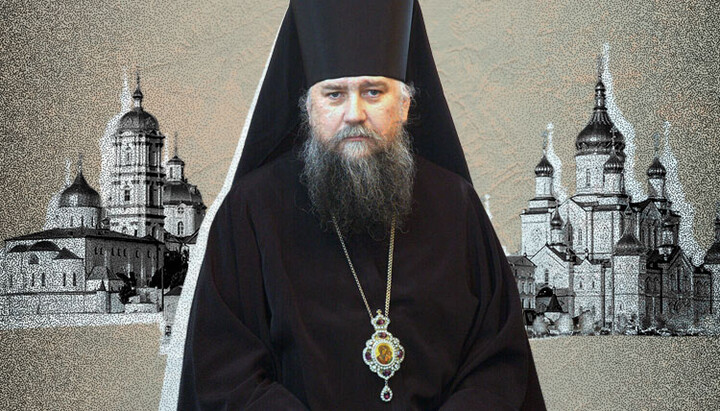
Archbishop Job (Smakouz). Photo: UOJ
“Christ is risen, Your Eminence! The Paschal season has its own unique commemorations and sequence: after Pascha comes Antipascha, then Radonitsa, then the Myrrh-Bearing Women. Each following Sunday is also tied to a specific Gospel reading. Why is this so – who composed this sacred sequence, and for what purpose?”
“Indeed He is risen! The Sundays after Pascha have a special character. The first of them – Thomas Sunday – begins with the enlightenment of the ‘blind’ in faith Apostle Thomas, who comes to believe in the Resurrection of Christ, and culminates in the healing of the man born blind, who likewise confesses Christ’s divinity. The Holy Fathers established this order of Gospel readings at the Divine Liturgy to strengthen our faith in the Risen Christ, so that we might see and hear the witnesses of His Resurrection.
The Myrrh-Bearing Women revealed an example of radiant, joyful love for our Savior. To this day, all Christians repeat the glad tidings they proclaimed at dawn to the Apostles: Christ is risen! In uttering these words, they became ‘apostles to the Apostles.’ ‘In Christ Jesus they became a new creation’ (2 Cor. 5:17). Gentle as they were, they became fearless and courageous – in them the finest qualities of both men and women were united (Gal. 3:28). Bringing myrrh to anoint the Body of Christ, they assumed a unique ‘diaconal’ ministry. They became deaconesses – forerunners of the first deacons, whose election is recounted in the Acts of the Apostles.
They continue even today to assist priests who lack the time and hands for everything. Modern myrrh-bearers sing in church, light candles and lamps before icons, perform works of mercy, teach children the Law of God and prayer, and maintain the beauty and order of the храм. By the grace of the Holy Spirit, our mothers and grandmothers preserved the Orthodox faith and now fill our churches. The fragrance the Myrrh-Bearers carried in their hearts to Christ’s tomb – to anoint His most pure Body – has endured for two thousand years. It is the finest fragrance in the world, distilled from sacrificial love for God. The Myrrh-Bearing Women help us radiate spiritual beauty and warmth to the glory of God.
The fourth Sunday, of the Paralytic, reminds us that the Pascha of the Lord heals us, just as Christ healed the man who had lain for thirty-eight years at the Sheep Pool – and did so precisely during the feast. This is a call for us to remain in these Paschal days by the new ‘Sheep Pool’ – in our churches. It is a sign that only the Savior can make us whole.
On the fifth Sunday after Pascha, the Church recalls Christ’s conversation with the Samaritan woman so that we might imitate her in the work of Gospel proclamation. Having recognized in Him the Messiah, she left her earthly concerns and ran to the city to announce that Christ had come – the One who speaks of what matters most. So we, too, must carry from the храм into the world the message of our Savior. To the Samaritan woman, Christ revealed Himself as Messiah and spoke of His teaching under the image of living water. He told her that salvation is realized within the family (‘call your husband’) and that it is not a place that saves a person, but God, who is Spirit. The well of Jacob symbolizes our Church – there we meet Christ and strengthen our faith in His Resurrection and in eternal life.
“History shows that not every Pascha has been free of sorrow. We are living through war, through grief – and yet: Christ is risen! How are we to understand this?”
“Metropolitan Anthony (Bloom) defined the Church in these words: ‘The Church is the Body of Christ, crucified for the salvation of the world.’ The Lord suffered in His earthly life, and the God-human Body of His Church has suffered throughout history. Even now He is persecuted – in different ways, in different parts of the world. The history of the Church is Gethsemane and Golgotha, after which there is always the Resurrection. ‘Where the Holy Spirit is, persecution follows like a shadow… The prophets were always persecuted, the Lord was persecuted, and so were the Apostles,’ said Saint Macarius of Egypt.
The Paschal joy of Christ’s victory over the devil and hell accompanied the Apostles everywhere, worked miracles, and did not abandon them even in the hour of martyrdom. It gave courage, fearlessness, and victory to Christians thrown to the lions in the arenas of the Roman Empire. The joy of the Resurrection strengthened thousands of priests and laypeople imprisoned for their faith in Soviet prisons and exile. Today, it inspires the faithful of the canonical Orthodox Church in Ukraine and throughout the world.
Even now it mysteriously kindles our hearts, calling sinners to become saints. The joy of the Resurrection becomes ‘wings’ for our priests, teachers, and students who serve God, who teach and learn to serve the Holy Church and our people.
The Resurrection of Christ is the beginning of a new life for every Christian. In the days of Pascha, the Church proclaims the prophetic words of the Psalmist David: ‘Let God arise, and let His enemies be scattered!’ Let God arise and begin to act! Then life and love will be renewed in each of us; sin, falsehood, enmity, evil, and division throughout the world will flee. May the sorrowful burdens of war once again be transformed into the joy of victory and the triumph of Christ’s peace.
“You now lead the Pochaev Theological Seminary in your homeland – in Pochaev – and bear the name of St. Job of Pochaev. After nearly twelve years of ministry overseas, in Canada and America, the Lord has placed you at the feet of your heavenly patron. This is God’s providence. How attentive must a believer be to recognize such providence in his life and rightly understand it?”
“In the first chapter of the Acts of the Apostles, Saint Luke records the instruction of the ascending Christ: ‘…you shall receive power when the Holy Spirit has come upon you; and you shall be My witnesses to the ends of the earth.’ The example of Saint Job and the worldwide preaching of the Apostles about Christ’s Resurrection helped me accept, with humility and love, the path that led me to Canada and to fulfill that obedience. Obedience to the Church must always be the distinguishing mark of an Orthodox Christian – not only of a monk, but of every layperson.
“The Ascension of the Lord is not far off. How can we imitate His disciples – the holy Apostles who accompanied Him as He ascended to the Father?”
“Christ, like loving parents, leads us – His children – into the first grade of the school of spiritual life. He leaves us so that we may learn from the Holy Spirit to live according to His Gospel. Christ ascends to His Father in order to beseech Him to send us the Spirit – the Comforter and Teacher of Truth. The Spirit of Life consoles those who are persecuted for righteousness and truth.
The meaning of the feast is revealed in the ancient greeting of the first Christians: ‘Christ is in our midst!’ – and the answer: ‘He is and ever shall be!’ Christ is with us and among us when we abide in love, in truth, in humility, and in patience. We must labor earnestly to preserve unity with Him and with one another. May we also be granted, like the Apostles, the spiritual joy and blessing of our Lord Jesus Christ, who ascended in glory.”
Read also
Deadly spiral of human hatred
The tragedy of Lebanon's civil war lays bare how dehumanization and fear can turn human beings into monsters.
Woe to expectant mothers – or to those of little faith?
God commanded one prophet not to have children, yet told his people in exile to bear sons and daughters. What does this apparent contradiction tell us today?
The help God never asked for
Uzzah wanted only to keep the Ark of the Covenant from falling into the dust. Why did this well-intentioned act cost him his life, and who was really responsible for his death?
Freedom begins when there's nothing left to take
Fear of persecutors takes root in our attachment to possessions. We turn to St. Basil the Great to understand why the prefect's threats held no power over him.
The bride in the window frame
The author of the earliest account of St. Thecla’s life was defrocked. Yet it was his book that preserved the only ancient description of the Apostle Paul’s appearance.
Drinking priest, or the flip side of parish life
In his epistle, the Apostle Jude describes a scene familiar to anyone who has seen a church meal turn into a drinking party.