When words end, Bach begins
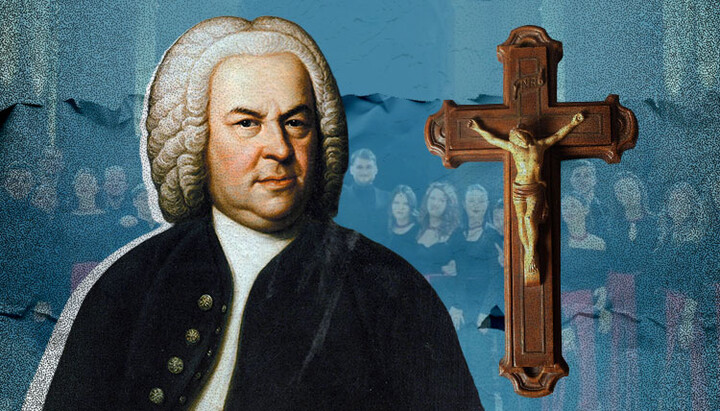
Bach's penitential oratorio. Photo: UOJ
Bach wrote the "Passion" for Good Friday 1727 for Leipzig's Church of St. Thomas, not for a hall with velvet seats and coughing during intermissions. People did not come merely to "listen to a piece of music". They remained inside the work for three hours – in the twilight, surrounded by two choirs and two orchestras, as direct participants in the biblical events, together with their own grief and personal struggles.
The "Passion" is generally arranged as a kind of spiritual space where the listener needs to enter with their numbed pain – and live through it until the end of the musical composition.
Bass heavier than air
The opening chorus "Kommt, ihr Töchter, helft mir klagen" – "Come, daughters, help me weep" – immediately sets in motion a pulsating bass. Then voices build up in layers. They interrupt each other, cling together, diverge, collide again. Dissonances cut through space – in them one hears the crowd, the shouting, the crush, the palpable weight of what is happening. And yet the score remains almost flawless and geometrically precise.
Bach knows well: collective cruelty rarely looks like cruelty. More often it resembles a precisely calculated order, a law of society. And he writes it as such.
And suddenly – above this march – a children's choir quietly throws out: "Sehet! – Wen? – Den Bräutigam" ("Behold! – Whom? – The Bridegroom"). Picander's tiny dialogue sounds as if someone is speaking from different air. Above the crowd that leads the Man to execution, a question suddenly emerges: do you even understand Whom you are carrying?
The violin speaks what words cannot express
There is a moment in the Passions that almost unfailingly strikes the emotions every time, regardless of whether a person believes or not. It is the aria ‘Erbarme dich, mein Gott’ (‘Have mercy, my God’), which follows the scene of Peter’s threefold denial.
In Matthew, this episode is described briefly, in one phrase: "And he went out, and wept bitterly" (Mt. 26:75). Bach unfolds these words into several minutes of slow and almost unbearable weeping. Even the violin here does not accompany the voice – it weeps itself. The rises and falls of the melody match the rhythm of the flow of tears. The alto repeats the same word, as if it can never end: "Erbarme, erbarme dich" – "Have mercy, have mercy on me."
This feeling of inner judgment is familiar to many: "I could have remained with God but I did not remain."
Bach does not explain what should be done with this and does not push toward the correct reaction. He simply gives freedom to sound. And while the violin weeps, a simple thing is suddenly discovered: one can and must weep. It is precisely weeping that reunites the sinner with the Savior.
One step between Judas and Peter
Sometimes it seems that the "Passion" reveals to us what the human eye does not always notice.
Judas also repented. The Gospel says: he threw the money in the temple – and went and hanged himself (Mt. 27:5). His repentance closed in on itself, found no way out beyond itself; and in the end, destroyed the former apostle.
Peter, in turn, went out from the high priest's courtyard and wept. Bach transforms this movement of the soul into a musical image. The violin in "Erbarme dich" seems to walk alongside Peter, descends with him into the same depth of repentance – and from there slowly rises toward the soul's rebirth.
Bach reminds us that the matter here is not only in the weight of each apostle's sin, but also in the direction of their gaze.
Judas looks into himself and sees the final failure of his plans. Peter looks at Christ and weeps. Bach hears this and lets us hear it.
Tears at the Tomb
The final chorus of the "Passion" – "Wir setzen uns mit Tränen nieder" – is written in the tempo of a lullaby. After three hours of pulsating bass, dissonances, cries and torn grief, suddenly a quiet, swaying rhythm is heard, almost lulling. Picander's text is addressed directly to the Tomb – in free translation from German it sounds like this: "We sit down in tears and call to You in the grave: rest in peace, rest in peace."
There is no triumph here, and it would be strange if it suddenly appeared. A person who has passed through the Messiah's sufferings simply sits before His tomb. Grief is again not fully explained but placed there, in the grave, where it belongs before paschal joy.
At the end of the score, Bach places three letters: S.D.G. – Soli Deo Gloria, "Glory to God alone." He does not boast that he wrote a great work. But it indeed turned out to be great and has sounded for centuries.
Philosopher Emil Cioran – one of the skeptics of the 20th century, a man who argued with existence his whole life – wrote: "Bach's music is the only proof that the creation of the Universe cannot be considered a total failure."
Cioran was not a believer. But he heard in this music what even an atheist could not help but hear.
Now the "Passion" sounds in concert halls, and after the finale the audience applauds, which looks a bit strange: we have just been sitting and weeping with prayer at Christ's Tomb. The liturgical space for which this work was written functioned differently: the silence after ‘Wir setzen uns’ turned into the prayer of Holy Saturday.
However, the matter is probably not only in the place where this work sounds. Bach does not require special inner readiness from a person. He asks for one thing — to come to God without closing oneself off from Him. Bach does not dispense ready-made answers to our spiritual questions. He offers something else — a space of music in which our grief reaches its depths, and from which, pushing off the bottom, one can rise toward salvation and breathe freely once more.
Read also
Facade of bones and facade of light
Antoni Gaudí spent forty-three years building a church in Barcelona, knowing that this construction was for the ages.
Trial of a dead pope
Once in Rome, the body of a deceased pope was seated on the throne and put on trial. The accusation relied on a church canon that had once saved his see.
Monastery built in defiance of king
When Orthodox believers in Minsk were left with just one church, townspeople decided to build another – and even a royal decree did not stop them.
Young Mother and Sleeping Christ
Michelangelo carved a Virgin Mary who looks younger than her Son – and signed his name in marble for the only time in his life. Neither of these peculiarities was accidental.
Orthodox books from a Uniate printing press
In the 18th century, Uniate monks at Pochaiv printed books used in prayer by Orthodox Christians and Old Believers alike.
The story of the honey brotherhood
The Mogilev Brotherhood began with members pooling money to brew honey drinks for feast days – and eventually grew to have its own printing press.