A solitary vigil light against academic enlightenment
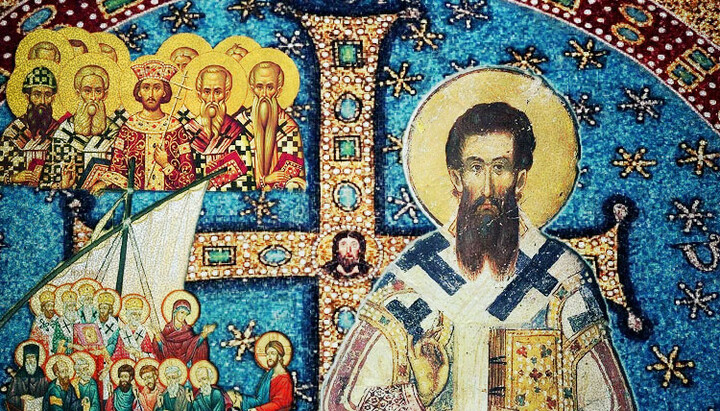
Palamite disputes. Photo: UOJ
By the middle of the fourteenth century, the once-mighty Byzantine Empire was coming apart at the seams before everyone’s eyes. From the East, the Turks were pressing forward with relentless force. Inside the country, civil wars erupted one after another, while terrifying rumors of an approaching plague crept through the cities like poison smoke. Politically and economically, the empire had driven itself into a dead end. It seemed that one final blow would be enough for everything to collapse into dust.
And yet, astonishingly, it was precisely in those darkest and most hopeless years that Byzantine society experienced a dramatic spiritual turning point – one that would shape the entire face of Eastern Christianity for centuries to come.
While blood flowed along the frontiers, another battle erupted in Constantinople – a battle that shook everyone, from market traders to the emperor himself. On one side stood Barlaam of Calabria. He was a brilliant and dazzlingly educated theologian from Southern Italy, a philosopher steeped in Greek mathematics and Aristotelian logic. Behind him stood the vast university libraries of Europe, the refined discipline of public disputation, and the polished machinery of Latin intellectual thought.
For Barlaam, God was a sublime and beautiful Idea – infinitely exalted, infinitely distant. He sincerely believed that God could be studied through books, analyzed through elegant arguments, and discussed from academic lecterns, but that no ordinary human being could truly encounter Him personally in this life.
Books against living warmth
When this refined intellectual arrived on the Holy Mountain of Athos, he collided head-on with the hesychast monks – and the encounter shocked him to the core.
Barlaam saw men sitting for hours in the dimness of cramped cells, their chins pressed against their chests, rhythmically repeating the Jesus Prayer with every breath. And these monks claimed, with utter seriousness, that in the depths of this silence they beheld the very same Light of Tabor that the apostles once saw during Christ’s Transfiguration.
Barlaam’s rational, analytical mind revolted against it.
To him, this seemed like primitive superstition – dark mysticism, peasant magic, mass self-deception. In his writings, he mocked the monks with open contempt. He sneered that these people had initiated him into absurd fantasies, and that he had personally witnessed strange fanatics who apparently believed the human soul resided somewhere near the navel.
For Barlaam, God was such an utterly transcendent Absolute that any visible light could only be an atmospheric phenomenon or the hallucination of uneducated men.
But the monks found a defender in another remarkable figure – Saint Gregory Palamas.
Palamas himself came from a noble aristocratic family. He had once moved within imperial circles and possessed every opportunity for a brilliant worldly career. Yet he abandoned everything for Athos. He knew philosophy and logic as well as Barlaam did, but behind Palamas stood something greater than libraries and intellectual systems – the living experience of men who had spent years praying in caves, alone with their fears, face to face with God.
The Light you can touch
Saint Gregory found astonishingly clear and simple words to defend the monks’ experience.
He explained that God possesses two modes of existence before humanity. On the one hand, there is His Essence – utterly unknowable, inaccessible, beyond every created mind. No human being can ever penetrate into the inner mystery of God Himself.
But on the other hand, God reveals Himself to the world through His Energies – His living Grace, actively present here and now.
Palamas offered an image that even the simplest person could grasp.
We cannot touch the sun itself. Its unimaginable heat would instantly reduce us to ashes. In that sense, the essence of the sun remains forever unreachable.
Yet every day we stand beneath its rays.
A sunbeam is not the sun itself, but neither is it separate from it. It is the sun’s living energy, truly present on earth, giving warmth, light, and life to everything alive.
So too, the Light of Tabor spoken of by the Athonite monks was not an optical illusion or psychological trick. It was the real and tangible presence of God in human life.
Palamas wrote plainly that God is Light – and whoever partakes of Him gradually becomes light as well.
In the end, the Councils of Constantinople vindicated Palamas. They affirmed that the Creator does not remain somewhere beyond the stars, coldly observing human suffering from afar. He enters directly into the chaos of human existence, filling every corner of life with His presence.
The body as a living temple
The circle of intellectuals around Barlaam viewed the human body with deep suspicion. To them, flesh was merely a temporary and dirty shell – a prison for the soul that prevented the mind from soaring into the pure realm of abstract thought. The body belonged to a lower order of existence; only the intellect truly mattered.
Palamas overturned this vision entirely.
He restored to the human body its forgotten dignity as a temple.
He taught that salvation embraces the whole person – bones, muscles, lungs, heartbeat, breath. Everything in man was created by God and is capable of receiving divine grace.
The prayer practiced on Athos was not some abstract meditation detached from physical existence. It was exhausting spiritual labor. The monks synchronized their breathing and the beating of their hearts with the words of prayer. It was an attempt to gather the shattered, fear-ridden mind back into the heart – to restore the human being to inner wholeness.
Palamas asked his critics a devastatingly simple question: if our bodies are temples of the Holy Spirit dwelling within us, then why should the body be ignored during prayer?
If divine light can penetrate human flesh, then even in the most terrifying and inhuman circumstances, a person can become a bearer of that light. And for this, no doctorate in philosophy is required.
How to preserve yourself in the darkness
Later, secular historians often grumbled that the Palamite controversies merely distracted Byzantium’s elite from the real Turkish threat. While armies gathered beneath the walls, theologians argued about the nature of uncreated light.
But history delivered its own verdict.
The empire fell anyway. Its collapse could not be prevented.
Yet the Orthodox peoples survived centuries of foreign domination without losing themselves precisely because of this living tradition of inner prayer.
It gave them an inner core that neither violence nor empire could crush. Prayer could not be confiscated at a border checkpoint. And the hidden light within the human heart continued to burn even when every earthly light around them went dark.
Today it is easy to encounter new “Barlaams.” They sit on forums and Telegram channels, flawlessly quoting canons, bending faith to fit temporary political agendas, dissecting every mistake with surgical sarcasm.
But behind all that polished logic there is often only cold emptiness. A mind deprived of living spiritual experience leaves the soul lifeless.
Modern believers, too, often feel like citizens of a dying empire. The sky seems sealed beneath leaden clouds. God feels impossibly distant.
Yet Athos reminds us that human beings have not changed in six hundred years.
When you sit in a dark apartment during a blackout, or hide in a freezing basement during an air raid siren, fingering prayer ropes in your pocket or whispering the simplest words of prayer under your breath, you are doing exactly what those Athonite monks once did in their own age of catastrophe.
You are searching for inner silence in the middle of outward chaos.
That quiet light requires no permission from governments and no diploma from prestigious universities.
Grace is not a paragraph buried inside a dusty textbook of dogmatics.
It is living warmth.
A warmth that reaches a person here and now – in the darkest and most unbearable moment of life.
One only needs the courage to trust that warmth and allow it to enter the heart.
Read also
Trial of a dead pope
Once in Rome, the body of a deceased pope was seated on the throne and put on trial. The accusation relied on a church canon that had once saved his see.
Monastery built in defiance of king
When Orthodox believers in Minsk were left with just one church, townspeople decided to build another – and even a royal decree did not stop them.
Young Mother and Sleeping Christ
Michelangelo carved a Virgin Mary who looks younger than her Son – and signed his name in marble for the only time in his life. Neither of these peculiarities was accidental.
Orthodox books from a Uniate printing press
In the 18th century, Uniate monks at Pochaiv printed books used in prayer by Orthodox Christians and Old Believers alike.
The story of the honey brotherhood
The Mogilev Brotherhood began with members pooling money to brew honey drinks for feast days – and eventually grew to have its own printing press.
Golgotha in the midst of a pogrom
In the autumn of 1938, the Jewish artist Marc Chagall painted the crucified Christ. Synagogues burn and refugees flee around the cross, while the Crucified One Himself is wrapped in a prayer shawl.