
How monks saved antiquity – through chattering teeth and worn-out quills
Plato, Galen, and pagan grammar survived the collapse of Rome because monks carried them through the darkness – by lamplight, with frozen fingers, while wars raged beyond monastery walls.
Southern Italy, the middle of the sixth century.
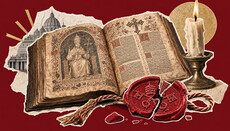
A stone monastic cell is so cold that the ink thickens on the quill. Above the desk hangs an ever-burning lamp, ingeniously designed so that oil flows automatically from a hidden reservoir, keeping the flame alive throughout the night.
Beneath that lamp sits a monk. He is not copying the Gospel. He is copying the works of Galen – a pagan Greek physician who died more than three centuries earlier.
Outside the monastery walls, a seemingly endless war is tearing Italy apart. Goths and Byzantines have been fighting over the peninsula for nearly two decades. Cities change hands, libraries burn alongside entire neighborhoods, and with them disappears the cultural inheritance that future generations will call classical antiquity.
Yet amid this devastation, someone is painstakingly preserving the medical writings of a long-dead doctor, line by line.
Why?
Why would monks devote themselves to such a task? Was prayer, fasting, and theological reflection not enough?
The statesman who put his faith in parchment
The man who gave such instructions to his monks was Flavius Cassiodorus.
A former senior official at the court of the Ostrogothic kings – effectively the prime minister of a dying state – Cassiodorus rose to the highest levels of political power before concluding that the world he had served was doomed.
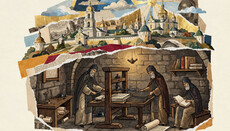
Around 544, he founded the Monastery of Vivarium on his family estate near Squillace and established there a scriptorium – a workshop devoted to the copying of manuscripts.
We know how this workshop operated because Cassiodorus described it himself. He instructed the monks how to trim a quill, how to correct mistakes, and how to handle books properly.
Yet these practical details were not the heart of his vision.
In his Institutions of Divine and Secular Learning, he ordered that monks copy not only Scripture but also pagan literature: the medical treatises of Hippocrates and Galen, the botanical works of Dioscorides, and textbooks of grammar and rhetoric.
For a monastery of that era, placing pagan authors on the same shelves as sacred books could easily have been considered scandalous.
Cassiodorus explained his reasoning plainly.
To understand Scripture properly, a monk first needed to master everything the ancients had known – language, history, medicine, and learning itself.
A scribe’s pen, he wrote, wounds the devil with every line copied for the glory of God.
Cassiodorus saw something the kings battling around him could not.
Kingdoms survive for decades.
A faithfully copied book may survive for a thousand years.
Evidence written in the margins
The most honest testimony about this labor survives not in grand chronicles but in the margins of manuscripts.
There, for a brief moment, anonymous scribes stopped being anonymous. They became human. Hundreds of such notes remain.
“Very cold.”
“Oh, my hand.”
“Hairy parchment.”
The last complaint meant the animal skin had been poorly scraped, causing the quill to catch on the remaining fibers.
One exhausted scribe ended his work with a simple observation:
“Three fingers write, but the whole body labors.”
And indeed, the entire body paid the price for those three fingers gripping the pen.
Another monk, having finally reached the final line of a manuscript, could not resist adding:
“The work is finished. For Christ’s sake, give me a drink.”
There is little romance in these words. A scriptorium was not a cozy library illuminated by warm light. It was a cold room where health slowly deteriorated and where the only reward was reaching the final sentence.
Across Europe, scribes described that moment in almost identical terms:
“As a harbor is welcome to a sailor exhausted by the sea, so the last line is welcome to a scribe.”
The comparison was no accident. These men truly felt like sailors carrying precious cargo through a storm, uncertain whether it would ever reach safety.
Grammar amid the sound of oars
And sometimes the storm was literal.
Let us travel northward, nearly three centuries later.
Today, the Abbey of Saint Gall in Switzerland preserves a manuscript known as Codex 904.
It is a copy of the Latin grammar of the Roman scholar Priscian, produced around 845 in Ireland and covered with notes written in Old Irish.
Monks used it to learn Latin – the language upon which all Western scholarship depended. Yet among its grammatical annotations appears something entirely unexpected.
An anonymous Irish monk interrupts his studies to write four short lines about a storm. He rejoices in the raging wind. A fierce gale is roaring across the sea, whipping the waves into a gray frenzy, and the monk gives thanks for it.
Why?
Because in such weather the Viking raiders cannot sail. Their longships will remain in harbor, and the monastery may survive another night.
The image is striking.
A man studies Latin grammar – one of the intellectual treasures inherited from fallen Rome – while listening anxiously to the darkness beyond the walls, wondering whether enemy oars will soon scrape through the water.
A quill rests in his hand.
His mind rests entirely on survival.
The legacy of frozen ink
Vivarium did not long outlive its founder.
After Cassiodorus died around 580, the monastery gradually declined. Its library was dispersed, its community faded, and the great literary project appeared to fail.
But only in appearance.
By then, copies of its manuscripts had already traveled elsewhere.
They found their way to Bobbio, founded by the Irish missionary Columbanus.
They reached Saint Gall.
They reached other monasteries across Europe.
The texts escaped before the house that sheltered them disappeared.
The monk who scribbled, “Oh, my hand,” never lived to see the outcome of his labor. He never knew whether his sleepless nights had mattered.
Yet the line he traced with chilled fingers outlived the Goths.
It outlived the Byzantines.
It outlived the kingdoms and alliances of countless barbarian rulers.
And because of men like him, priceless works of ancient science, philosophy, medicine, and literature survived the wreckage of the ancient world and reached our own age.
The civilization that later called itself Christian did not merely inherit antiquity.
In countless cold monastic cells, it saved it.