
Volcanic eruption and frost in Europe: a test of humanity
A natural disaster on the other side of the world left Europe without warmth. Where people united, famine retreated. Where help came too late, society began to unravel.
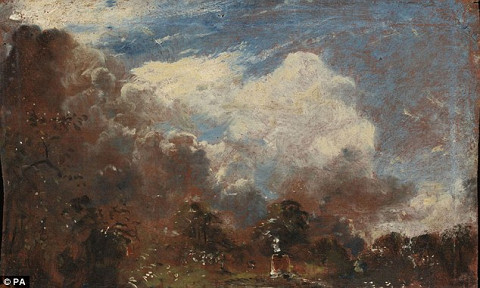
June 1816 brought snow to Switzerland. Puddles froze overnight, and hail destroyed the first tender shoots on the trees. People waiting in line at parish soup kitchens looked up at the sky, unable to understand what was happening. The sun shone dimly, as though through dirty glass, while the evening sky burned with an unnatural crimson glow. Years later, these apocalyptic scenes would appear in the paintings of William Turner and John Constable.
None of those waiting for food had ever heard of Mount Tambora.
A year earlier, in April 1815, the Indonesian island of Sumbawa witnessed the largest volcanic eruption of the past millennium. Around one hundred cubic kilometers of ash and gases were blasted into the atmosphere, along with six times more sulfur than was released during the infamous 1991 eruption of Mount Pinatubo. On Sumbawa itself, and on the neighboring islands of Lombok and Bali, more than 70,000 people died as a result of the eruption, the ensuing famine, and epidemics.

The sulfur-laden cloud rose into the stratosphere and circled the globe. Average global temperatures fell by about half a degree Celsius. It may not sound like much, but Europe suffered the most severe consequences. In the middle of summer, the continent was suddenly gripped by unprecedented cold. North America fared no better – snow fell in June, and lakes froze in July. History would remember it as the Year Without a Summer.
Twilight as a sign of the end
For people living in the early nineteenth century, without telegraphs or weather forecasts, the explanation for the catastrophe seemed to be written in the sky.
Sunspots were visible to the naked eye, and together with the relentless cold and darkened skies, they seemed to point to only one conclusion: if the sun itself was fading, then the end of the world must be near.
That same summer, a group of British writers, stranded by relentless rain at a villa on Lake Geneva, entertained themselves by telling ghost stories. Mary Shelley began developing the idea for Frankenstein – the tale of a creature created in defiance of nature. Lord Byron wrote his poem Darkness, envisioning a world where the sun has gone out and humanity descends into savagery. Their literary imagination echoed the very real fears gripping Europe at that moment.
But while some described the apocalypse in poetry and fiction, others had to feed the hungry.
Soup against panic – or the collapse of civilization
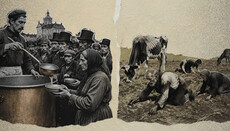
Across Swiss towns and cantons, networks of parish and municipal soup kitchens began serving hot meals to the poor. The system was already well established, having saved lives during the famine of 1813, and it was quickly revived in 1816–1817. Through these efforts, the Church fulfilled its mission of mercy during a time of public disaster.
Eastern Switzerland suffered the hardest blow. Farmers there had long shifted from agriculture to textile production and depended on grain imported from southern Germany. At the height of the panic, those grain shipments stopped.
Pastor Rupert Zollikofer, who witnessed the events firsthand, left a chilling account of life in Appenzell Ausserrhoden: "People now graze together with the cattle."
Reduced to desperation, they crawled through meadows on all fours beside livestock, searching for anything edible because no other food remained. In Appenzell Innerrhoden, around ten percent of the population died during 1817 alone.
Two administrations – two very different outcomes
Geneva responded to the crisis quickly. By December 1816, the city authorities had begun purchasing grain abroad and releasing it onto the market while gradually increasing prices. By the summer of 1817, grain prices had risen by about 220 percent – painful, but still manageable.
In eastern Switzerland, however, prices soared by 587 percent during the same period.
As shocking as it sounds, some Swiss cantons actually blocked grain shipments to one another. Even within a single confederation, neighboring regions closed their borders to protect their own supplies as everyone struggled to survive.
Government responses varied dramatically. In the cities, prices roughly doubled by the summer of 1817. In the countryside, meanwhile, people were reduced to grazing alongside animals.
State assistance reached those in need unevenly. Where authorities acted decisively – as in Geneva – parish relief complemented government grain purchases. But where officials hesitated or failed to act, the burden of saving lives fell almost entirely on local parishes.
Humanitarian aid from Odesa
This tragic story also has an unexpected southern connection.
The port of Odesa, founded in 1794 on the newly developed northern Black Sea coast, was experiencing explosive growth in trade during these same years. Grain exports through Odesa increased by 120 percent between 1798 and 1817, fueled by Europe's wars and repeated crop failures.
While northern Europe shivered beneath an ash-filled sky, the southern steppes – largely spared the effects of Tambora's eruption – became one of the continent's most important sources of grain.
A test of humanity
The Year Without a Summer became a severe test of human resilience in the face of disaster. Some communities endured it remarkably well; others fell into catastrophe. Much depended on the judgment and determination of those making crucial decisions.
In some places, the Church stood ready to share its last stores of grain through communal meals. In others, neighboring regions blocked grain routes to protect themselves.
Where the state remained silent or responded too slowly, the parish soup kitchen became the center of community life. There, hunger became manageable and could be overcome. Elsewhere, people were driven to the point where survival meant grazing in the fields alongside animals.