Bishop plays double game in Przemyśl
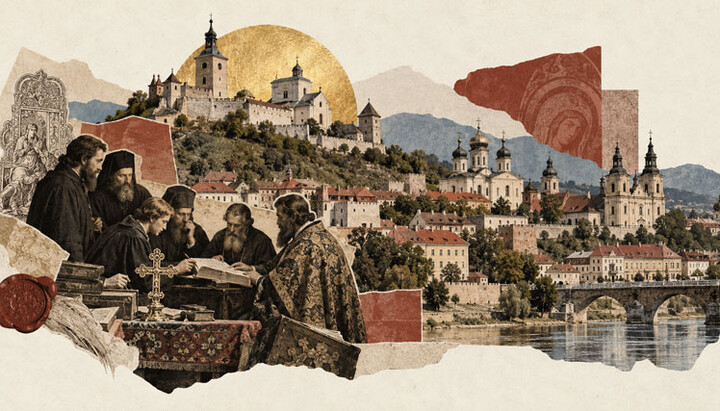
Документы XVII века хранят разгадку сложной драмы, когда простые миряне взяли на себя защиту древних традиций.
On June 1, 1606, Bishop Michael (Kopystensky) of Przemyśl could barely hold a goose quill in his failing hands. On the table before him lay a sheet of paper addressed to the assembly of the nobility in Lublin. This document contained a desperate plea to protect the people from the violence being committed in the lands of Volhynia and Galicia. The archpastor wrote that the Uniate authorities were seizing churches, driving out priests, and forcing the faithful to change their faith by "violence and coercion."
The venerable elder knew what he was talking about. He had less than three years left to live, and behind him stretched the shadow of a difficult decision that had changed the fate of the entire diocese.
A Double Stroke of the Pen in Sokal
In the summer of 1594, the West Russian bishops gathered in the town of Sokal. Among them was Bishop Michael of Przemyśl. The situation surrounding the Orthodox communities in the Polish-Lithuanian Commonwealth was becoming more difficult with each passing year. The Polish administration restricted the rights of townspeople, while the nobility was gradually converting to the Latin rite.
On June 27, 1594, the bishop signed a document declaring his readiness to submit to the Roman See. A year later, at a new gathering in Sokal, he repeated this procedure. Later, his name was entered in the papal bull among the chief supporters of church union.
But in August 1595, an event occurred that changed the course of history. Bishop Michael unexpectedly withdrew his consent. He filed an official protest against the actions of the Uniate party. And in the autumn of 1596, at the Orthodox council in Brest, his signature was the fifth under the "Apophasis" — the conciliar decree rejecting the union with Rome.
The Uniate council immediately declared Bishop Michael deposed. The Przemyśl cathedra became a field of legal and armed warfare. In his letters to Chancellor Lew Sapieha, the Uniate bishop Hypatius Potii called him a "schismatic" and demanded that the local starosta not allow the implacable hierarch to attend the council. But the deposed bishop continued to serve. In defiance of official prohibitions, he ordained priests and deacons not only for his own diocese but also for neighboring lands, where Orthodox parishes had been left entirely without pastors.
Townspeople Against Royal Decrees
The most remarkable thing about this story is that Przemyśl began its resistance long before the hierarchs' wavering. While the bishops hesitated and signed papers in Sokal, a different force was already at work in the city itself.
In 1592, the townspeople of Przemyśl established a church brotherhood. They were ordinary craftsmen, merchants, and guild masters. They waged a persistent struggle for equal rights with the Polish townspeople. Under the laws of the Commonwealth, Orthodox residents were restricted in their rights: they were forbidden to be elected to the magistrate, to engage in guild trades, and to freely open educational institutions.
Then the townspeople opened their own school at the cathedral. They did not wait for royal privileges.
Having become convinced of the laypeople's determination, Bishop Michael supported this initiative and sent a letter to Lviv asking for an experienced teacher — a didaskalos — to be sent to the brotherhood.
From this moment on, two lines of defense of the faith developed in parallel in Przemyśl. The bishop waged a complex canonical struggle, while the townspeople built social infrastructure. After he was deprived of his see, the bishop relied on the city community, and the community found in him its lawful archpastor.
In early March 1609, the bishop passed away. After his repose, only one Orthodox hierarch remained in the vast state – Bishop Jeremiah (Tyssarovsky) in Lviv.
A Century-Long Siege of the Bishop's Castle
The repose of Bishop Michael did not leave Przemyśl in peace. A century-long struggle for the episcopal throne began. Two hierarchs – one Orthodox and one Uniate – simultaneously laid claim to the same see.
The archival court cases of that time read like chronicles of a feudal war. In mid-June 1636, an armed detachment of the Orthodox Bishop Sylvester (Hulevych-Voiutynsky) seized the Savior Monastery in Stary Sambor, where the residence of the Uniate Bishop Athanasius Krupecki was located. Mutual lawsuits, seizures of property and endless complaints followed. The royal tribunal stripped Bishop Sylvester of his civil rights, declaring him infamous. Only four years later did the Sejm rehabilitate the hierarch.
While the bishops were suing one another and storming monasteries, the Przemyśl brotherhood continued its work.
The brethren founded a shelter for the poor and the sick – a hospital. In 1633, they opened their own printing house.
When the pressure on the parishioners of the cathedral became unbearable, the center of the brotherhood's life moved to the Holy Trinity church. Ordinary townspeople printed books, taught children, supported the elderly and financed legal proceedings, defending their right to their native faith.
The Night Secret of the Royal Castle
The detective-style denouement of the century-long confrontation came at the end of the 17th century. On March 26, 1681, a secret event took place in a small chapel of the royal castle in Warsaw.
Bishop Innocent (Vynnytsky), together with the Lviv hierarch Joseph (Shumlyansky), secretly made a Catholic profession of faith. For ten years, Bishop Innocent continued to publicly call himself an Orthodox hierarch, governing the diocese and taking part in the affairs of the community.
Only in 1691 did Bishop Innocent openly proclaim the transition of the entire Przemyśl diocese to the Union.
The confrontation that had lasted a century ended with another stroke of the pen in the episcopal chancery. No one asked the opinion of the people of the Church.
It seemed that the Orthodox history of the city had come to an end. But the brotherhood refused to surrender. No longer able to maintain a printing press under the changed conditions, the Przemyśl townspeople sold their printing house to the Lviv Dormition Brotherhood. The type and presses moved to Lviv in order to continue publishing books in the native language there.
Bishops changed their views, signed secret declarations and stormed castles. But the community, created by ordinary city craftsmen, outlived all the apostate archpastors, preserving the Orthodox faith for posterity.