School without students
On lost parishes, secret baptisms and the steadfastness of faithful townspeople who kept loyalty to Orthodoxy despite bans by the authorities.
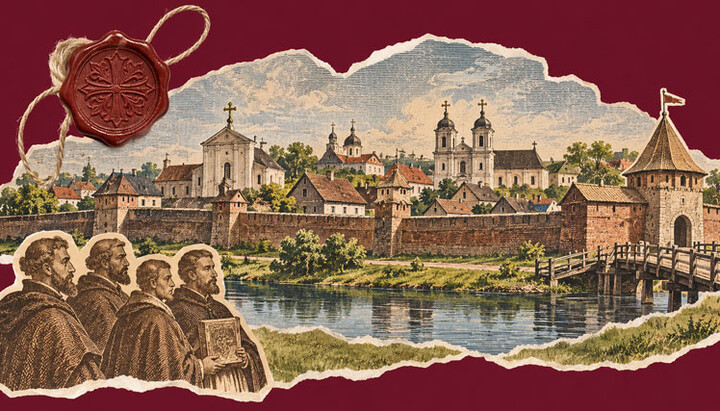
In the old center of Berestye rose the cathedral Church of St. Nicholas, the main parish of the city. On July 6, 1590, Bishop Meletius (Khraptovich) of Vladimir and Brest permitted the founding of a brotherhood with a school at this church. Half a year later, King Sigismund III confirmed this decision by his charter, taking the statute of the Lviv Brotherhood as a model. When Hypatius (Pociej) took the cathedra in 1593, he too supported the activity of the brotherhood. It seemed that the new organization had found a lawful footing.
But in October 1596, this very church became the site of a Church schism. Metropolitan Michael (Rahoza) solemnly opened the Uniate synod here. Bishop Hypatius served the Liturgy. Eyewitnesses remembered one disturbing detail: during the preparation of the Holy Gifts, a Greek priest who had converted from Catholicism became confused and mixed water with water in the Chalice, which the Orthodox regarded as an ominous sign. On October 18, beneath these vaults, the act of the Union was signed.
It is not known where the Orthodox parishioners of St. Nicholas Church were during those hours. The lists of the participants of the assembly include envoys from the Vilnius and Lviv brotherhoods, and there are mentions of deputies from Brest, but the church's own community seems to have vanished from the documents of the council.
The Hall of a Protestant House
If one walks from St. Nicholas Church to the other end of the city, one can see the spacious house of the nobleman Malcher Rajski. According to the testimony of St. Macarius (Bulgakov), all the Orthodox churches of Brest had been locked by order of Bishop Hypatius before the council began.
Orthodox bishops, priests, and laypeople had to seek shelter under a foreign roof. The owner of the mansion was a Protestant, and the large hall of his house served as a Calvinist meeting house.
The situation in the city at that time resembled a siege. Prince Konstanty Wasyl Ostrogski entered Berestye surrounded by Tatars, haiduks, Cossacks, and artillery, for reasons of security. The Orthodox delegates waited until Vespers for an invitation from the Metropolitan to discuss the provisions of the council, but received no reply. In the heterodox meeting house they approved the conciliar act rejecting the Union.
Upper Rooms for Prayer
Three days before the opening of the councils, Bishop Hypatius struck a blow at the way of life of the townspeople. The priests of Berestye were forbidden, under threat of punishment, to have contact with the unyielding brotherhood members. The clergy were ordered not to "baptize their children, administer to them the Holy Mysteries of Christ, or bury their dead."
Deprived of churches and priests, the townspeople dispersed to their homes. In closed upper rooms, laypeople themselves read prayers over women in childbirth, baptized infants, studied Scripture, and delivered sermons.
Despair and bewilderment went so far that some of the townspeople went to pray at Protestant gatherings, just so as not to cross the threshold of Uniate churches.
A Charter for an Empty Place
In January 1591, in response to the petition of the townspeople, King Sigismund III issued a charter that exempted the brotherhood's school building from municipal taxes and military quartering. The teachers gathered townspeople's children around them, building a system of Orthodox education according to the Lviv statute.
After the Union, the fate of the school was decided with a single stroke of the pen. In 1597, the same monarch signed a new charter placing the school under the authority of Bishop Hypatius, supposedly so that it might have "better order and learning." In 1599, the Greek Peter Arkudios was appointed as its instructor. According to historical testimony, the brotherhood was dispersed and the former teachers were driven out. But even the renewed school never began to function. As later became clear from a royal charter, Bishop Potiy died without having reformed the school system.
A Refuge Beyond the City Rampart
For more than three decades, Orthodox Brest vanishes from the official chronicles. Only in 1633, after the legalization of the Orthodox Church in the Polish-Lithuanian Commonwealth, were the townspeople given back the Church of the Nativity of the Most Holy Theotokos, which was assigned to the monastery of St. Symeon the Stylite beyond the city rampart.
The old brotherhood was revived in a new place. From the 1630s, the monastery became a center of resistance to the Union. Later, the struggle for the brotherhood's rights was led by its hegumen, the holy martyr Athanasius of Brest.
The life of the brethren remained dangerous. A court record from 1678 has survived. On the feast of the Holy Trinity, an Orthodox procession with prominent townspeople was carrying a deceased fellow member across the market square to the Church of St. Symeon. The prior of the Catholic Order of Augustinians rushed out to meet them with monks and servants armed with clubs. The funeral procession was dispersed, and the deceased had to be buried only by his son and a chance cart driver.
The last trace of the Orthodox organization was found far from its native streets, in the minutes of the Pinsk Congress of 1791, where a "Brest-Litovsk" brotherhood is listed among the delegates. At the turn of the 18th and 19th centuries, the traces of the Brest townspeople are finally lost in the dust of the archives.