Secrets of Egyptian epistle to Galician townsfolk
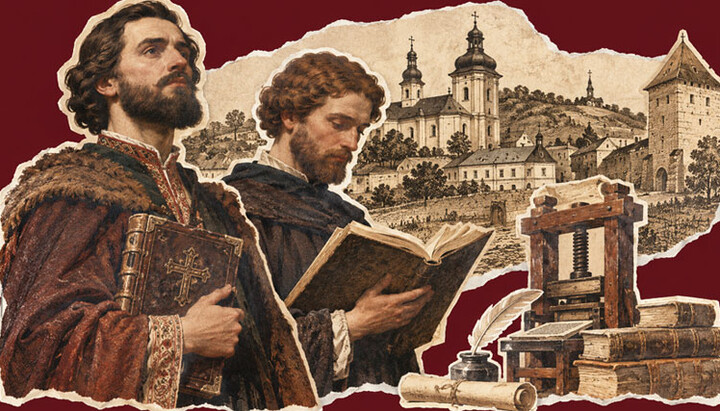
Глядя на яркие рекламные буклеты, легко поверить в красивую сказку о галицкой пленнице Роксолане. Но старинные документы показывают совсем иную картину.
Every tourist entering Rogatyn is met by a vivid signboard. Roadside billboards vie with one another in inviting travelers to the homeland of the captive sultana and the great enlighteners of ancient Rus'. The town square is adorned with a bronze monument to Roxelana, and tour guides, with practiced ease, rattle off the names of Pamva Berynda and the future Metropolitan Job (Boretsky), assuring visitors that Galician theological thought was forged in the local schools.
But if one sets aside the tourist brochure and opens the court records of the sixteenth century together with old reference works, the festive façade crumbles into fine dust. It turns out that the Rogatyn origin of the Ottoman ruler rests solely on Samuel Twardowski's romantic poem and on the nineteenth-century writers' imagination, which gave the local priest's daughter the name Nastya Lisovska. Venetian diplomats, in their dispatches from Constantinople, mentioned only that the captive was "from Rus'." Neither a name nor the exact place of her origin was recorded in the diplomatic papers.
With the great teachers, matters are even worse. The renowned enlightener Pamva Berynda and the future Archpastor of Kiev Job (Boretsky) never taught in Rogatyn classrooms. Their biographical paths ran quite differently, never crossing with the local schools. Tourist slogans rely on late literary inventions. Does this mean that the small Galician town on the Hnyla Lypa, which received Magdeburg rights as early as 1415, has nothing to be proud of?
The Purchase of a House in the Halych Suburb
The true drama began in December 1579, when two brothers, Yuri and Ivan, arrived in Lviv. They were neither credentialed philosophers nor wealthy noblemen. Their father Kuzma worked as a simple saddler in Rogatyn, and his sons inherited their father's trade, having learned to cure leather, cut straps, and forge buckles.
The Rogatynets brothers bought a modest house in the Halych suburb and later moved to Rus'ka Street, intending to open a craft workshop. But the Lviv guild greeted the newcomers with hostility. The local masters admitted the craftsmen into their corporation as an exception, but categorically forbade them to hire Orthodox apprentices and journeymen.
Despite outside pressure, Yuri and Ivan Rogatynets became key organizers of the reformed Lviv Dormition Brotherhood, taking over the leadership of the community in 1588.
It was they who drew up the statute of the brotherhood school, which became the oldest document of Ukrainian pedagogical thought. Their undertakings were supported by Patriarch Joachim of Antioch and Patriarch Jeremias II of Constantinople.
The struggle for the rights of the Orthodox community demanded firmness and steadfastness. When the Bishop of Lviv, Gedeon (Balaban), excommunicated the members of the brotherhood in late October 1587, his own brother Vasyl, in a fit of rage, beat Yuri Rogatynets in the street. After this, the brothers appealed to the Patriarch of Constantinople, who lifted the unjust prohibition.
At the same time, the Dormition Brotherhood demanded impeccable discipline from its leaders as well.
For an offense against the internal order of the community, Yuri Rogatynets was locked up in the church tower for a full day. And the master-founder humbly submitted to this decision.
In 1596, at the Council of Brest, Yurii Rohatynets stood among those who firmly rejected the Union, defending the interests of the laity.
Parchments from the old archive
While two craftsmen were fighting for the rights of the Orthodox in Lviv, public events were unfolding in their native Rohatyn. In the late 1580s, the townspeople of Rohatyn founded a brotherhood at the ancient stone Church of the Nativity of the Most Holy Theotokos.
The Institute of Manuscript of the Vernadsky National Library in Kyiv holds a charter from Patriarch Jeremias II of Constantinople addressed to the Rohatyn community.
The First Hierarch blessed the craftsmen, giving legal sanction to their fraternal organization and their work in education.
Another unique document is dated August 5, 1601. On that day, Hieromonk Isaac and the Alexandrian reader Ioasaf arrived in Rohatyn. They brought a letter written by Patriarch Meletios of Alexandria.
The Patriarch wrote an Epistle to the Rohatyn clergy, craftsmen, and their wives and children. He called the spiritual trials of those times "a storm from the most wicked bishops and scribes." Citing the Gospel, Patriarch Meletios reminded the townspeople that in the world they would have tribulation, but the Savior would not leave them orphans.
A wooden log church on a museum lawn
Passing the monument to Roxolana and heading toward the city outskirts of former Rohatyn (present-day Ivano-Frankivsk), one can see the wooden Church of the Holy Spirit. Tourist brochures still reprint the tale of the father of the captive sultana, who supposedly served the Liturgy within these walls.
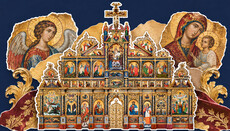
The archival records once again cool the ardor of romantics. The wooden church was built much later, in 1644–1645, and its famous five-tier iconostasis was completed by the masters by 1650.
Does this truth deprive the old oak log structure, inscribed on the UNESCO list, of its history steeped in legend? Not in the least. The logs laid by Galician carpenters preserve the memory not of heroes of novels, but of real generations of local townspeople—those very tanners, shoemakers, and blacksmiths who gathered modest funds to build the holy place, hired craftsmen, and carefully preserved their faith.