
Student goes to doctor, reaches Sinai: story of Vasily Barsky
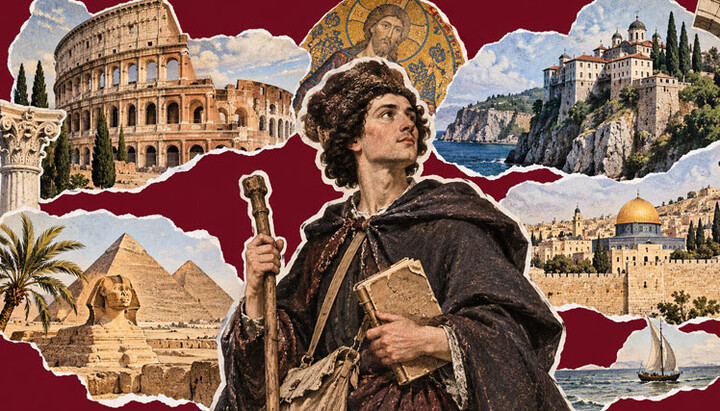
In 1723, a Kyiv student went to Lviv to see a physician, and returned home 24 years later — a month before his death.
Reference works on Vasily Grigorovich-Barsky say that he spent "a quarter of a century on the road." It sounds beautiful, but it is not quite accurate. He left Kyiv in July 1723 and returned in September 1747. That makes not twenty-five years, but twenty-four years and two months. But this does not change the essence much.
Vasily was born in 1701 into a merchant family in the Podolian town of Bar. He studied at the Kyiv Mohyla Academy. At the age of 22, as a student, he set out to have his sore leg treated, but ended up traveling halfway around the world, took monastic vows in Damascus, and returned home a month before his death. In his hands he carried a thick manuscript, which he called unfinished.
Flight to Lviv under a false name
In the summer of 1723, Vasily had no plans for a pilgrimage to Athos or Jerusalem. The reason for the trip was purely mundane: he needed a good physician in Lviv. He set off together with his friend Justin.
The young men, it seems, packed in haste, forgetting to take the most necessary things. From Pochaev, Vasily sent his father a letter in the colloquial language of the time: "I was in great need, for I had not taken any svita or kobenyak." A svita was a kaftan, a kobenyak a hooded garment of coarse cloth. In this one sees all the carelessness of ardent youth.
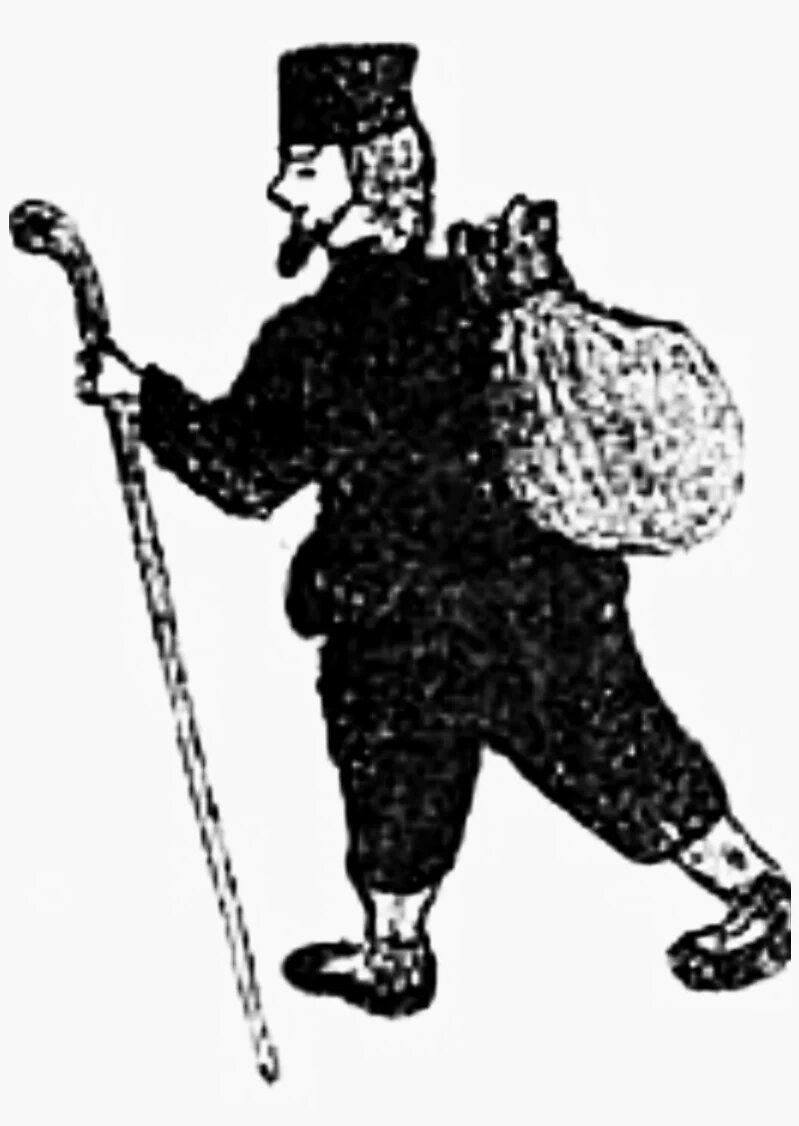
In Lviv, the everyday trip unexpectedly turned into an adventure. Instead of returning to Kyiv, Barsky enrolled in a Jesuit college. The student of the Mohyla Academy did so under an assumed name. In the spring of 1724 the deception was exposed, and the deserter was forced to leave Lviv hurriedly.
The former schoolboy set out on foot for Rome with a precious cargo: letters of safe conduct from the bishops of Lviv and a letter from the Lviv kahal, the Jewish community. But the clothes and books he had brought from Kyiv he left behind in Lviv, which he would later mention with vexation in a letter to his parents from Damascus.
Robbed on the road to Jerusalem, and monasticism
Further on, the geography of the young traveler's "wanderings" is striking in its scope. In 1724 alone he passed through Hungary, Vienna, and Venice, and reached Rome. Then his course turned eastward: in 1725–1726 he visited Athos, then Jerusalem, Cyprus, Egypt, Sinai, and Damascus.
The reader of Barsky's travel notes expects stories of Turkish captivity, quarantines, and extortion at the entrance to the Church of the Holy Sepulchre. After all, all this was commonplace at the time. But there is nothing of the kind in the pilgrim's chronicle.
There is, however, the story of how the Kyivan wanderer was robbed by Arabs between Ramla and Jerusalem. Yet far more often what flashes through the pages of his notes is not fear of robbers but exhausting want. In Europe, Orthodox travelers were received without much hospitality. Barsky writes bitterly that "some called us schismatics, others heretics, and would not give." He was speaking of the giving of ordinary alms and a piece of bread.
In Damascus, in 1734 or 1735, Patriarch Sylvester of Antioch tonsured him a monk with the same name, Vasily, and ordained him subdeacon. The monk then settled for a long time on the island of Patmos. For about seven years, from 1736 to 1743, he studied Greek, then returned to Athos, and a couple of years later, by way of Bucharest, he went home to Kyiv.
The oath of an honest witness
How do Barsky's "Wanderings" differ from dozens of other travel notes of that time? Eighteenth-century monks willingly copied from one another the wonders of various corners of the earth without leaving their cells. Barsky, however, swears in the preface to his book: "I write only that which I have examined." That is, I write only what I have seen myself.
Rumors he ruthlessly rejects: "since I have not happened to see them with my own eyes, but only to hear of them many times, therefore I do not dare to write what is heard."
Later he formulates his professional credo even more clearly: "For a true and upright historian, it is a shame to conceal the truth." Later, some biographers called Barsky "the first traveler" and a "Christian archaeologist." These titles are quite disputable, yet they do not diminish the scale of his labors. An ordinary monk documented an entire era for us.
A Pilgrim's Plagiarism
No less interesting are the illustrations in the traveler's book. He never studied painting anywhere. He made sketches with pen and ink. About one hundred and fifty sheets with pictures accumulated. At the end of the nineteenth century, 137 of his drawings were published; another 11 vanished without a trace.
When these images were compared with European books, a curious detail came to light. Not all the views were copied from life.
The Jaffa of 1726 and the tombs of Zechariah and Absalom repeat the engravings of de Bruijn. The drawing of the Tomb of the Lord from 1729 is noticeably similar to an engraving by Horn. And the Umayyad Mosque in Damascus the monk drew entirely from memory.
But this does not look like outright forgery. In the eighteenth century, a sketch in a book served as a visual illustration, not as a work of art. A monk traveling on foot did not always have the time and opportunity to sit for hours with an inkwell and draw the sights. He took a ready-made engraving and, if he considered it accurate, placed it in his book.
A Manuscript Instead of an Inheritance
On Patmos in 1741, the traveler is overcome by homesickness. He wrote that he was drawn to his homeland "like a magnet." But the road back stretched out for another six years.
In the autumn of 1746, he sent his family a last letter from Bucharest with the words: "and this year, if God wills, I shall arrive to you." But he reached Kyiv only in September 1747, by then gravely ill.
A month later, Vasily Grigorovich-Barsky died. He was buried in the Kyiv Brotherhood Monastery. A letter of absolution from Patriarch Chrysanthus of Jerusalem was placed in his coffin.
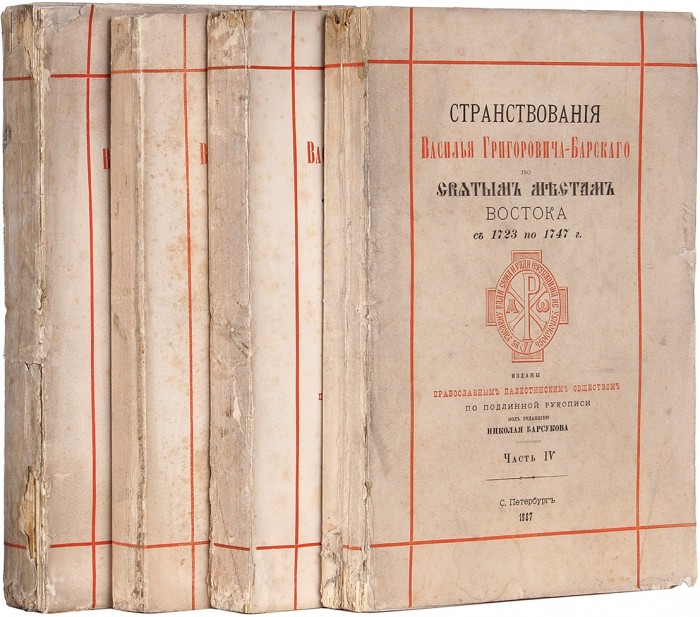
After long wanderings, instead of a rich inheritance, all he left was a bundle of written pages. The manuscript passed to his mother and his brother Ivan, the future architect. The book waited more than thirty years for a printing press. But even before it was printed, the "Wanderings" circulated in manuscript copies. There was no house where a copy of these notes was not kept. The book was read for generations.
An ordinary student left Kyiv without a caftan to heal his leg, and returned shortly before his death with a thick notebook in his hands. Twenty-four years and two months of the journey fit into lines that we now read as a map of the Orthodox East.