Five owners of Reims Gospels
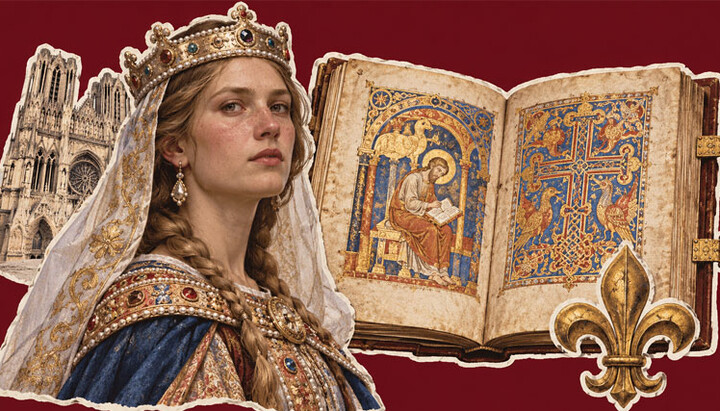
Legends and facts about a sacred book that kept changing hands.
On 4 January 1790, a French inventory for the first time mentioned a landmark item, described as an article of coronation use. Until the end of the eighteenth century, no one knew that French monarchs had taken their oaths on this book.

Later, in November 1792, officials of the young republic drew up a separate record describing in detail the precious cover of the ancient manuscript: dark wood, red morocco leather, gilded silver, crystal over holy relics, and enamel plaques with the symbols of the evangelists. The exact weight of the precious metal was estimated at three marks and seven ounces before the metal cover was sent to be melted down.
No records of any particular kings taking an oath on this Gospel — from Henry III to Louis XVI — have been found in the cathedral books of the earlier centuries. The manuscript's coronation role rests solely on cathedral tradition, and library surveys as early as the mid-twentieth century recognised the legend of the coronation oath of the French rulers as false.
When in June 1717 Tsar Peter I spent two hours examining the cathedral relic in Reims and kissed the silver reliquary, the custodians showed him the precious cover. But even the Reims library, in its scholarly annotations, expresses doubt as to whether the guest was actually shown the Slavonic leaves themselves.
The Cathedral Archive of the Cardinal of Lorraine
The 1574 inventory of cathedral property records that Cardinal Charles of Lorraine gave the manuscript to the cathedral clergy on the eve of the feast of Pascha in 1574. In that inventory, the precious cover weighed six marks and six ounces.
That is, 1574 is a reliable date confirming the moment when the item first appears in the documents of Reims.
Where the cardinal obtained the codex, the official papers are silent. Historians have put forward scattered theories: a gift from participants of the Council of Trent, a Greek trail from Constantinople, or a private gift from the Eastern patriarchs. But not one hypothesis has been confirmed. Between the Prague traces and Pascha of 1574, the documentary history of the codex has a gap of two centuries. The entire chain of the folio's owners before the sixteenth century rests exclusively on conjecture.
The Colophon of the Emmaus Monastery in Prague
A colophon of 1395 mentions a monk of the Slavonic monastery of Emmaus in Prague, founded by King Charles IV for Benedictines of the Glagolitic rite, who completes the copying of thirty-one Glagolitic leaves. At the end of the work, the scribe leaves a memorial note: the first part of the codex was supposedly written by the hand of the saint Procopius of Sázava.
But the venerable Procopius died in 1053, 342 years before this note.
A Prague monk of the late fourteenth century, commemorating the late King Charles IV, attributed the Cyrillic leaves to a Czech saint in order to lend the Slavonic codex great authority. Medieval scriptoria regularly resorted to this device.
The scribe created a documentary legend about the origin of the parchment, shifting the date and the name of the author three centuries back.
Silvestre's Prospectus on the Kyivan Queen
In the 1843 prospectus of the French palaeographer Joseph Silvestre, there is a hypothesis that Queen Anna Yaroslavna was the owner of the Gospel. This version relies on retellings. The daughter of Yaroslav the Wise supposedly brought the Kyivan aprakos to France in 1051 and presented it to Bishop Roger of Châlons.
But no official French document knows of Anna's book. The Library of Reims calls the version of the Kyivan gift from the queen a legend of the twentieth century.
An Unknown Master of the Kyivan Scriptorium
The Cyrillic part of the Gospel, consisting of sixteen leaves, contains a fragment of the Gospel readings of the Greek rite. An analysis of the manuscript carried out by philologists attributes the writing of the Cyrillic part to the work of Kyivan scribes of the second half of the eleventh century. Researchers point to the specific features of the parchment's preparation and the system of Cyrillic writing.
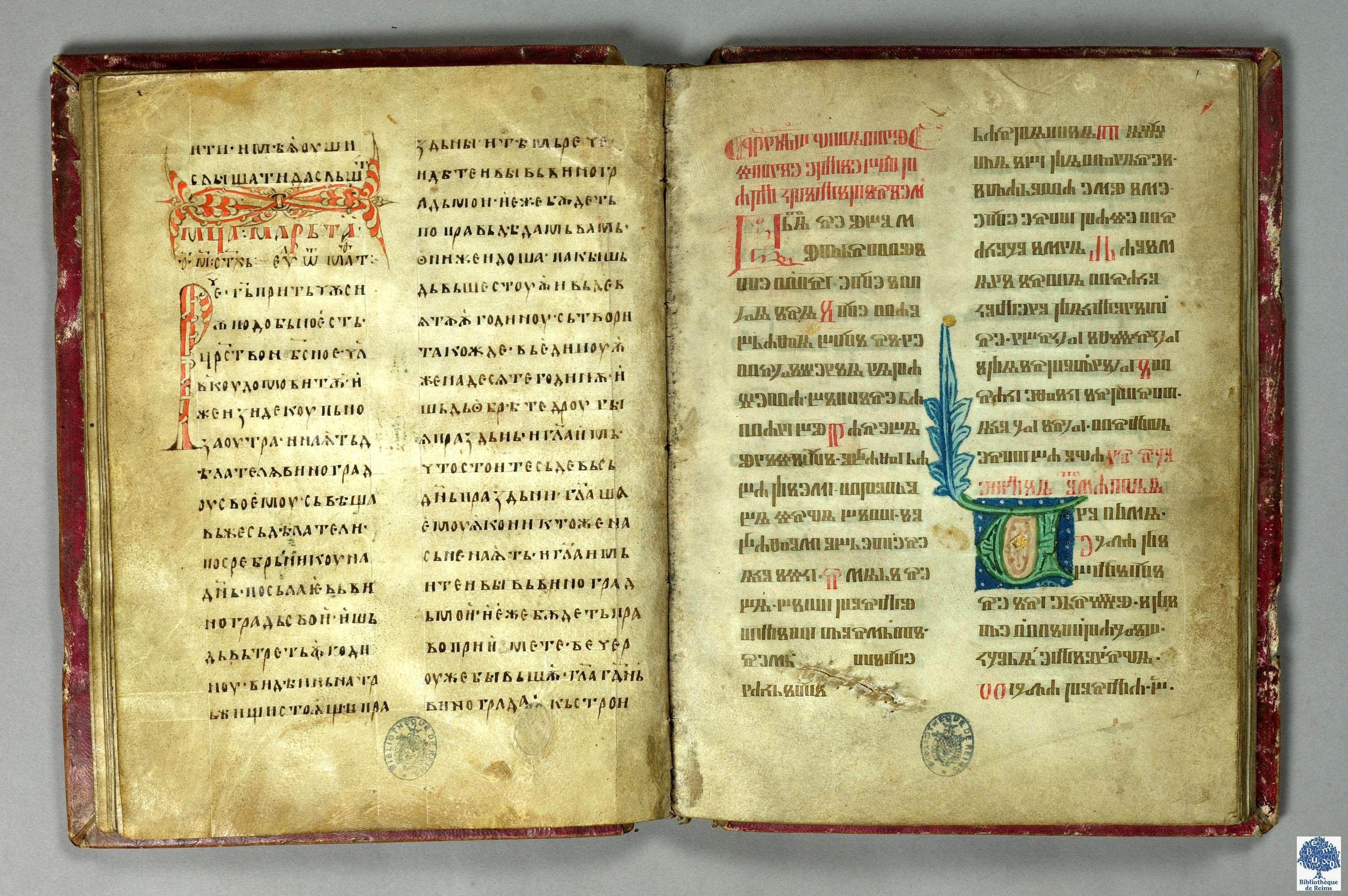
The text contains linguistic errors. The copyist worked in a Kyivan workshop, copying an ancient original whose script he did not fully understand. He stumbled over letters, made mistakes in case endings, wrote out lines by candlelight, and did not enter his name in the memorial notes.
Each century ascribed the manuscript to a new owner, but history has left us only two verified dates: 1395 in Prague and 1574 in Reims. And at the very beginning of this chain stands a master of the eleventh century. He left his mark on parchment, creating a codex that, centuries later, became overgrown with the myth of European coronations.