A bishop's double game in Przemyśl
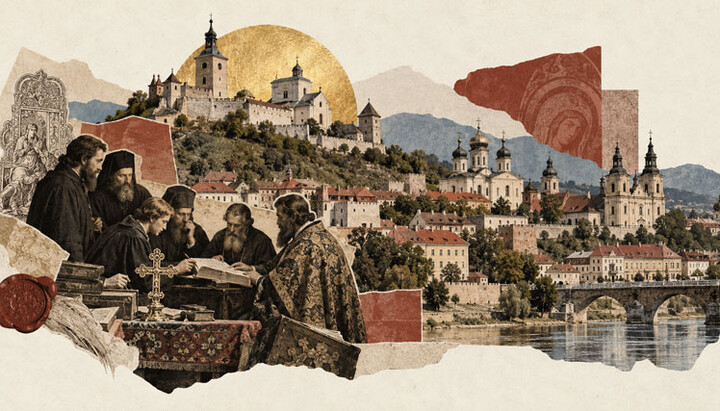
Seventeenth-century documents reveal the story of a bitter struggle in which ordinary laypeople took it upon themselves to defend their ancient religious traditions.
On June 1, 1606, Bishop Mykhailo (Kopystensky) of Przemyśl could barely hold a quill in his weakening hands. Before him lay a sheet of paper addressed to an assembly of nobles in Lublin. It contained a desperate plea to protect people from the violence sweeping through Volhynia and Galicia. The bishop wrote that the Uniate authorities were seizing churches, driving out priests, and forcing believers to change their faith "through violence and coercion."
The venerable old bishop knew what he was talking about. He had less than three years to live, and behind him lay the shadow of a difficult decision that had changed the fate of his entire eparchy.
Two strokes of the pen in Sokal
In the summer of 1594, the bishops of Western Rus' gathered in the town of Sokal. Among them was Bishop Mykhailo of Przemyśl. Life was becoming increasingly difficult for Orthodox communities in the Polish-Lithuanian Commonwealth. Polish authorities restricted the rights of Orthodox townspeople, while members of the nobility were gradually embracing the Latin rite.
On June 27, 1594, the bishop signed a document expressing his willingness to submit to the See of Rome. A year later, at another gathering in Sokal, he signed a similar declaration. His name was subsequently included in a papal bull among the principal supporters of Church union.
But in August 1595, something happened that changed the course of events. Bishop Mykhailo unexpectedly withdrew his consent and filed a formal protest against the actions of the pro-union faction. In the fall of 1596, at the Orthodox Council of Brest, his signature appeared fifth on the Apophasis – the council's decree rejecting union with Rome.
The Uniate council immediately declared Bishop Mykhailo deposed. The Przemyśl episcopal see became the center of a legal and armed struggle. In letters to Chancellor Lew Sapieha, Uniate Bishop Hypatius Pociej called Mykhailo a "schismatic" and demanded that the local royal official bar the defiant bishop from the cathedral.
But the deposed bishop continued his ministry. Defying official prohibitions, he ordained priests and deacons not only for his own eparchy but also for neighboring territories where Orthodox parishes had been left without pastors.
Townspeople against royal decrees
What makes this story particularly remarkable is that resistance in Przemyśl began long before the bishop's change of heart. While bishops debated and signed documents in Sokal, another force was already at work in the city itself.
In 1592, the Orthodox townspeople of Przemyśl established a church brotherhood. Its members were ordinary craftsmen, merchants, and guild masters. They fought persistently for equal rights with the city's Polish residents.
Under the laws of the Polish-Lithuanian Commonwealth, Orthodox townspeople faced numerous restrictions. They were barred from election to municipal government, excluded from guild trades, and prevented from freely establishing educational institutions.
So the townspeople opened their own school at the cathedral. They did not wait for royal privileges.
Recognizing the determination of the laity, Bishop Mykhailo supported the initiative and sent a letter to Lviv requesting an experienced teacher – a didaskalos – for the brotherhood.
From that point onward, two parallel efforts to defend the Orthodox faith developed in Przemyśl. The bishop waged a complicated canonical struggle, while the townspeople built the institutions their community needed.
After losing his episcopal see, the bishop relied on the city's Orthodox community, while the community continued to recognize him as its legitimate archpastor.
Bishop Mykhailo died in early March 1609. After his death, only one Orthodox bishop remained in the vast Commonwealth – Bishop Jeremiah (Tyssarovsky) of Lviv.
A century-long battle for the bishop's seat
Bishop Mykhailo's death brought no peace to Przemyśl. Instead, it ushered in a century-long struggle for the episcopal see, with two hierarchs – one Orthodox and one Uniate – simultaneously claiming authority over the same eparchy.
Court records from the period read like chronicles of feudal warfare.
In mid-June 1636, an armed detachment under Orthodox Bishop Sylvester (Hulevych-Voiutynsky) seized the Monastery of the Savior in Stary Sambir, which served as the residence of Uniate Bishop Athanasius Krupetsky.
Lawsuits followed, along with property seizures and endless petitions. A royal tribunal declared Bishop Sylvester legally infamous, stripping him of his civil rights. It took another four years for the Sejm to restore his legal standing.
While bishops fought court battles and stormed monasteries, the Przemyśl Brotherhood continued its work.
The brotherhood established a charitable institution for the poor and sick, known as a shpytal. In 1633, it opened its own printing press.
When pressure on the cathedral's Orthodox parishioners became unbearable, the center of the brotherhood's activities moved to Holy Trinity Church.
Ordinary townspeople printed books, educated children, cared for the elderly, and financed lawsuits to defend their right to practice their ancestral faith.
The midnight secret of the royal castle
The century-long confrontation reached its dramatic conclusion toward the end of the seventeenth century.
On March 26, 1681, a secret ceremony took place in a small chapel at the royal castle in Warsaw.
Bishop Innocent (Vinnytsky), together with Bishop Joseph (Shumliansky) of Lviv, secretly made a Catholic profession of faith.
For the next ten years, Bishop Innocent continued publicly to identify himself as an Orthodox hierarch, governing his eparchy and participating in the life of the community.
Only in 1691 did Bishop Innocent openly announce that the entire Przemyśl Eparchy was joining the union with Rome.
A confrontation that had lasted a century ended with another stroke of the pen in the bishop's chancery. No one had asked the faithful what they thought.
It seemed that the city's Orthodox history had come to an end.
But the brotherhood refused to surrender. Unable to maintain its printing operation under the changed circumstances, the Orthodox townspeople of Przemyśl sold their press to the Lviv Dormition Brotherhood. The type and printing equipment were moved to Lviv, where they could continue producing books in the community's native language.
Bishops changed their allegiances, signed secret declarations, and stormed castles. Yet the community founded by ordinary urban craftsmen outlasted every archpastor who abandoned the Orthodox faith, preserving that faith for generations to come.