A unique cossack cathedral in Samar and its engineering secret
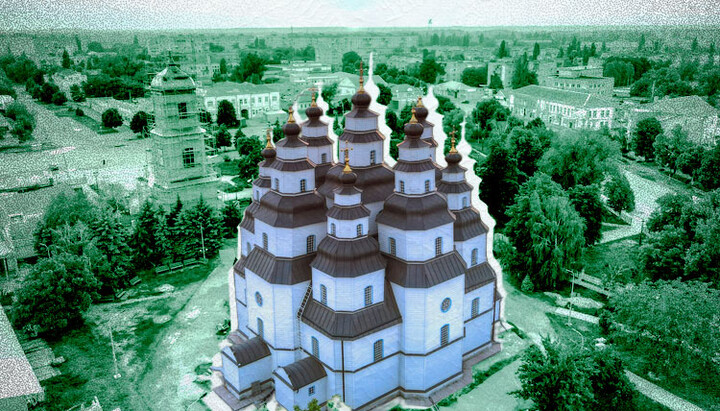
The Trinity Cathedral in Samar. Photo: UOJ
For centuries, the steppe smelled of gunpowder, tar, and red-hot steel. Life on the frontier taught people to trust only iron. If you had a saber, you were master of your fate. Without one, the feather grass would quickly erase all memory of you.
But if you turn off the noisy highway, arrive at the old square of the former Cossack town of Samar, and press your palm against the wall of the Trinity Cathedral, the world instantly changes its rhythm.
Beneath your fingers lies a thick oak beam darkened by centuries of rain. Wood warmed by the steppe sun still gives off the living heat it has gathered over more than two hundred years. Its surface is rough and uneven, marked by tiny cracks, still carrying the scent of dry pine resin and incense.
At this point, the philosophy of war met the philosophy of life.
This remarkable wooden cathedral was founded in 1773. A true historical drama unfolded around its construction: while carpenters were shaping the logs, the Liquidation of the Zaporizhian Sich was already underway by order of Catherine II. The church was completed by people who had just lost their freedom, their rights, and their native land. The Cossacks, stripped of their statehood, poured their last money and wartime trophies into these oak beams. For them, the cathedral became a final manifesto – a powerful statement carved into wood before they disappeared forever from the political map of the age.
Why the Cossacks rejected iron
The cathedral was commissioned by Cossack elders. These veterans of the Wild Fields had spent half their lives in the saddle. They knew the value of strength, understood fortifications, and had shed blood themselves. They were hardly sentimental dreamers.
And yet these hardened warriors placed a strict condition before the folk master Yakym Pohrebniak: not a single forged nail was to be used in the walls of the future cathedral.
Why?
The answer survived in old regional records. To the Zaporizhian Cossacks, iron remained the metal of war – an instrument of violence and a reminder of the Passion of Christ. To drive heavy forged spikes into the walls of a sanctuary while remembering the nails hammered into the Savior’s flesh on the Cross seemed to them an unbearable sacrilege.
These stern soldiers, seeking repentance for the sins of their past, consciously chose vulnerability. They wanted the space of prayer to remain free from symbols of killing.
The builders fitted together massive oak logs with astonishing precision, fastening them with wooden pegs instead of iron. During later nineteenth-century repairs, metal braces were added, but the original vision remained intact. It was an attempt to lay down all weapons before God and leave brutality outside the threshold of the church.
The secret of the soaring domes
The Cossack leadership collected money for the construction across the scattered winter settlements of the steppe. But how could they convince skeptical warriors that a gigantic wooden structure, as tall as a twenty-story building, could survive the violent steppe winds without internal support pillars?
Yakym Pohrebniak, a gifted self-taught master from Nova Vodolaha, found a brilliant solution. He wove an exact model of the future church from ordinary willow branches. The structure impressed the Cossacks so deeply with its strength that the master immediately received an enormous fee of two thousand rubles.
The cathedral’s greatest engineering secret reveals itself only after you cross its threshold.
Inside, there are no massive stone columns supporting the vaults, as in classical churches. The space opens freely in every direction. Nine domes soar upward into dizzying height, supported entirely through their relationship to one another. The immense weight of the wooden framework is distributed so skillfully that the structure sustains itself through a complex internal balance.
The feeling of oppressive heaviness completely disappears.
When storms sweep across the steppe, the old walls creak softly. The church breathes. It bends gently beneath the force of the wind, unlike rigid stone, which under such strain quickly splits with deep cracks.
When the Cossacks questioned him, Pohrebniak answered simply: just as a tree stands in the forest by holding fast to the earth through its roots, so this church will stand through the unity of all its parts.
Wood against stone armor
In the twentieth century, this masterpiece of Ukrainian Baroque endured new trials. Soviet authorities closed it, turned it into grain warehouses, and later even tried to demolish it to make way for another gray industrial zone.
The pain caused by the neglect of this wooden shrine inspired Oles Honchar to write his famous novel Sobor in 1968. Its central call – to preserve the cathedrals of our souls – became a powerful protest against a soulless state machine trying to melt human individuality into faceless mass.
The story of the Samar Cathedral may be one of the best remedies for our modern fears.
Today we constantly live under tension, convinced that survival is possible only if we encase ourselves in iron. We search for safety in concrete bunkers, behind high fences, in legal formulas, and under powerful patronage. We imagine that faith and culture can also be protected with armor – secured by state decrees and bayonets.
But history tells a different story.
The steppe is littered with the ruins of stone fortresses that once seemed invincible. The Sich was destroyed. The Russian Empire disappeared. The Soviet system collapsed in a matter of days.
And yet this wooden cathedral – defenseless against moisture, fire, and even the tiny wood-boring beetle – still stands where it has stood for nearly two and a half centuries.
The Church survives the blows of history not because it is armed or shielded by earthly authorities. Its strength lies precisely in the vulnerability of wood – in the ability to breathe, to bend beneath the hurricane winds of historical catastrophe, yet not break, preserving within itself the warmth of living branches.
Truly enduring things do not need body armor. They are held together by inner gravity and by the faithfulness of those who continue creating beauty amid the ashes.
We often long for absolute guarantees of safety in a world ruled by brute physical force. But perhaps the deepest lesson of these oak walls is this: when people begin placing all their hope in iron, the only real victory over decay comes through the stubborn labor of building something that can stand without a single nail.
Read also
Trial of a dead pope
Once in Rome, the body of a deceased pope was seated on the throne and put on trial. The accusation relied on a church canon that had once saved his see.
Monastery built in defiance of king
When Orthodox believers in Minsk were left with just one church, townspeople decided to build another – and even a royal decree did not stop them.
Young Mother and Sleeping Christ
Michelangelo carved a Virgin Mary who looks younger than her Son – and signed his name in marble for the only time in his life. Neither of these peculiarities was accidental.
Orthodox books from a Uniate printing press
In the 18th century, Uniate monks at Pochaiv printed books used in prayer by Orthodox Christians and Old Believers alike.
The story of the honey brotherhood
The Mogilev Brotherhood began with members pooling money to brew honey drinks for feast days – and eventually grew to have its own printing press.
Golgotha in the midst of a pogrom
In the autumn of 1938, the Jewish artist Marc Chagall painted the crucified Christ. Synagogues burn and refugees flee around the cross, while the Crucified One Himself is wrapped in a prayer shawl.