Why couldn't a negligent student be hanged in the Middle Ages?
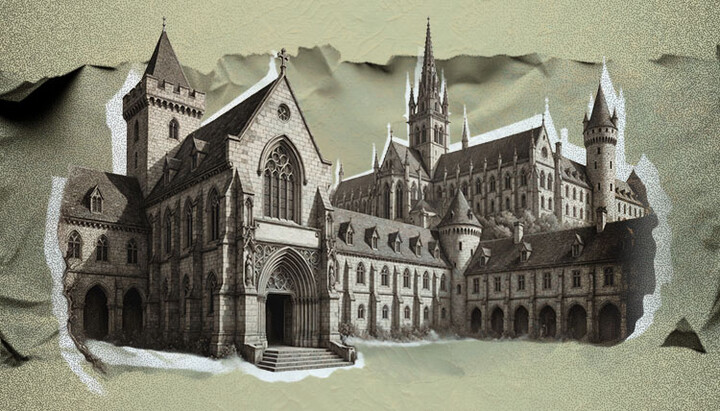
Medieval university. Photo: UOJ
A black mantle and a tonsure shaved on the top of the head — that is the only armor. By the standards of a medieval city, he is defenseless: a stranger without kin and without weapons, who is moreover disliked here. But when the guard comes toward him through the Parisian mud with halberds, the halberds are lowered. The guards let the outsider pass, even though they would gladly wring his neck. By law, they are not allowed to touch him—neither to detain him nor, even more so, to hang him.
How did a penniless scholar in that brutal age get such immunity?
The mantle as body armor
The secret lay in clothing, or rather in what it signified. Even without being ordained, a medieval student was legally considered on par with the clergy: he wore a tonsure and was counted as part of a special clerical estate. And a cleric was judged not by the city but by an ecclesiastical court. This applied, among other things, to matters of life and death. Secular courts tortured criminals and sent them to the gallows, while the Church was forbidden to shed blood, and therefore simply could not sentence anyone to execution.
A student who had proven his status would, at worst, receive an ecclesiastical punishment, whereas an ordinary townsman would already be facing the gallows or the guillotine.
Strange as it may seem, the first law protecting students was enacted by a secular ruler. In 1158, Emperor Frederick Barbarossa issued a decree known as the Authentica habita. A student was granted protection while traveling, exempted from the harsh “right of reprisal” (where anyone could be seized and tried for someone else’s debt), and, most importantly, given the right to choose his own magistrate or bishop as his judge instead of the city authorities. The decree was soon confirmed by Pope Alexander III and became part of Roman law.
The case of bloodshed
The worth of this legal armor was best demonstrated by Paris in 1229. During Shrovetide, some tipsy scholars quarreled with a tavern keeper over the bill presented to them. The matter ended in a brawl; they were beaten and thrown into the street. The next day they returned with clubs, and at that point the guard intervened. With the consent of Queen Blanche, the mercenaries set upon the students in earnest, and several men were left lying on the cobblestones.
What happened next was something the city had not expected. The University neither complained nor submissively fell silent. It simply shut down. Masters stopped giving lectures, students dispersed to other cities, and Paris was left without students for two years – and therefore without the money they spent and without its reputation as a major university center. In this way, an academic guild could simply pack up and disappear, like traveling Gypsies.
This was enough to prompt Rome to intervene. In 1231, Pope Gregory IX, who had once studied in Paris himself, issued the bull Parens scientiarum (“Mother of the Sciences”), which historians call the Magna Carta of the university. The pope removed the university from the authority of the king and the local bishop and placed it under his direct protection, legalized the masters’ right to strike, and threatened excommunication for anyone who infringed upon these rights.
Such is the paradox: a drunken brawl in a tavern ended up resulting in a charter of academic freedom.
A crack in the shield
What exactly this armor protected against becomes clear in the case where it once developed a crack.
On 10 February 1355, the feast day of Saint Scholastica, Oxford students at the Swindlestock tavern quarreled with the proprietor over poor wine and threw a cup in his face. Within half an hour the argument escalated into a brawl. On the second and third day, armed townsmen from the surrounding villages poured into the city with cries "Kill them!" They broke into student lodgings, murdered scholars, and, according to eyewitness accounts, even scalped them.
When all fell quiet, some thirty townsmen and up to sixty-three members of the university lay dead in the streets. And this was Oxford, already endowed with every conceivable privilege. Cambridge, it should be noted, grew as an academic center in 1209 from students who had fled Oxford following the execution of two of their companions.
The Church as protector
All of this sits poorly with the Enlightenment myth that the medieval Church stifled learning and that the university forced its way through in spite of it. The reality was the opposite. Without the clerical estate and without canon law prohibiting the shedding of students’ blood, any school would have been destroyed – either by a feudal lord or by an enraged mob.
The imperial decree provided only the initial impetus. The main supporting structure of this legal protection was the Church itself: it was she who incorporated the student into the inviolable clerical estate, and it was her jurisdiction that became the “protection” for universities.
The black mantle with which we began this account is today worn at the master's graduation ceremony, when former students walk across the hall to receive their diplomas in long robes and square caps. Almost none of them know that this is not a carnival costume but a surviving trace of that very armor. Once upon a time, this attire signified that no official dare hang you for thinking differently from the rest.
Read also
Trial of a dead pope
Once in Rome, the body of a deceased pope was seated on the throne and put on trial. The accusation relied on a church canon that had once saved his see.
Monastery built in defiance of king
When Orthodox believers in Minsk were left with just one church, townspeople decided to build another – and even a royal decree did not stop them.
Young Mother and Sleeping Christ
Michelangelo carved a Virgin Mary who looks younger than her Son – and signed his name in marble for the only time in his life. Neither of these peculiarities was accidental.
Orthodox books from a Uniate printing press
In the 18th century, Uniate monks at Pochaiv printed books used in prayer by Orthodox Christians and Old Believers alike.
The story of the honey brotherhood
The Mogilev Brotherhood began with members pooling money to brew honey drinks for feast days – and eventually grew to have its own printing press.
Golgotha in the midst of a pogrom
In the autumn of 1938, the Jewish artist Marc Chagall painted the crucified Christ. Synagogues burn and refugees flee around the cross, while the Crucified One Himself is wrapped in a prayer shawl.